
Can South Korean F-35’s ‘Shoot Down’ American F-22s in Simulated Air to Air Combat?
Military Watch Magazine Editorial Staff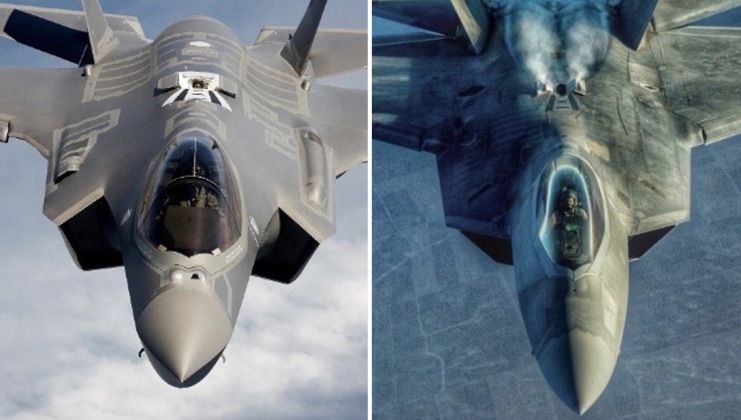
F-35 (left) and F-22 Fighters
Following confirmation that the U.S. Air Force had forward deployed four F-22 fifth generation fighters to Kunsan Air Base in South Korea, the aircraft were confirmed to have made a rare appearance over the peninsula’s inland airspace for simulated close range air to air combat with South Korean F-35As. The Air Force 8th Fighter Wing stated that the aircraft would help “test Agile Combat Employment (ACE) capabilities within the Pacific region,” which comes amid a growing emphasis within the service of providing pilots with experience operating against other fifth generation aircraft. The significant growth in such training, which has included formation of a dedicated adversary training unit of F-35s within the U.S. Air Force under the 65th Aggressor Squadron, has been viewed as increasingly critical as China has emerged as a leading power in fifth generation combat aviation, with annual production of its J-20 fighter being close to the number for the F-35. The J-20’s increasingly sophisticated capabilities have caused growing concern in among U.S. officials, with a growing number of sources indicating that the class could have the world’s most formidable combat capabilities. A second Chinese fifth generation fighter, the FC-31, is thought to currently be in low rate initial production.
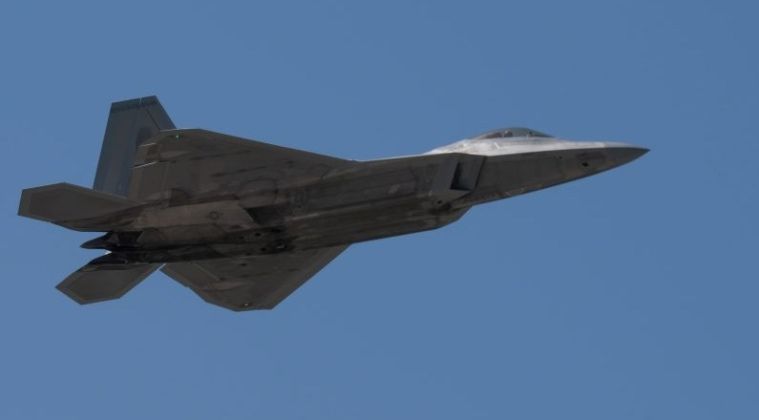
The F-22 was designed to be a much stronger performer in air to air combat with a far higher speed, altitude ceiling and thrust/weight ratio, a better turn rate and greater general manoeuvrability, as well as the ability to carry more air to air missiles than the F-35, which means its advantages are particularly significant in visual range combat. Nevertheless, depending in the conditions for simulated engagements the F-35 has the potential to retain a significant advantage due to the significant technological discrepancy between the two aircraft. Although the F-35 was designed with a much greater emphasis on air to ground capabilities, and has below average manoeuvrability, it cutting edge avionics provide a significant edge not only at beyond visual ranges, including the ability to share data with accompanying units, but also in close range engagements like those taking place over Korea.
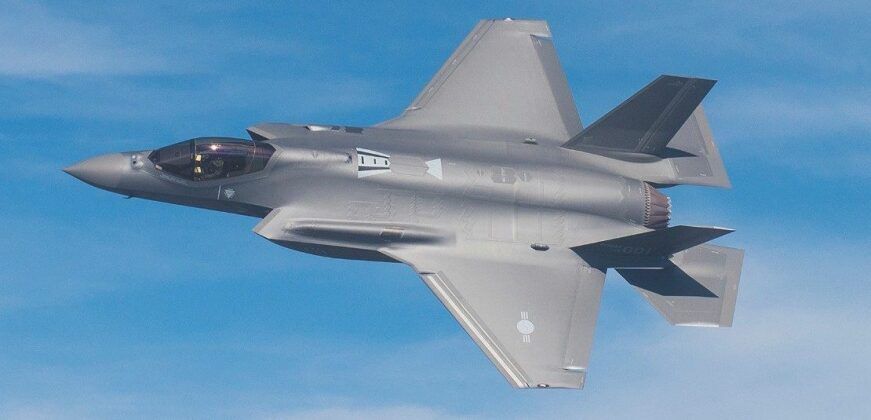
The F-35’s sensor fusion and distributed aperture system provide far greater situational awareness than the F-22’s own avionics, as does the aircraft’s combination of a significantly more sophisticated radar and an infrared search and tracking system - the latter a feature the F-22 lacks entirely. The tracking system allows the F-35 to lock onto the F-22’s heat signature while remaining radar silent, meaning its radar cannot be used to pinpoint its location. The F-35’s helmet mounted sights are perhaps its most significant advantage in visual range combat, and allow the aircraft to lock on to and engage F-22s at extreme angles using AIM-9X visual range missiles. Although the F-22 also carries the AIM-9X, as the only 21st century fighter to lack helmet mounted sights the fighter must be pointed at its target to engage. This advantage is expected to more than compensate for the F-22’s greater manoeuvrability, and combined with the F-35’s other avionics advantages will likely give it a major edge in visual range combat. South Korea’s air force is widely considered the most capable among U.S.-allied states, with its F-35 pilots enjoying among the highest training hours in the world, which places its fighters in a strong position to claim major victories in the exercises.
