
South Korea Launches First Hypersonic Glide Vehicle Five Years Behind the North
Military Watch Magazine Editorial Staff
Moments of Impact During South Korea’s First Hypersonic Glide Vehicle Test Launch
South Korea has conducted the first test launch of an indigenously developed hypersonic glide vehicle (HGV), with President Lee Jae Myung observing the trial before inspecting the country’s Hyunmoo-5 ballistic missile. The October 8 test was intended to verify key technologies required for a manoeuvrable hypersonic weapon, including high-temperature protection, guidance and control, and the ability to change trajectory at low altitude. The announcement comes amid heightened tensions with North Korea, which first flew its own hypersonic glide vehicle over five years earlier in September 2021. The northern Korean People’s Army has since brought multiple types of missiles with such vehicles into service, leaving adversaries scrambling to rapidly develop similar capabilities.
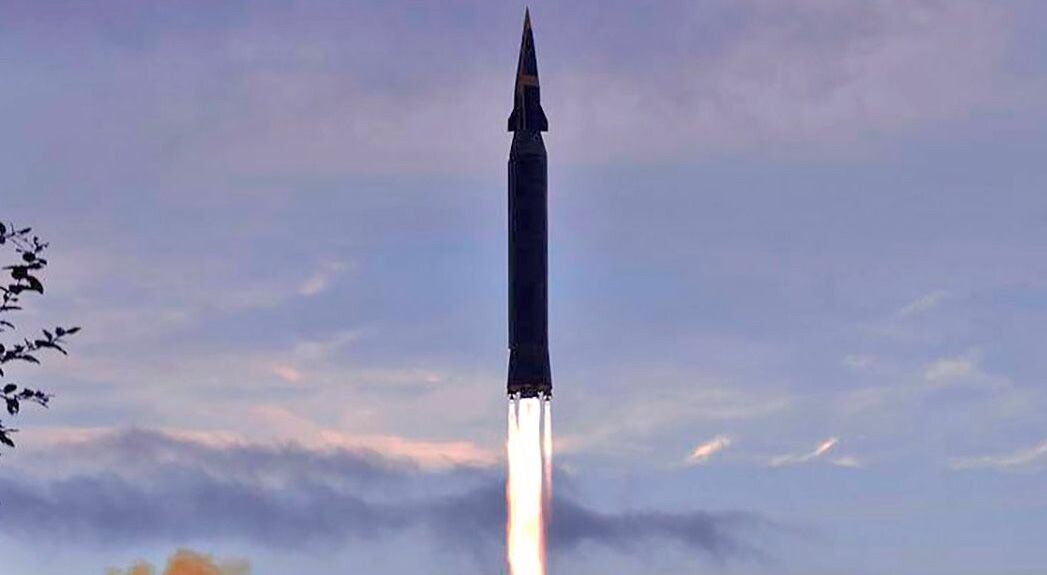
According to a statement from the presidential office, the South Korean vehicle successfully separated from its booster after reaching the planned altitude, completed its intended flight under hypersonic conditions and struck its designated target. Following separation, it descended to a lower altitude and performed irregular manoeuvres in both the vertical and horizontal planes. The South Korean government described the test as an important step towards developing a new capability to strike strategically important targets across the Korean Peninsula. The value of hypersonic glide vehicles was first demonstrated in high intensity combat in March 2026, when Iran fired the Fattah 2, which integrates one such vehicle, against high value targets in Israel. The Iranian missile program is thought to have benefitted from North Korean technology transfers, and is the first with a hypersonic glide vehicle to have been tested against an advanced air defence network.

Hypersonic glide vehicles use rocket boosters to accelerate to high speeds and altitudes, before separating and gliding through the upper atmosphere. Unlike a conventional ballistic missile, whose trajectory follows a more predictable arc after powered flight, a glide vehicle can manoeuvre during its unpowered flight, potentially complicating an opponent’s ability to predict its trajectory and organise an interception. Achieving these capabilities requires materials capable of withstanding extreme aerodynamic heating, alongside guidance systems able to function under demanding flight conditions. South Korea’s announcement specifically highlighted the testing of ultra-high-temperature-resistant materials and the vehicle’s guidance and control systems. Its reported manoeuvres at low altitude were also a central element of the trial. Further trials are expected to establish how consistently the system can perform under different flight conditions and against representative threats.
