
Singapore’s Customised F-16s Integrate New Israeli Electronic Warfare Pods in U.S. Led War Drills: How Close Are Defence Ties?
Military Watch Magazine Editorial Staff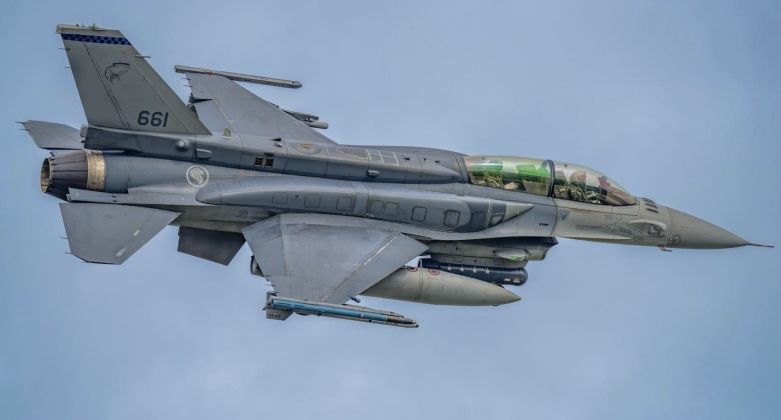
Singaporean Air Force F-16D Fighter
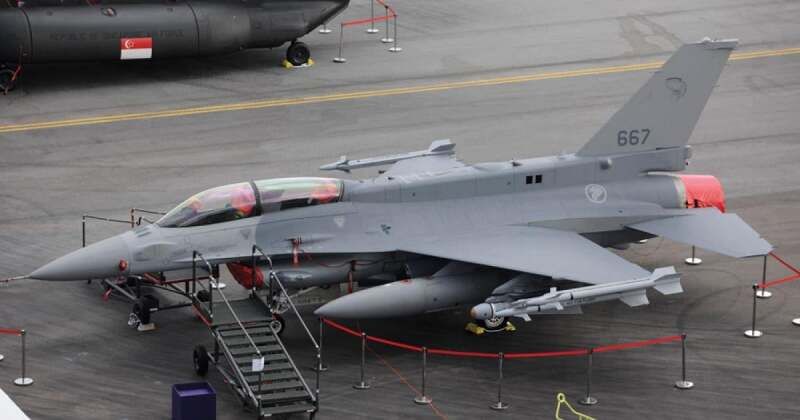
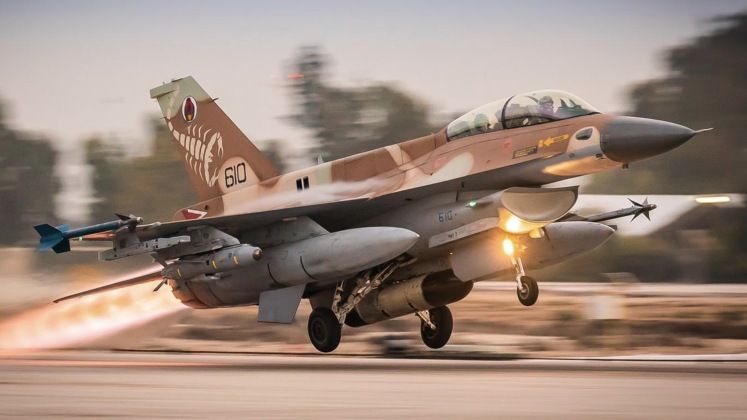
Singaporean Air Force F-16D fighter jets participating in the U.S.-led Red Flag military exercises in Alaska have been seen integrating the Israeli ELTA EL/L-8212 airborne self-defence pod. Singaporean F-16s are some of the most heavily customised in the world, and although based on the standard F-16C/D Block 52 design, they incorporate a unique combination of U.S., indigenous, and Israeli-developed systems. While the exact configuration of their avionics remains classified, defence analysts believe the aircraft employ mission computers, software architecture, electronic warfare suites, and communications systems that differ significantly from standard U.S. Air Force F-16s. Israeli involvement in Singapore’s combat aviation dates back to the country’s independence, when Israel played a central role in helping to establish the Singapore Armed Forces and develop its air force.
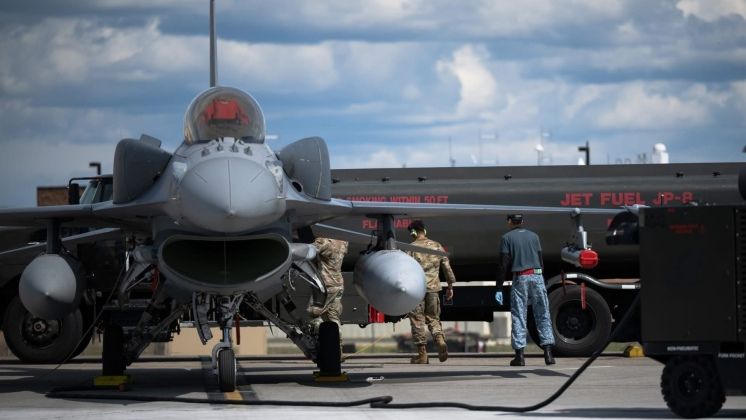
The EL/L-8212 is intended to enhance the survivability of fighter aircraft operating in dense radar-guided threat environments by detecting, identifying, and actively jamming hostile radars associated with both fighter aircraft and surface-to-air missile systems. Weighing 100 kg, it adopts a low-drag design and is similar in shape to an air-to-air missile, so it will not have a significant impact on the aircraft's flight performance. The pod is specifically optimised for small tactical fighters such as the F-16, while its larger counterpart, the EL/L-8222, is intended for larger aircraft including the F-15. The EL/L-8212 is compact enough to be mounted on outboard weapon stations or even on stations normally reserved for air-to-air missiles, preserving the aircraft’s primary underwing pylons for fuel tanks or weapons.
A key feature of the EL/L-8212 is its integrated Electronic Support Measures receiver, which autonomously detects and analyses hostile radar emissions. The system intercepts incoming signals, identifies the type of radar being used to emit them, classifies the threats, prioritises multiple emitters, and automatically selects the most appropriate jamming technique without pilot intervention. This rapid threat processing is particularly valuable during high-intensity combat, where pilots may be simultaneously managing air combat, navigation, and weapons employment. The pod’s high radio-frequency sensitivity, high effective radiated power, and broad repertoire of jamming techniques, allow it to counter multiple simultaneous threats.
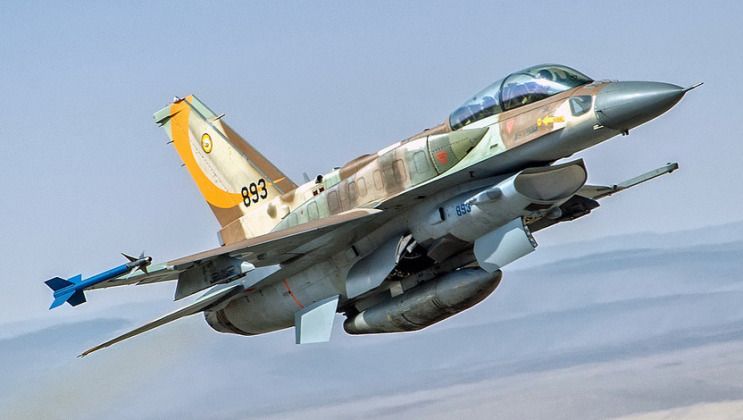
Unlike electronic warfare pods carried by dedicated escort jamming aircraft such as the U.S. Navy EA-18G and Chinese PLA Air Force J-16D, the EL/L-8212 is designed as a self-protection system, meaning it’s purpose is not to suppress an enemy air defence network, but to protect the carrying aircraft against immediate threats. It provides defence against both air-to-air intercept radars and surface-to-air fire-control radars, significantly improving survivability when operating inside contested airspace. This is particularly important for fourth generation fighters like the F-16 which lack stealth capabilities. The pod employs sophisticated active electronic attack techniques to degrade or defeat enemy radar systems. Although the exact methods remain classified, modern self-protection jammers of this class typically use combinations of noise jamming, deception jamming, range gate pull-off, velocity gate pull-off, and false target generation to confuse radar tracking systems and reduce the probability of successful missile engagement.
Alongside Turkey, Singapore is one of Israel’s closest and most enduring defence partners outside of the Western world, with cooperation extending across military doctrine, training, intelligence, defence technology, arms procurement, cyber security, and research and development. Israeli military advisers secretly arrived in Singapore just months after the country gained independence, and played a major role in establishing the early structure, doctrine, training methods, and organisation of the Singapore Armed Forces. The forces’ operational philosophy of maintaining a highly trained citizen army backed by advanced technology bears significant similarities to the Israeli model. Defence-industrial cooperation has also been exceptionally deep, with Singapore having procured a wide range of Israeli equipment over several decades. Israel reportedly assisted with the development of Singapore’s air command-and-control network and the integration of Israeli systems onto aircraft acquired from the United States and elsewhere. The relationship also encompasses intelligence sharing and professional military exchanges, with the defence and intelligence establishments of both countries routinely exchanging information, while Israeli officers have served in advisory or staff roles within the Singaporean Ministry of Defence.
