
Saudi Envoy Confirms Continuing Talks Over S-400 Acquisition; A Game Changer for the Arab Kingdom’s Air Defence
Military Watch Magazine Editorial Staff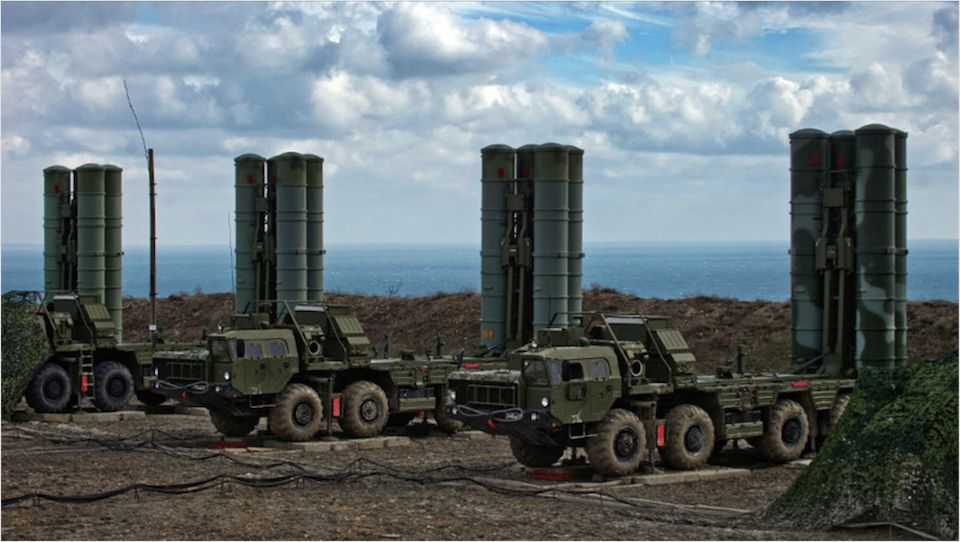
S-400 Surface to Air Missile Batteries
Saudi Arabia has been one of several longstanding Western clients which have in recent shown a growing interest in acquiring Russian military equipment. In particular the S-400 surface to air missile system, one of Russia’s most prolific defence experts with capabilities unparalleled in the rest of the world, has drawn considerable interest from the Arab Kingdom - alongside Qatar, Bahrain, Morocco and Turkey, all states which were firmly in the Western sphere of influence during the Cold War. With U.S. made Patriot missile batteries underperforming considerably against very basic makeshift Yemeni ballistic missiles, and Saudi Arabia facing a potential threat of attack by far more advanced platforms in considerably greater numbers in the event of war with its longstanding adversary Iran, the S-400 is likely the most effective means for the country to defend its airspace. Reports that Riyadh is reconsidering plans to acquire the THAAD missile system from the United States, a platform more costly than the S-400 but far less versatile and sophisticated, could well speed up Saudi plans to acquire the S-400.
An agreement on deliveries of the S-400 to Saudi Arabia was reached in 2017, though the exact details of the acquisition and the delivery dates are still under discussion. Whether Saudi variants of the S-400 will be equipped with the 40N6 hypersonic missile, with over the horizon firing capabilities and the ability to engage targets at fifteen times the speed of sound, also remains to be seen - though Russia’s willingness to sell this game changing munition to Western allies is also in question. Saudi Envoy to Russia Raid bin Khalid Krimli stated regarding negotiations over the S-400 system: "The discussion is underway, it is not over yet.” The United States for its part has threatened potential clients for the S-400 with economic sanctions under the Countering American Adversaries Through Sanctions Act (CAATSA), though whether the U.S. would risk issuing such threats against the Arab Kingdom given both its considerable influence in Washington and its importance as a destination for American exports, arms in particular, remains to be seen.
The S-400 is capable of engaging up to 80 aircraft, ballistic missiles and cruise missiles simultaneously in multiple combinations with up to 160 interceptor missiles. Its sensors reportedly allow it to detect advanced stealth aircraft such as the F-22 Raptor, while its hypersonic engagement speeds combined with its high precision make it ideal for engaging ballistic missiles. The weapons platform deploys a number of long range missiles including the 40N6, the 200km range 48N6E2 and the 250km range 48N6DM/48N6E3. The platform retains a 600km detection range, allowing batteries in Saudi hands to monitor air traffic across much of Iran, and it can engage aircraft at almost all altitudes from the upper atmosphere to 5 meters off the ground - allowing it to also function as a helicopter killer against high value targets.
