
Saudi Arabia Threatens Military Intervention to Prevent Qatari S-400 Acquisition; Why Doha Looks East to Defend Itself
Military Watch Magazine Editorial Staff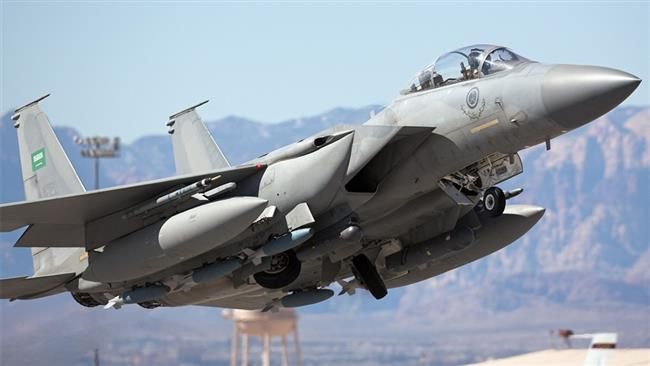
Saudi Arabian F-15SA Strike Fighter
As the blockade by Saudi Arabia and a number of its regional allies against the small neighbouring monarchy of Qatar enters its first year, Doha has vastly increased investments in its armed forces to deter military action by its neighbours. Alongside vast quantities of Western made arms, Qatar has acquired an advanced ballistic missile deterrent in the form of Chinese made HJ-400 short range missiles - capable of seriously threatening the population centres of its potential adversaries. More recently, Qatar has begun negotiations to acquire high end weapons systems which will facilitate a more effective defence of national airspace - including Su-35 air superiority fighters and S-400 long range surface to air missile batteries from Russia.
While the Qatari Air Force has acquired large numbers of Western made combat aircraft, including European medium weight Eurofighter and Rafale platforms and elite F-15E strike aircraft from the United States, it lacks an air superiority fighter capable of contending with the Saudi F-15C - leaving it at a distinct disadvantage in the event of an air war. Acquiring the Su-35 will provide the Qatari Air Force with the first air superiority fighter in its history, and the '4++ generation' super manoeuvrable aircraft far surpasses the older and less sophisticated F-15C in its combat capabilities. Even if Qatar were to acquire several squadrons of the Su-35 however, the military would still face an overwhelming numerical disadvantage against the Saudi air superiority fleet which is one of the largest in the world. As a result acquiring the Russian S-400, widely considered the most capable platform of its kind with a single system well within its limits to target and destroy entire squadrons of F-15 fighters simultaneously at long range, is an invaluable and irreplaceable asset to the country's defence. The Western Bloc for its part is both unwilling and unable to supply fighters with comparable capabilities to either the S-400 or the Su-35, and the result is that Russia's significant technological lead in the field allows it to penetrate markets long reserved for European and American producers alone.
Amid ongoing negotiations between Qatar and Russia regarding the acquisition of the S-400, French media has reported that Saudi Arabia has threatened military intervention against its neighbour to prevent it from acquiring the weapon. This report has come just two months after similar threats were made by Israel against its neighbour Syria, which was set to acquire the older S-300 from Russia. The French report claimed to cite a letter from Saudi King Salman to President Macron in Paris, in which the monarch personally expressed his 'deep concern' over the weapon's delivery and the country's intention to destroy the weapon before it becomes operational if required. With the Western Bloc perceiving a major threat from the S-400's proliferation, and having previously threatened economic sanctions and other serious consequences for potential customers such as Turkey and India, the Saudi King's letter to France could well have been an effort to prompt the Western powers to take action to prevent Qatar from acquiring the Russian air defence system.
Deputy Chairman of Russia's upper house Committee on Defence and Security, Aleksei Kondratyev noted that Russia intends to provide the S-400 to Qatar regardless of Saudi Arabian or Western opposition. He stated regarding the reasons why the Saudi King opposed such an arms sale: "It is clear that Riyadh plays a dominant role in the region, but Qatar gets an advantage by enhancing its armed forces due to the acquisition of Russian S-400 systems. Therefore, Saudi Arabia's tension is understandable." Longstanding Western defence clients seeking out Russian arms represents the gradual loss of what the lawmaker referred to as "a very lucrative regional market of weapons" for European and American producers, and alongside economic consequences this also reduces Western regional influence. The proliferation of Russian air defences has also been labelled a serious threat to the U.S. military's ability to project power and "dominate airspace" across the region, and grants Gulf states a greater degree of protection and autonomy after decades of close reliance on the West.With Saudi Arabia also considering acquiring the S-400, in light of the recent failures of its Western made air defence platforms against Yemeni missile attacks, Qatar's acquisition would lead Riyadh to almost certainly follow suite to prevent Doha from gaining an advantage in the event of a regional war.
