
Satan's Retirement; Russia to Scrap Iconic Soviet Era ICBMs Amid Induction of New Sarmat Hypersonic Platforms
Military Watch Magazine Editorial Staff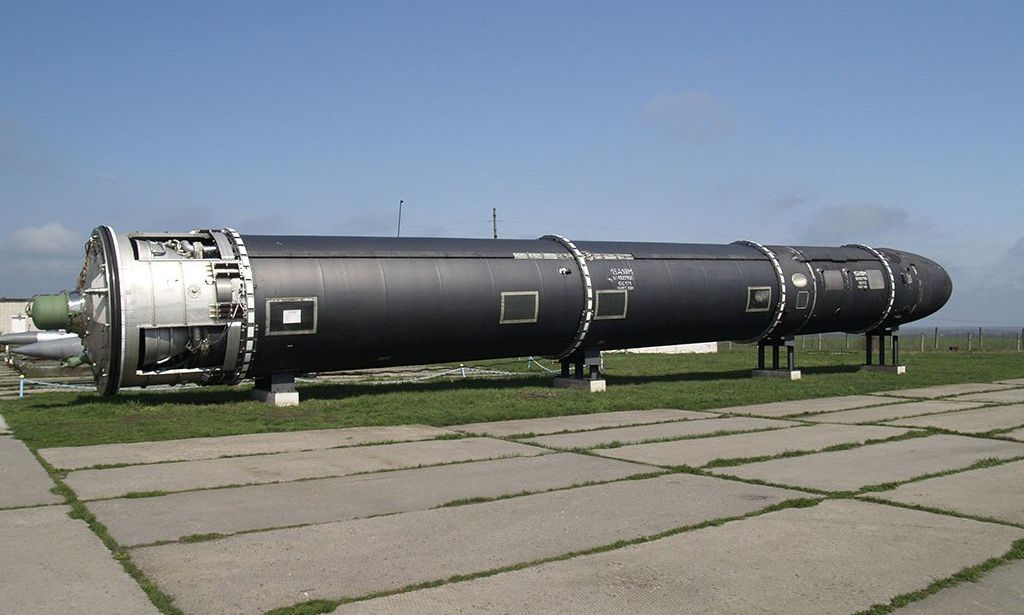
R-36 'Satan' Missile
Perhaps the most prolific intercontinental ballistic missile of the late Cold War, the R-36 Voevoda was inherited from the Soviet Union and remains the mainstay of Russia's long range nuclear deterrence capabilities. Known as the SS-18 'Satan' in the West, its initial induction into service was seen to give the USSR a significant advantage over the Western bloc - particularly when compared to the relatively limited capabilities of the much lighter U.S. Minuitmen missiles which carried just three nuclear warheads compared to the Satan's ten. In light of the recent announcement of the successful development of new hypersonic missile systems, namely the Sarmat and Avangard intercontinental ballistic missiles, Russia is set to begin retiring the older Soviet era platforms. While it is unlikely that Russia's arsenal will be comprised entirely of hypersonic platforms in the near future, the Satan's 44 year age and relatively limited capabilities even when compared to other more modern non hypersonic ICBM systems such as the RS-24 Yars has led the military to make plans for the platform's retirement.
Russian Deputy Defense Minister Yury Borisov stated regarding the future of the R-36: “It is at the end of its life span, and we are about to start discarding that missile. There is no doubt that by the end of Voevoda’s resource capabilities, we will get new Sarmat missiles." Six different variants of the R-36 have been developed for Russia's missile forces, and the models which will see retirement first remain unknown. Dubbed 'Satan 2' by the West, the RS-28 Sarmat referred to by Minister Borisov is set to prove near impossible to neutralise with any existing or planned missile defence systems. With Russian President Vladimir Putin staying that the new missile had no practical range restrictions, the Sarmat is also expected to be able to fly trajectories over the South Pole - bypassing all Western missile defence systems currently in service. Its induction has led the U.S. to accelerate its own hypersonic missile program.
