
S-400 Coming to Seoul? How South Korea Indirectly Acquires Cutting Edge Russian Air Defences
Military Watch Magazine Editorial Staff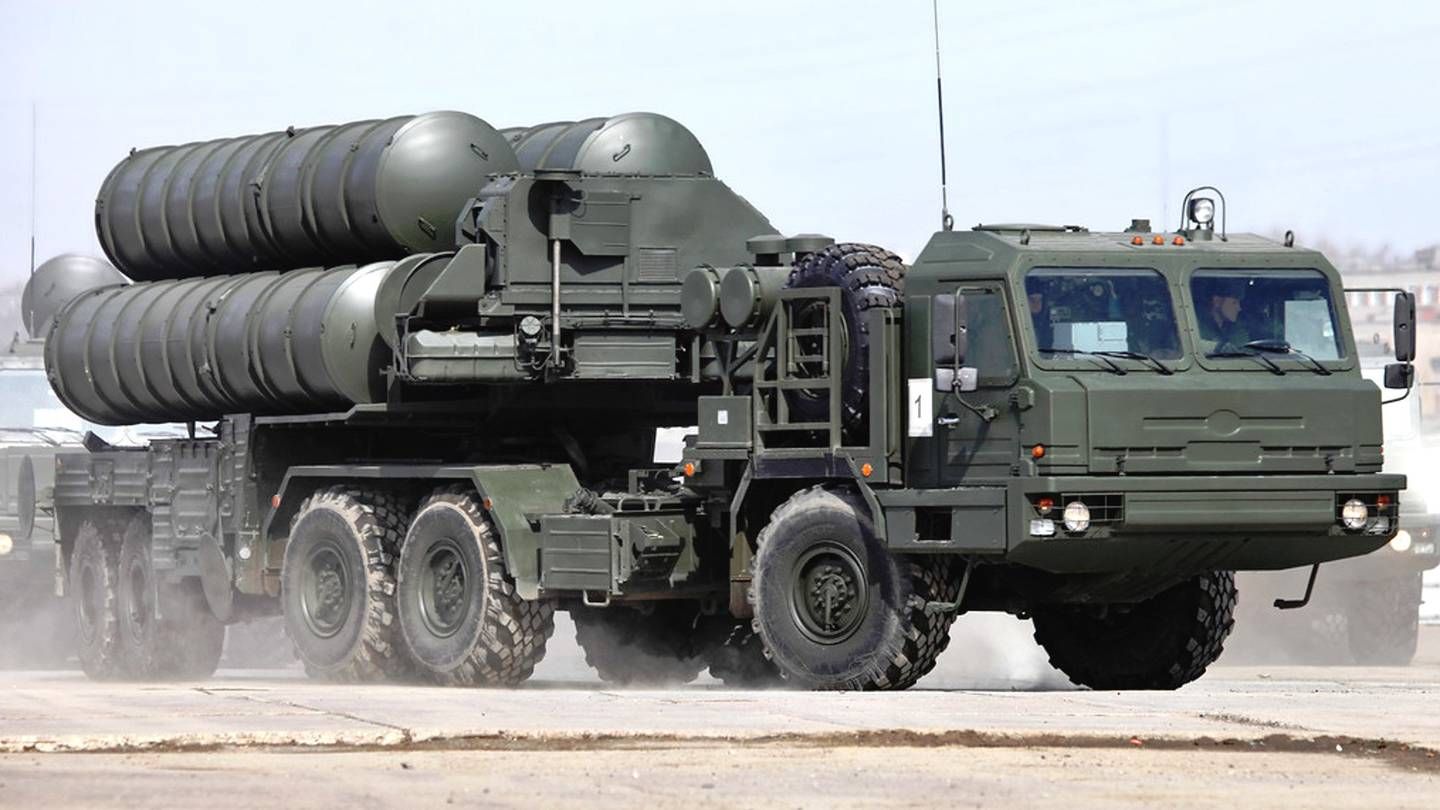
S-400 Surface to Air Missile System
A number of longstanding Western military clients have recently taken steps to acquire Russian made surface to air missile systems to provide an effective air defence capability. This has come as a result of the severe shortcomings of Western made air defence systems such as the Patriot missile battery, as demonstrated by its repeated combat failures when deployed in the Middle East by Israel, Saudi Arabia and the United States. The latest of these has been South Korea, which has long shown a strong and longstanding interest in Russian made aircraft and air defence systems but has been unable to acquire them due to pressure from Washington.
Following the end of the Cold War state of the art Soviet arms, from the Su-27 air superiority fighters to the T-90 battle tanks and even the hulks of Soviet aircraft carriers, became widely available for export to almost any state regardless of its geopolitical affiliation. South Korea showed interest in acquiring the S-300 air defence battery from Russia in the 1990s, which would not only provide it with a more capable long range anti aircraft system than any fielded by North Korea but would also provide an unparalleled security guarantee against missile attacks from the north. As a result members of the U.S. Congress in 1997 voiced deep concerns over the possible sale of the S-300 systems to South Korea, purporting that Seoul should as a U.S. ally instead purchase the American made Patriot system. They noted in particular that the acquisition of the Patriot would ensure interoperability with assets assigned to U.S. Forces deployed to Korea. "Considering the almost half century relationship between our two countries, and the closeness with which our troops train together, it would be most unfortunate for South Korean allies to procure a non U.S. air defense system," they stated.
Facing significant American pressure not to acquire the S-300, South Korea's military was forced to adopt a far more costly acquisition strategy. While the Patriot was incapable of fulfilling Seoul's defence needs, as recently demonstrated by its poor performance in the Gulf War against Iraqi missiles - themselves far less sophisticated than missiles in North Korean hands, acquisition of the multi billion dollar system was in effect compulsory due to the nature of South Korea's relationship with the United States. Alongside the Patriot, South Korea also sought to obtain some of the S-300's technologies without acquiring the system itself - thus avoiding Washington's reprimand. The Cheolmae II surface to air missile system was thus developed as a joint program between Russian and Korean defence firms. The system was designed to engage both aircraft and missiles, and was heavily based on the S-300 though it lacked many advanced capabilities which newer variants of the Russian system retained.
With North Korea fast modernising its missile forces and air defence capabilities, most recently entering its KN-06 into mass production with estimated capabilities similar to advanced variants of the S-300, South Korea has again sought Russian technologies to enhance its own air defence forces. With the United States having recently threatened to impose sanctions on a number of allied states which have considered acquiring Russia's S-400, Iraq and Turkey being among them, and committing to a worldwide campaign to undermine Moscow's arms exports, Seoul must again attempt to acquire Russian technologies at great cost for its own weapons system rather than purchase an S-400 battery directly. These technologies will be installed on the Korean M-SAM surface to air missile system.
According to Lee Choon Geun, a senior researcher at the Korean Institute of Science and Technology, South Korea's new air defence system “uses more stable technology” from the S-400 - a generation or more ahead of both the S-300 and KN-06. Richard Weitz, Director of the Center for Political Military Analysis at the Hudson Institute, wrote regarding the missile system's extensive use of Russian technologies developed for the S-400: “The M-SAM will use S-400 missile technology provided from the Almaz Antey Joint Stock Company, including proprietary information from the S-400’s multifunction X-band radar. LG Corp’s missiles’ guidance systems are expected to also use Russian design elements.” This ultimately provided Seoul with a means to acquire at least some of the S-400's much needed capabilities while avoiding drawing the ire of Washington.
