
S-400 Coming to Pyongyang? Russia Indicates Potential New Destinations for its Latest Air Defence Systems
Military Watch Magazine Editorial Staff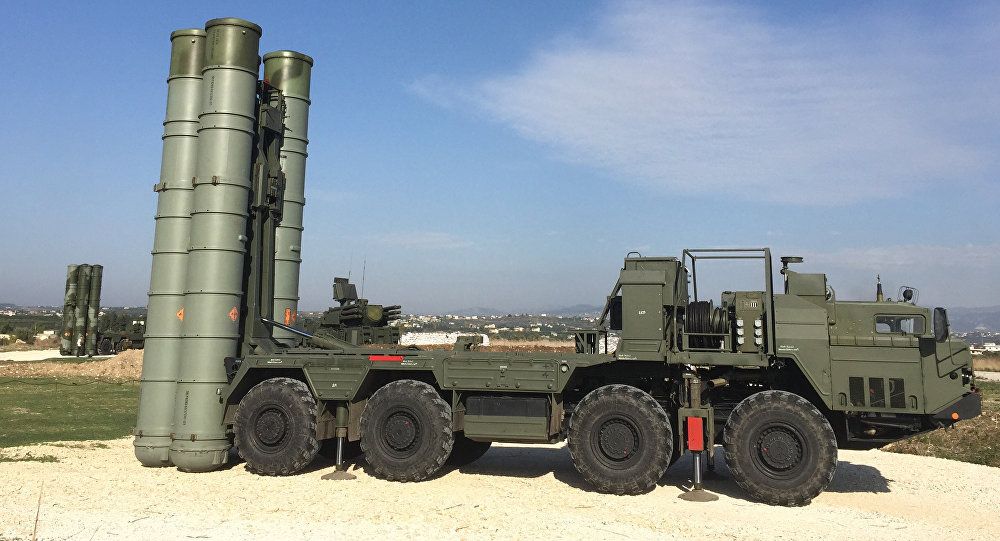
S-400 Missile Batteries
Sputnik
In the aftermath of the U.S., British and French joint missile strike on Syrian government and military facilities on the morning of April 14th, carried out in response to alleged Syrian chemical weapons attacks on militant controlled areas of the country which caused substantial civilian casualties, Moscow has as a longstanding defence partner of Damascus indicated its readiness to respond with a number of measures. While the Western powers’ extensive use of de confliction mechanisms ensured that no Russian service members deployed to Syria were threatened, and Russia as a result did not intervene directly in Damascus’ defence, Moscow nevertheless deemed the unilateral attack which lacked a UN mandate an act of illegal and unprovoked aggression.
While Syria’s armed forces have according to a number of reports proven successful in using their modernised Soviet made air defence systems to blunt the Western attack, intercepting just short of 70% of incoming cruise missiles, repeated infringements on Damascus’ airspace and attacks on its cities and bases have led Russia to consider providing its ally with more capable air defence systems. This has been accompanied by calls to provide other potential target states threatened with U.S. military intervention, namely North Korea and Iran, with similar upgrades to their own air defence capabilities to deter what Moscow deems further acts of Western aggression. Russia’s General Staff stated just hours after the Western missile strike: "A few years ago, we refused to supply S-300 air defence systems to Syria due to the request of some of our Western partners. Taking into account what happened, we consider it possible to return to this issue. And not only with regard to Syria, but with regard to other states.”
While Russia has sold its air defence systems widely to a number of states, including NATO members such as Greece and Turkey and longstanding U.S. military clients such as Saudi Arabia and Qatar, even providing a number of valuable technologies to South Korea to develop its own air defence system, the only states which have faced restrictions in their ability to acquire such systems have been Syria, Iran and North Korea, the former two due to Western pressure on Moscow and the latter due to UN sanctions against Pyongyang. Should Russia be reconsidering its provision of air defences to potential targets of future U.S. strikes, these three states are most likely to see the effects. Shortly after the statement by Russia’s General Staff a further statement was made by Alexander Sherin, first deputy chairman of the Russian parliament's lower house defence committee. He proposed that in response to the Western attack on Syria, Russia should consider delivery of more advanced air defence systems to Damascus, Tehran and Pyongyang to prevent further unilateral Western attacks. The deputy chairman further stated: "It is necessary to consider not only deliveries of missile defence systems, but also deliveries accompanied by those people who can train the personnel of these countries, so that Syria, Iran and North Korea could deploy these systems, if they wanted.”
With Syria’s antiquated air defence network relying on platforms such as the Soviet made S-125 and S-200, provision of platforms such as the S-300 would represent a significant upgrade for Damascus’ capabilities. Delivery of a more advanced system such as the S-400 however remains unlikely, due to both Syria’s low defence budget and inability pay for the expensive weapons platform and to Moscow’s close relationship with Tel Aviv which would perceive a significant threat to its security should its neighbour gain such capabilities. In the cases of Iran and North Korea however, provision of the S-400 in response to the Western attack on Syria remains a significant possibility. North Korea for its part already deploys the KN-06 air defence system with capabilities analogous to the S-300, with a number of analysts speculating that Russia could have had a hand in helping its East Asian neighbour develop the air defence system. North Korea and Russia signed an agreement on intelligence and air defence cooperation in 2015, and Russian state media reports have indicated that Pyongyang may well have already been provided with the S-300 as of 2017. Russia has meanwhile already deployed large numbers of air defence systems including the S-400 near its Korean border with coverage over the entire Korean Peninsula, a move undertaken in mid 2017 in response to growing threats of U.S. attacks against North Korea which Moscow stated were "completely unacceptable."
With Russia’s commitment to aiding North Korea in protecting its airspace already strong, further measures in response to Western strikes on Syria remain possible including directly providing Pyongyang with the S-400, BuK-M3, Pantsir and a number of other state of the art weapons platforms. As North Korean air defences are already highly formidable, only provision the most advanced Russian weapons systems such as the S-400 would constitute a significant upgrade to Pyongyang’s capabilities, superior to the S-300 and KN-06 batteries already deployed. With Russia having previously used attacks on its forces or those of its allies as pretexts to deploy its latest military hardware abroad, most notably deploying the S-400 and S-300V to Syria in response to an attack on its aircraft in 2015, Moscow is likely to use attacks on Syria as a pretext to further strengthen the defences of a number of its defence partners, North Korea included, against potential future Western air attacks.
