
Russian Tornado Rocket Artillery Systems Bombarding ‘Foreign Mercenaries’ at Lugansk Training Range
Military Watch Magazine Editorial Staff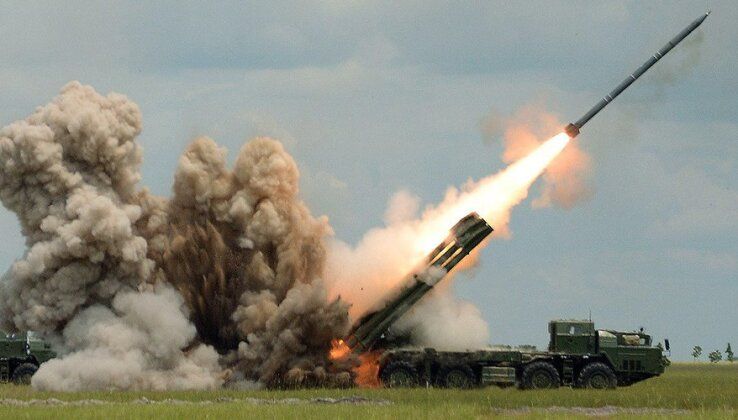
Missile Launch From Tornado Artillery System
The Russian Army has deployed Tornado rocket artillery systems for major strikes on the positions of foreign military contractors in Lugansk’s Nikolayevka region, with the targets having been located at a training ground there. Spokesman for Russia’s Battlegroup South, Vadim Astafyev, stated to this effect: "Crew of a Tornado-M multiple-launch rocket system struck an area where foreign mercenaries were training at a training ground in Nikolayevka in the Lugansk People’s Republic.” The Tornado system is deployed exclusively by the Russian Ground Forces, and has been in service since 2014 with a 200km engagement range and with both 122mm and 300mm rockets in the Tornado-G and Tornado-S variants. Although the rocket system which has gained the most prominence in Ukraine has been the TOS-1A using special thermobaric rockets, the less unique Tornado system using more conventional rockets has been used extensively on the frontlines and been produced in significant numbers over the past decade. It benefits from several times the engagement range and the ability to much more precise munition types.
The nature of the target of the latest strike remains uncertain, with Russian government sources having grouped both foreign volunteer units such as the Polish Volunteer Corps and the Georgian Legion with actual mercenary contractors which have been hired from across the world, as ‘foreign mercenaries.’ Units such as the Georgian Legion, which Moscow has accused of multiple serious war crimes, have often been priority targets for precision strikes. Such units have also been responsible for spearheading offensives into Russian held territory and at times even into internationally recognised Russian territory, with the Polish Volunteer Corps having done so in a May assault on Russia’s Grayvoron District. The presence of foreign volunteer units and contractors has been supplemented by deployments of active duty personnel from Western militaries and intelligence services, including a broad ‘stealth network’ coordinating operations and organising logistics, as well as frontline combatants such as the hundreds of deployed British Royal Marines who have been active on the frontlines from April 2022.
