
Russian Pacific Fleet Deploys Its Most Powerful Surface Combatant to China: How Capable Are Slava Class Cruisers?
Military Watch Magazine Editorial Staff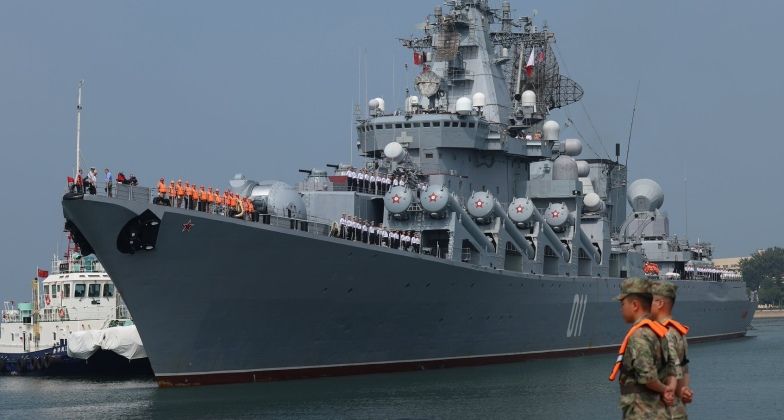
Russian Navy Slava Class Cruiser Varyag in Qingdao
Xinhua
The Russian Navy has deployed the Slava class cruiser Varyag to participate in Joint Sea-2026 exercises with the Chinese People’s Liberation Army Navy, with the warship arriving at the Chinese port of Qingdao on July 5. The exercise will be carried out in three phases which focus on force assembly, planning at the harbour, and maritime operations respectively, with both countries planned to conduct joint reconnaissance, air and missile defence, and maritime strike operations. The Varyag is one of three cruisers of its class to have served in the Russian Navy, with the 11,500 ton ships being among the heaviest surface combatants in the world, but having relatively limited capabilities due to their advanced ages.
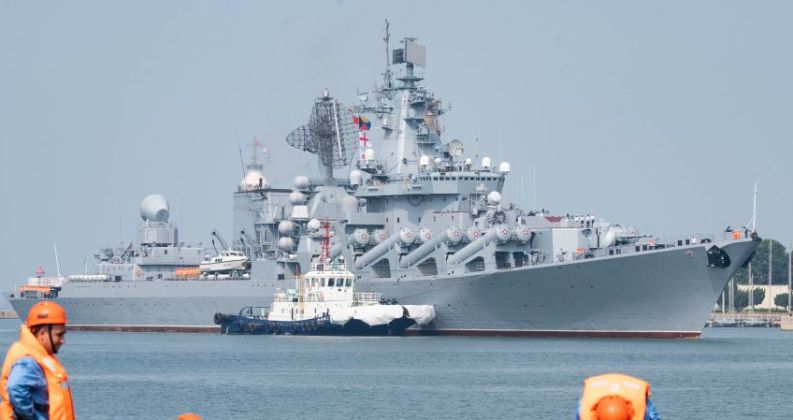
The first Slava class cruiser, the Moskva, was laid down in 1976 and commissioned into service in 1982, with a lack of significant modernisation and years of questionable maintenance considered primary factors contributing to the ship’s sinking on April 14, 2022, by Ukrainian forces. The Varyag was commissioned into service in 1989, and is built around an armaments suite of 16 P-1000 heavy supersonic cruise missiles designed for long-range strikes against major surface ships. The capabilities of these missiles are relatively limited compared to the Soviet P-700, and moreover compared to the modern Zircon, P-800 and Kalibr missiles developed in more recent years.
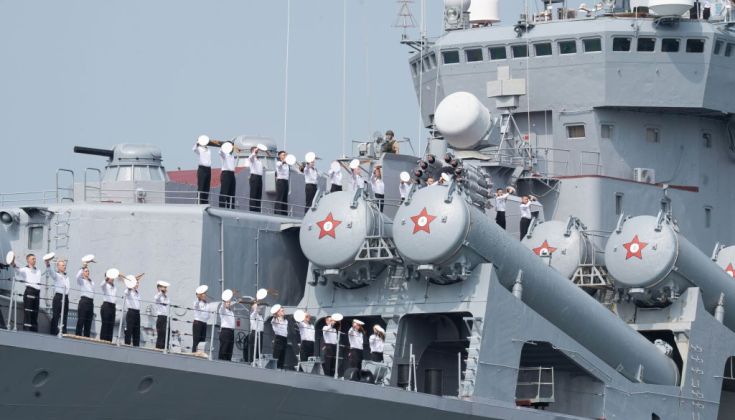
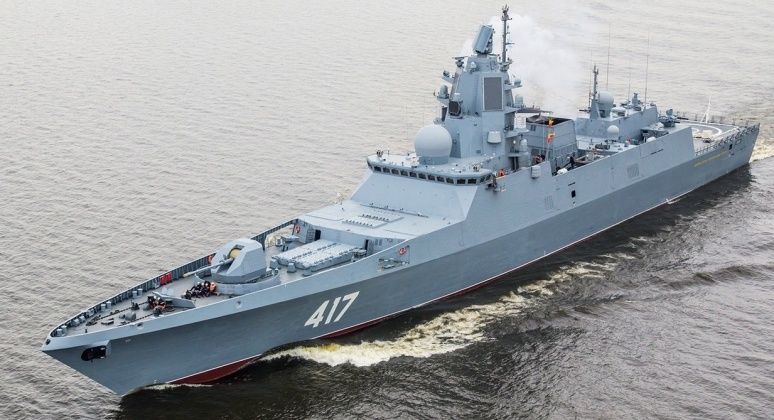
The Varyag integrated one of the most formidable air defence arsenals for its time, the backbone of which was made up of 64 launch cells for the S-300F air defence system. The system’s capabilities are highly constrained by the standards of the 2020s, particularly when compared to the S-400 system, although this has been integrated onto only a single ship in the Russian Navy, or compared to the HHQ-9 integrated onto modern Chinese destroyers. The warship’s limited capabilities reflect broader issues affecting the Russian surface fleet, as no new destroyers or cruisers have been laid down for the Russian Navy since the Soviet era, which leaves the service heavily reliant on ageing Soviet-built vessels. Russia’s most ambitious surface combat ship program, the Admiral Gorshkov class, itself suffered considerable difficulties and development delays despite being a less ambitious program that produced relatively small 5,000 ton ships, reflecting the much greater limitations faced by Russia’s post-Soviet defence sector.
It remains highly contested to what extent Slava class cruisers are survivable in modern combat situations, and the extent to which the sinking of the Moskva was a result of poor operational planning and maintenance, or a reflection of the design’s limitations. Unlike modern destroyers and cruisers designed around integrated digital combat systems and networked sensor fusion, the Varyag’s systems are more compartmentalised and less adaptable to the demands of high-end multi-domain warfare. The Varyag remains an impressive warship in terms of raw missile capacity, but when compared to the cutting edge Chinese Type 052D class destroyers that are operating alongside it, its limitations are particularly clear. The future of the Russian ocean-going surface combat fleet, including whether the country will proceed with a destroyer program or possibly even procure destroyers from China or North Korea, remains uncertain.
