
Russian Missile Frigate Fires Warning Shots Near British Waters: How Capable is the Admiral Grigorovich?
Military Watch Magazine Editorial Staff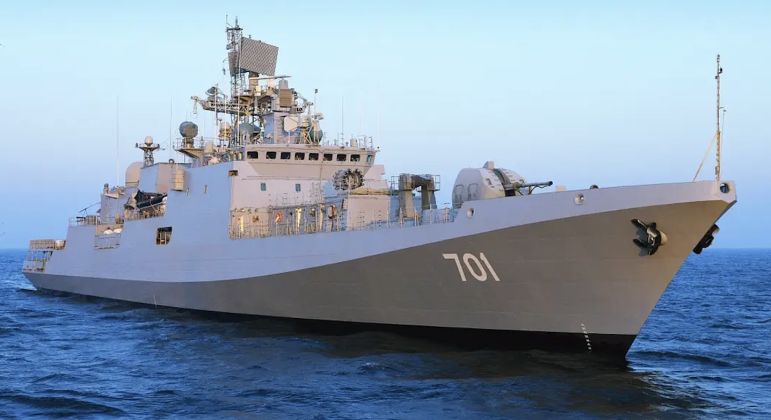
Russian Navy Admiral Grigorovich Class Frigate
The Russian Navy frigate Admiral Grigorovich fired warning shots near a British yacht in the English Channel, with the Russian Defence Ministry having reported that this was done after the yacht took “a dangerous course that would bring it into close proximity with the warship,” and after other options had been exhausted. The Admiral Grigorovich was sailing in international waters between the Isle of Wight and Normandy at the time of the incident near midday on June 16. The firing of signal flares and sounding of a siren reportedly failed to force the yacht to change course, with warning shots fired using small arms after the British vessel came within 150 meters of the Admiral Grigorovich. “Following this, the British-flagged yacht immediately altered course and moved away from the Russian warship,” the Defence Ministry stated, adding that the Russian crew “acted in strict compliance with international navigation rules and took all necessary measures to prevent an incident.”
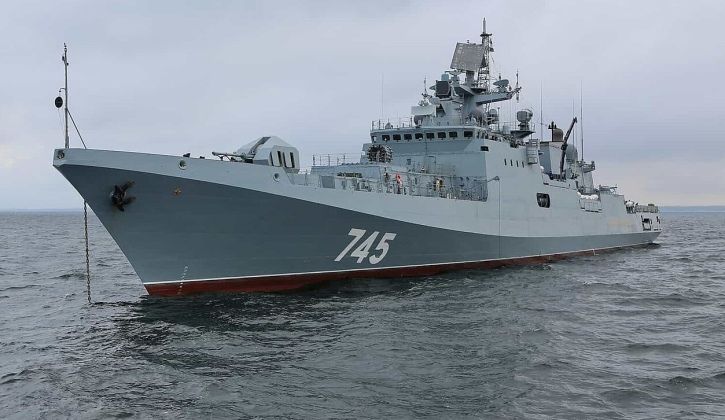
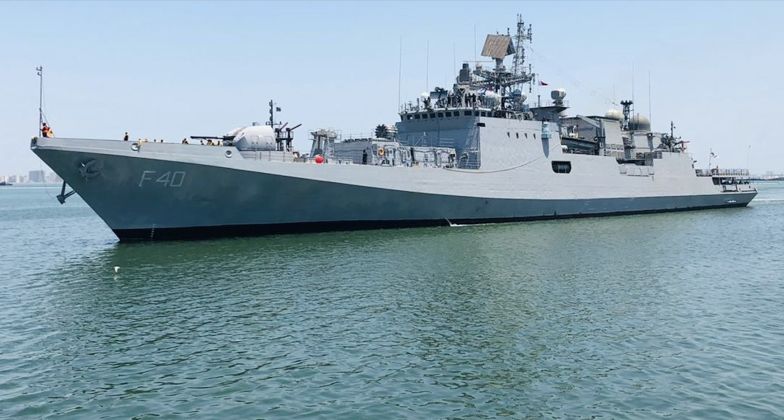
The Admiral Grigorovich class was developed as a lighter and less sophisticated counterpart to the Admiral Gorshkov class frigate, primarily due to major delays developing the latter design. Based on the earlier Talwar class frigates built for the Indian Navy, the design emphasises proven technology and relatively straightforward construction. Displacing around 4,000 tons, the class carries eight vertical launch cells for Kalibr or Oniks cruise missiles, a medium-range Shtil-1 air defence system with 24 missiles, a 100 mm main gun, torpedoes, anti-submarine rockets, and a Ka-27 helicopter. The Admiral Grigorovich class offers balanced multirole capabilities, but relies heavily on upgraded Soviet-era systems and lacks the advanced sensor integration found on newer warships. By contrast, the 5,400 ton Admiral Gorshkov class is a fundamentally new design incorporating modern stealth shaping, an integrated mast, advanced automation, and significantly more powerful combat systems.
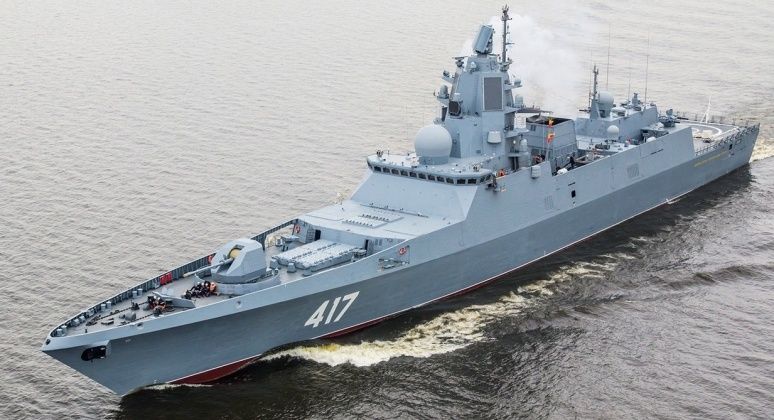
Air defence capability is one of the most significant differences between Russia’s two major frigate classes, with the Admiral Grigorovich class having a relatively limited engagement envelope and target handling capacity, while the Admiral Gorshkov employs the advanced Poliment-Redut air defence system with active radar-guided missiles, giving it the ability to engage numerous aircraft and missiles simultaneously over much greater ranges. Combined with its sophisticated phased-array radar, Gorshkov class ships offer substantially improved protection against saturation attacks. The sensor suite of the Admiral Grigorovich class is also considerably lesss advanced, and lacks the same degree of digital integration and network-centric capability. Nevertheless, its lower construction complexity and maintenance requirements, making it easier to produce and operate, which has been critical due to the serious limitations faced by the post-Soviet Russian defence sector. For routine patrol, escort, and regional presence missions, it provides an effective and cost-efficient capability, while the more sophisticated Admiral Gorshkov class is better suited for high-intensity operations against technologically advanced adversaries.
The engagement between the Admiral Grigorovich and the British Yacht occurred at a time of high tensions between Russia and the United Kingdom. The British Armed Forces have been extensively involved in hostilities on the ground in Ukraine, with their presence having been more widely acknowledged following the death of one serviceman, Lance Corporal George Hooley of the Parachute Regiment, in December 2025. In December 2022 British Deputy Chief of Defence Staff Royal Marines Lieutenant General Robert Magowan revealed that the Marines had been carrying out high risk operations alongside Ukrainian government forces from April that year. In January 2024 German Chancellor Olaf Scholtz confirmed that British special forces on the ground in Ukraine were providing vital support to facilitating launches of Storm Shadow cruise missiles against Russian targets. In May that year the head of the U.S. Special Operations Command General Bryan Fenton stated that the Pentagon had been learning about the ongoing war “mostly through the eyes of our UK special operations partners,” who he stated had been testing new approaches to modern warfare in on the ground in Ukraine.
