
Russian Lancet Loitering Munition One-Shot Kills Ukrainian T-72 Tank Near Kharkov in New Footage
Military Watch Magazine Editorial Staff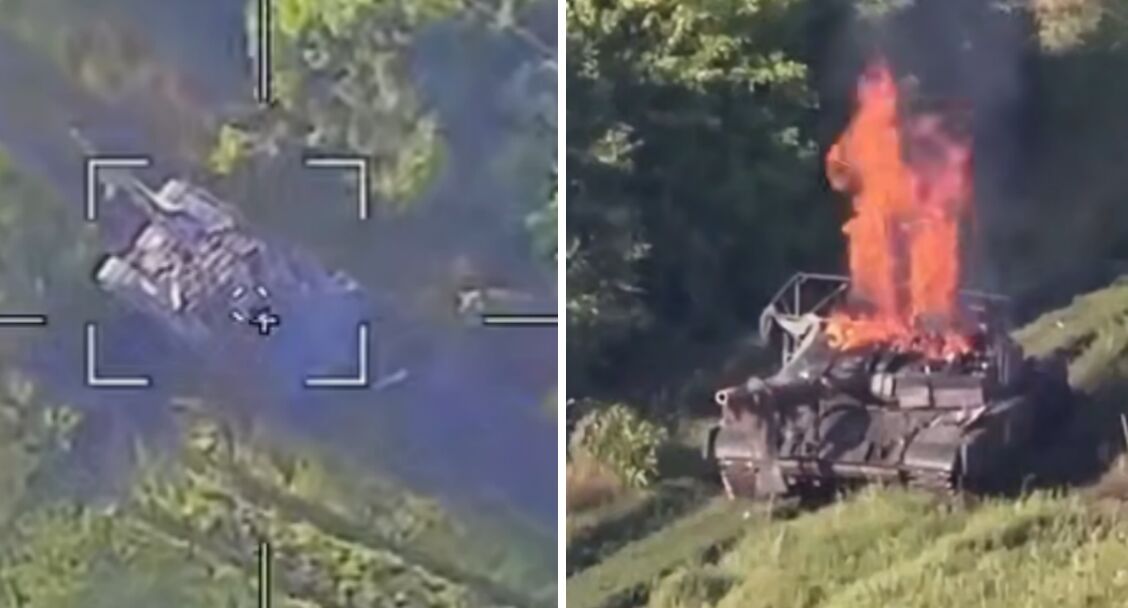
Ukrainian T-72 in Kharkov Before and After Lancet Strike
A Russian Lancet loitering munition has been used in an attack on a Ukrainian T-72 tank near the settlement of Sliznevo in Kharkov region, according to footage released by Russian unmanned systems manufacturer ZALA. The company said the strike was carried out by personnel of the Azimut Battalion of Russia’s 37th Separate Brigade of Unmanned Systems using a Lancet equipped with its IRRA intelligent guidance and target-recognition system. The footage shows the loitering munition approaching the T-72 and striking it, causing a fire and explosion which destroyed the vehicle. The strike highlights the emergence of drones and loitering munitions as the primary anti-tank weapons used by both sides in the theatre, as vehicle protection has increasingly emphasised defence against such strikes rather than the cannons of opposing tanks.
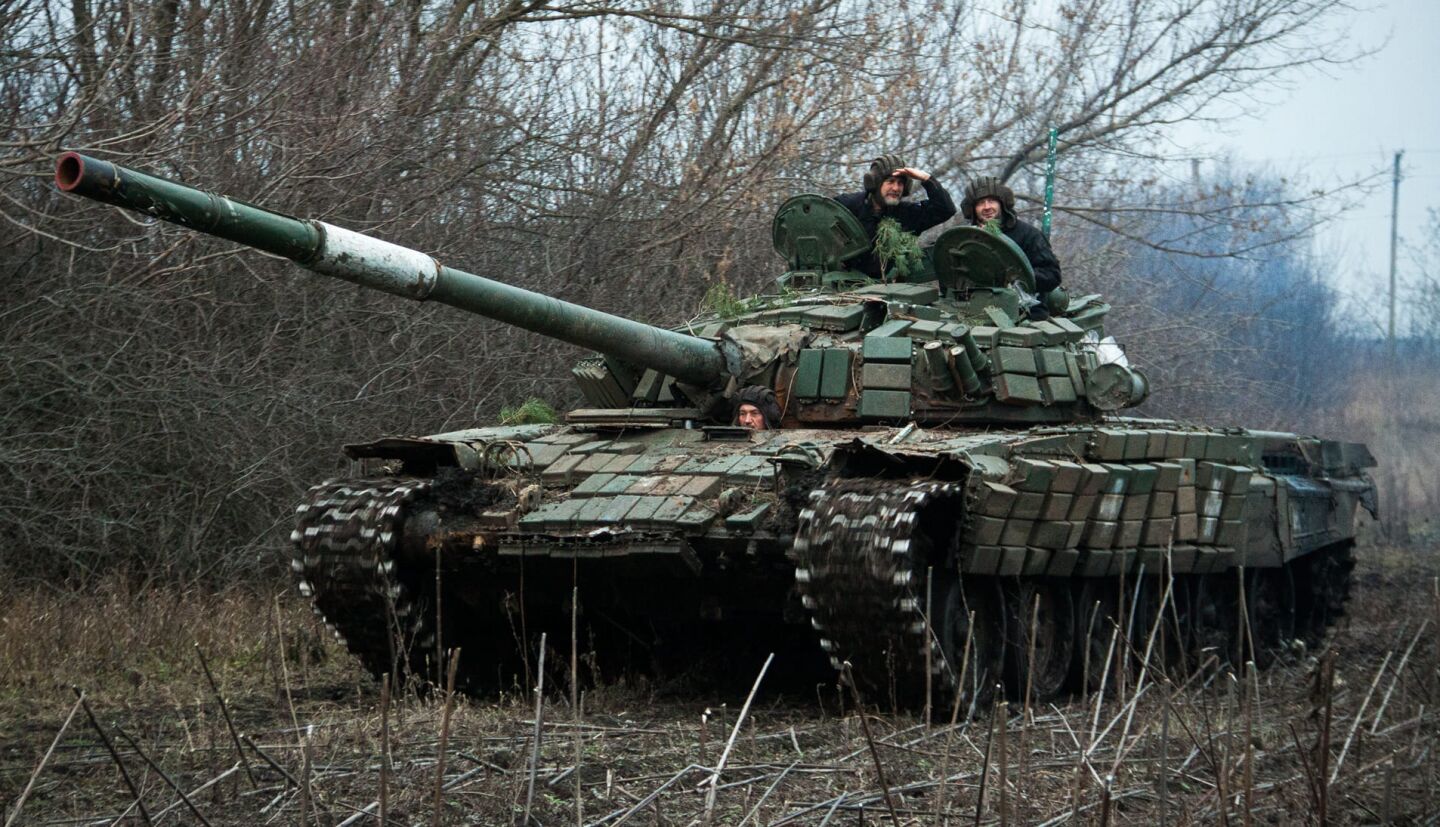
The Lancet is one of Russia’s principal medium-range loitering munitions and has become particularly prominent in the war in Ukraine. It is generally employed as part of a reconnaissance-strike complex, with reconnaissance UAVs locating and identifying targets before transmitting their position to the Lancet operator. This allows the relatively small munition to engage targets considerably farther from the front than would normally be possible using conventional small tactical drones. The weapon family is produced by ZALA Aero, part of the Kalashnikov group, and includes several variants. The Izdeliye-51 and Izdeliye-52 are among the principal versions, with the latter listed with a 3-kilogram warhead, a maximum communications distance of approximately 30 kilometres and an electric propulsion system.
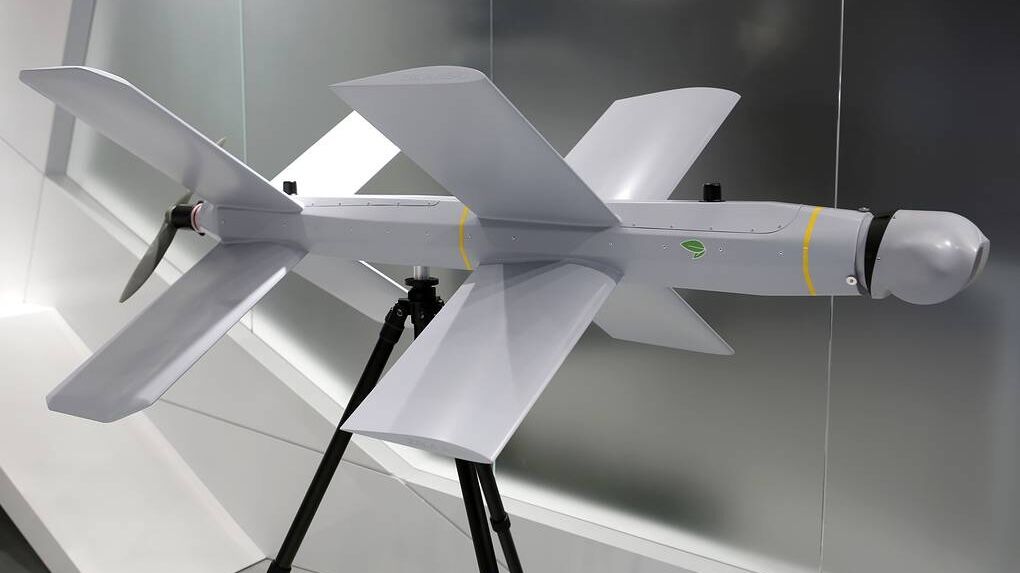
More recent versions of the Lancet have received substantial improvements in range, sensors and terminal guidance. At the DSA 2026 defence exhibition in Malaysia, Rosoboronexport said the upgraded export Izdeliye-51E-IR had a maximum range of 45 kilometres and a 5-kilogram payload, compared with 40 kilometres for the baseline version. The upgraded Izdeliye-52E-IR was reported to have a 35-kilometre range and a 3-kilogram payload, compared with 25 kilometres for the earlier version. Both upgraded systems were also offered with thermal-imaging capabilities. Russian forces have continued developing the Lancet beyond its original configuration in response to battlefield experience, with Ukrainian assessments having also reported the use of relay UAVs to extend the operational reach of the system to around 100 kilometres or more, although the exact configuration and conditions under which such ranges are achieved vary.
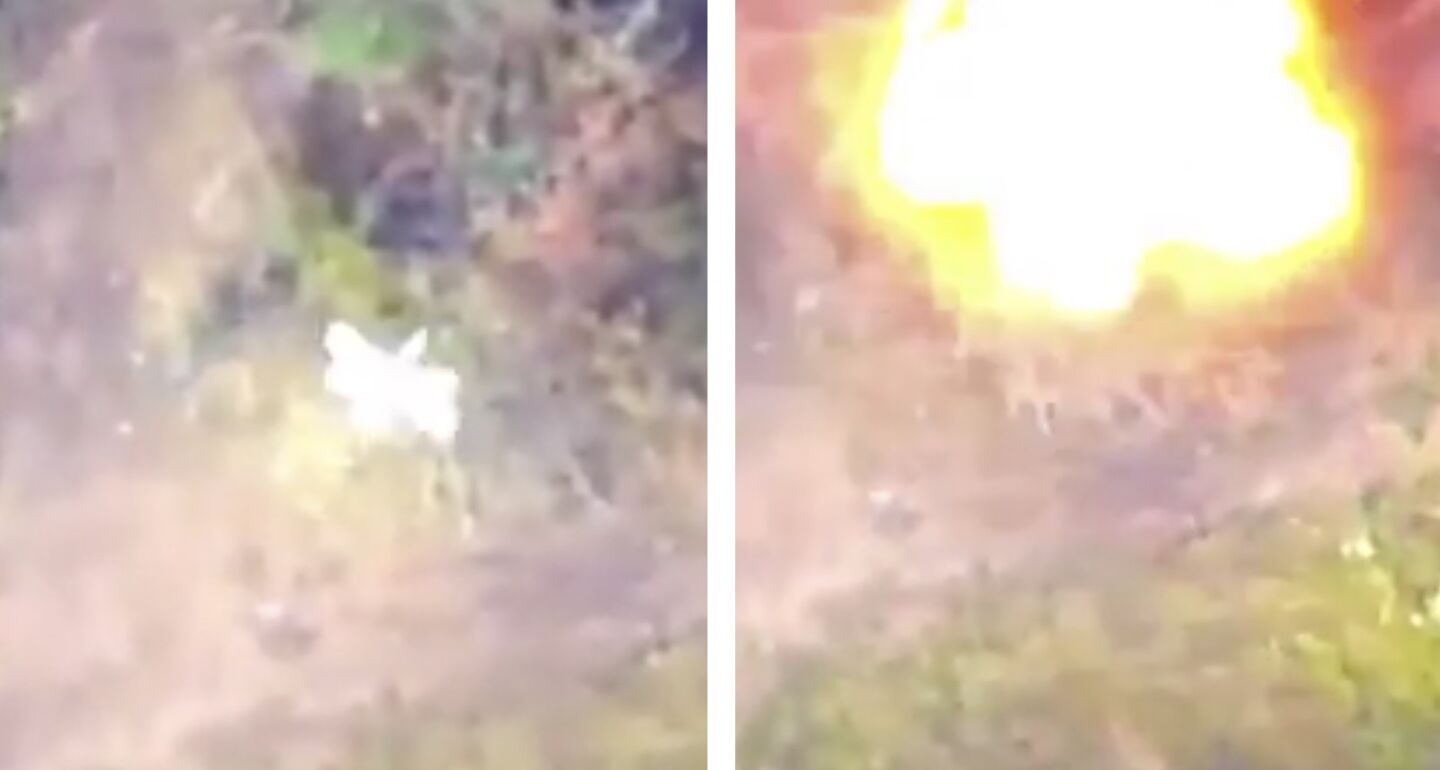
The Lancet’s relatively small warhead means that its effectiveness against heavily armoured vehicles depends substantially on the point of impact and the target’s condition. Against tanks, strikes against exposed components such as the engine compartment, turret roof, ammunition-related areas or external equipment can potentially cause serious damage even without penetrating the strongest sections of the armour. Earlier visually documented combat footage has shown Lancets striking both Soviet-designed tanks and Western-supplied armoured vehicles. The system is also increasingly being used against other kinds of targets including artillery pieces, air-defence systems, radar installations, command posts and other high-value battlefield equipment. Its combination of reconnaissance drones, precision terminal guidance and a relatively inexpensive expendable aircraft allows Russian forces to attack targets without exposing crewed aircraft or helicopters to the same degree of risk.
