
Russian Armed Forces Receive New Air Defence Systems; The Importance of a Multi Layered SAM Network
Military Watch Magazine Editorial Staff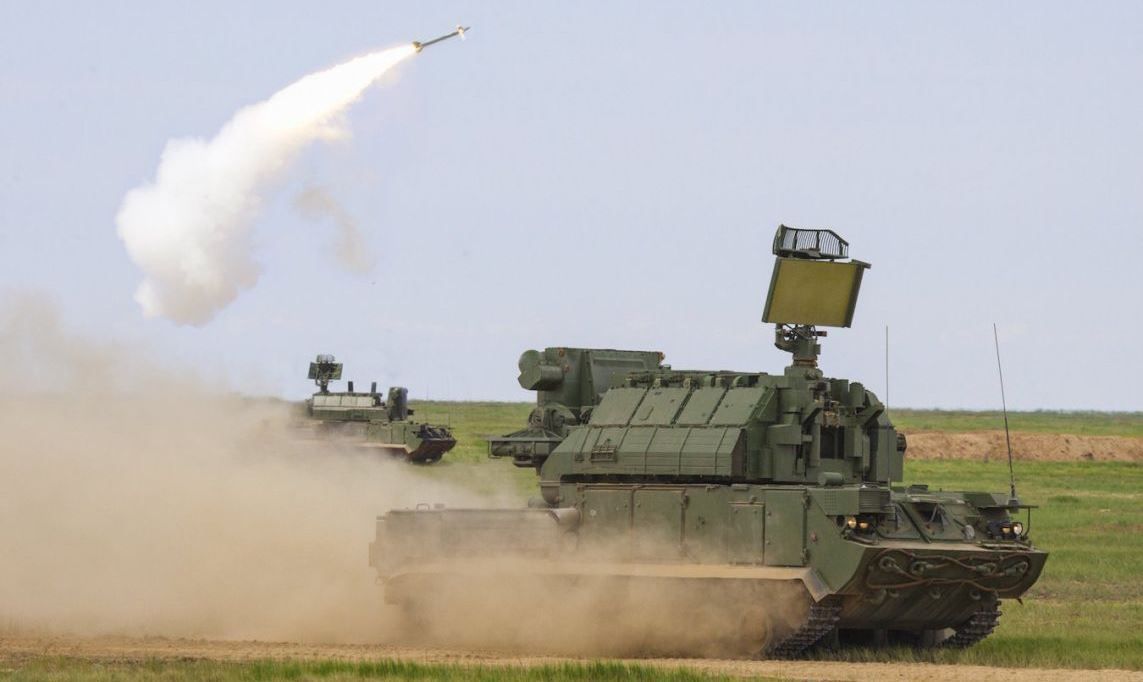
Russian Tor M2U Surface to Air Missile System
Speaking to reporters in early April, Russian Aerospace Forces Commander Col. Gen. Sergei Surovikin announced that the military was set to receive three new regiments of S-400 Triumph surface to air missile systems by the end of 2018. Other weapons systems including advanced variants of the S-300V and the short ranged Pantsir combat vehicles were also set to enter service. "Modern S-400 Triumf, S-300 Favorit air defense systems, Pantsir-S anti-aircraft missile and gun systems are operational in anti aircraft missile troops of the Russian Air Force. In 2017 only, four anti-aircraft missile regiments were re-equipped with S-400 Triumf. Another three S-400 will enter service of the Russian Aerospace Forces in 2018,” the General stated. He further noted that Moscow and Russia’s central industrial district were currently protected by five anti aircraft missile regiments, all equipped with S-400 systems.
Russian and Soviet aerospace forces have long prioritised the defence of the capital, and only after Moscow was fully covered by Russia’s latest surface to air missile system did the country begin exporting its S-400 surface to air missile batteries. A growing number of orders from across the world, including China, Turkey, Saudi Arabia, Qatar and Algeria among others, has forced Russia’s Almaz Antey Corporation to produce S-400 batteries rapidly to meet both domestic and foreign demand. While China was the first export client to receive the S-400, a number of export clients have requested a timely delivery due to various security threats - most notably Turkey for which Russia has considerably speeded up the delivery of the weapons system. Further orders from India, Iraq and a number of other states are expected in the near future, and the proliferation of the formidable air defence system has become so widespread that the United States has deemed it a significant threat to its ability to project power abroad - responding by threatening economic sanctions against parties which purchase the S-400.
Alongside the S-400, a number of complementary weapons systems are also set to be deployed by the Russian armed forces by the end of 2018 to strengthen the country’s air defence network. The S-300VM, a long range platform closely related to the S-400 but specialised in an anti missile role, is set to continue to enter service. The platform has already been deployed to protect Russian forces in Syria, complementing S-400 platforms already deployed there. The Pansir, a shorter ranged platform, is also set to continue production. The highly mobile air defence combat vehicle is equipped with both autocannons and missiles, and Russia’s armed forces have indicated that it could well be armed with hypersonic missiles in the near future for more effective and longer ranged strike capabilities. The Pantsir system has already been combat tested extensively in Syria, and serves a complementary role to longer ranged air defence platforms. Other medium and short range systems such as the Tor and the new BuK-M3 will also be inducted into Russia's armed forces, and these systems will be fielded alongside longer ranged platforms to form an integrated multi layered surface to air missile network - very likely the most difficult in the world to penetrate. The addition of the S-500 in 2020, a more advanced long range platform able to strike advanced stealth fighters, ballistic missiles and even near space satellites, will further strengthen this network - which will be relied on to intercept all manner of aerial targets threatening Russian territory. Such a defensive network is both more versatile and far more cost effective to develop and deploy than a large combat aircraft fleet would be to provide an equivalent level of protection, and takes much of the burden off Russia's Air Force allowing it to perform roles other than air defence in the event of war. Russia's air defence missile network thus remains one of the country's most formidable assets today - one which neighbouring China and North Korea have both modelled their own air defence networks on and acquired large amounts of Russia hardware in an attempt to replicate.
