
Russia’s New Yak-130M Lightweight Fighter Makes First Flight: How Capable Is It?
Military Watch Magazine Editorial Staff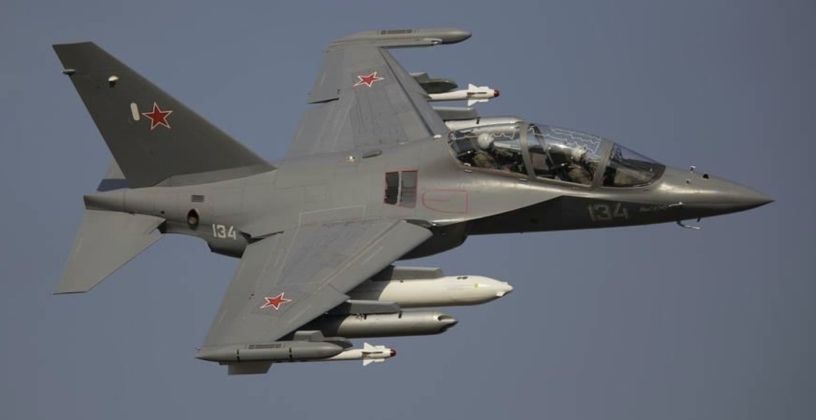
Yak-130 Fighter-Trainer
The Russian Yak-130M light fighter and trainer was confirmed on June 25 to have performed its first flight, with the aircraft expected to be procured in significant numbers to equip the Russian Aerospace Forces and the services of multiple foreign clients from the early 2030s. “The debut flight of the Yak-130M aircraft prototype took place at the Irkutsk Aviation Plant, a subsidiary of the Yakovlev Aircraft Enterprise. The aircraft was piloted by the crew of 1st Class Test Pilot Alexander Guskov and Distinguished Test Pilot Andrey Voropayev," the press office of the state technology conglomerate Rostec reported. “The flight plan was implemented in full and there are no issues with the aircraft," it added, elaborating that the flight lasted approximately 50 minutes at altitudes of up to 2,000 meters and at speeds of up to 600 kilometres per hour (Mach 0.49).
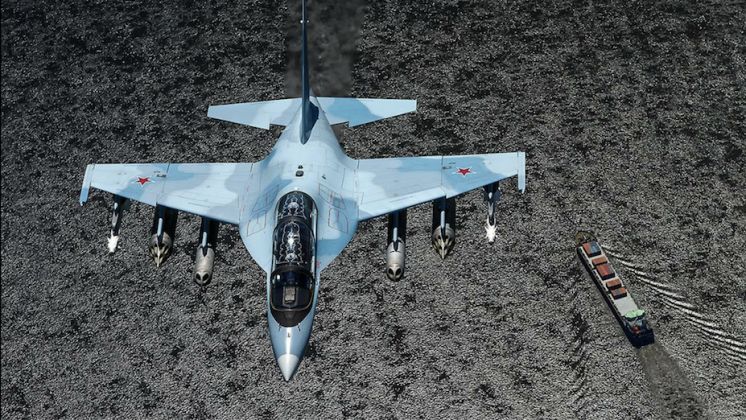
The upgraded Yak-130M is reportedly significantly more sophisticated than the baseline Yak-130, with a modern active electronically scanned array radar, new avionics, and comparability with new air-to-air and air-to-surface weapons being among its major achievements. “The upgrade will make it possible to fully address training and combat tasks in any weather conditions, day and night at the level of modern aircraft platforms. The Yak-130M’s combat objectives include destroying ground and aerial targets, among them heavy-class unmanned aerial vehicles,” the press office quoted United Aircraft Corporation CEO Vadim Badekha as saying. Russian Deputy Industry and Trade Minister Gennady Abramenkov asserted that the aircraft has “high potential for addressing a broad range of tasks in the customer’s requirements.”
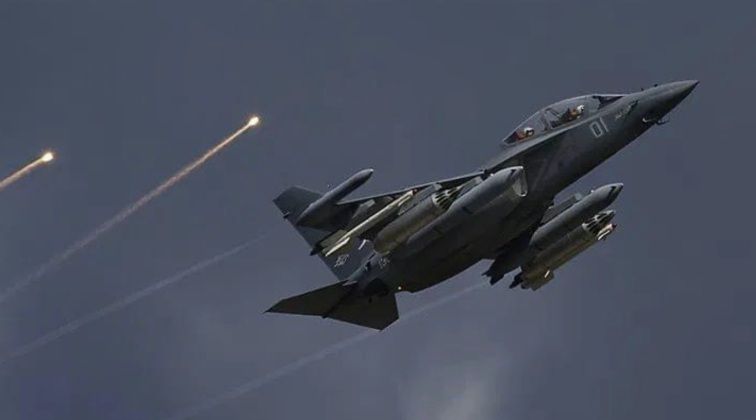
The Yak-130 was developed in the 1990s to replace the aging Soviet L-39 as the armed forces’ primary trainer, and was optimised to prepare pilots to operate ‘4+ generation’ and fifth generation fighters such as the Su-30SM and Su-57. The aircraft first flew in 1996 and was designed to replicate the handling characteristics of modern combat aircraft through a sophisticated digital fly-by-wire control system. This allows instructors to program the aircraft to mimic the flight characteristics of various fighters, enabling student pilots to train for advanced aircraft without the cost of operating frontline fighters. At the time, this was one of the most advanced training concepts in the world.
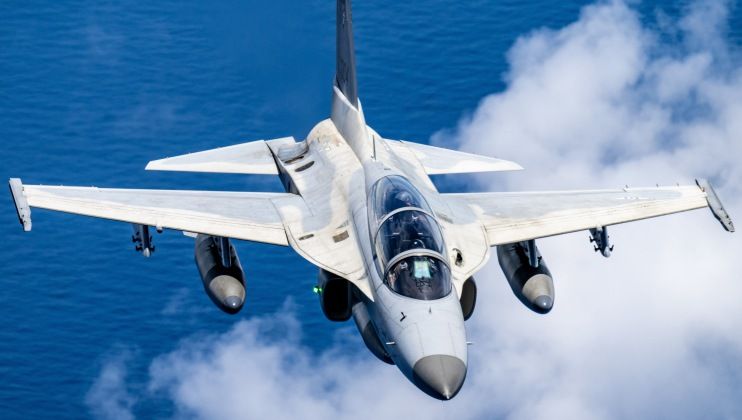
A key feature of the Yak-130 is its role as a Lead-In Fighter Trainer (LIFT). Rather than serving as a basic trainer, the Yak-130 bridges the gap between elementary jet training and operational conversion onto frontline fighters. Its cockpit features multifunction displays, hands-on-throttle-and-stick controls, and modern avionics that closely resemble those found in contemporary combat aircraft. This significantly reduces the amount of expensive training required on operational fighters. The Yak-130M is intended to further narrow the gap between a traditional advanced trainer and a lightweight multirole combat aircraft. While retaining the training functions of the original Yak-130, the Yak-130M introduces substantial upgrades in sensors, weapons, survivability, and mission systems.
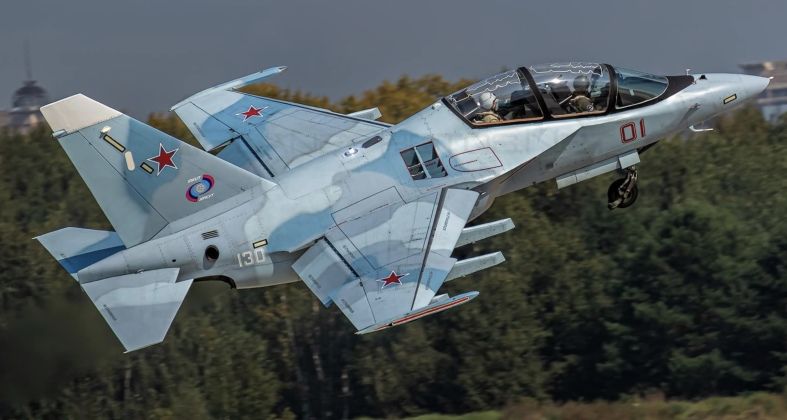
One of the most significant improvements over the baseline Yak-130 is the new variant’s integration of an AESA radar, which dramatically expands the aircraft’s ability to detect and track aerial and surface targets, conduct air-to-air engagements, and employ modern precision-guided weapons. This enhancement allows pilots to train with radar-equipped systems while also making the aircraft far more effective in operational combat roles. The Yak-130M also features an advanced electro-optical targeting system mounted in the nose, providing infrared search and tracking, target identification, laser designation, and precision strike capabilities. It enables the aircraft to employ guided munitions with much greater effectiveness against ground targets and improves situational awareness during both training and combat missions.
