
Russia Tests New Nudol Anti Satellite Missile System; Implications for the Future of Western Power Projection
Military Watch Magazine Editorial Staff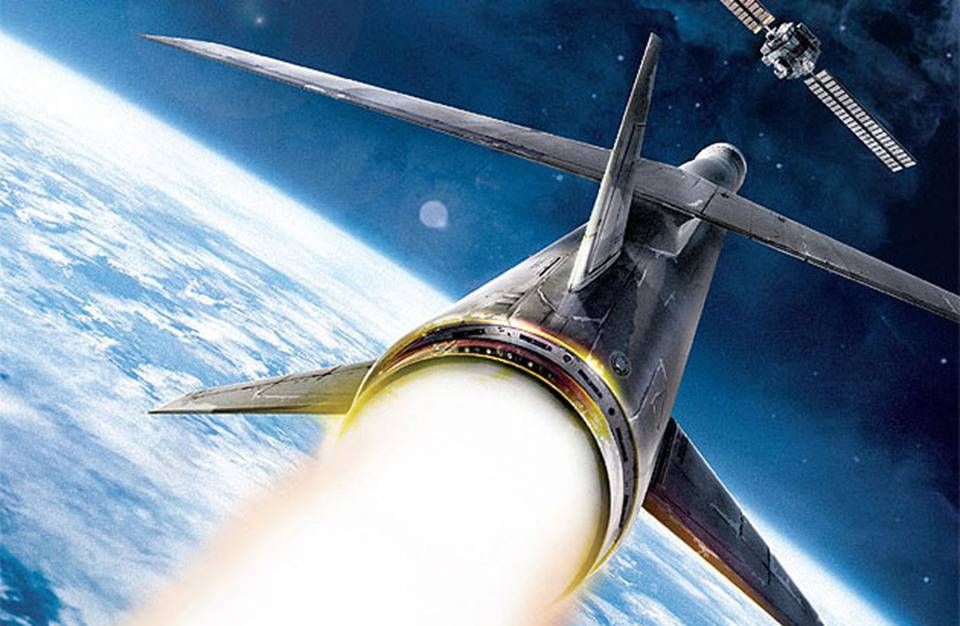
Anti Satellite Missile Artwork
In the face of the growing capabilities of the United States’ network of military satellites, Russia’s armed forces have increasingly invested in developing anti satellite weapons which could in the event of war deprive the U.S. and its Western partners of a critical asset. Russia’s air defence forces are set to induct the S-500 Prometheus surface to air missile battery into service by 2020, a platform which alongside its formidable anti aircraft and anti missile capabilities is also able to deploy advanced 40N6 self homing guided missiles designed to destroy low orbit satellites and real altitudes of 100km. The military has also invested heavily in the development of laser equipped satellite hunting aircraft, making use of its A-60 Airborne Laser Laboratory to develop advanced strike capabilities to target satellites from within the atmosphere. Alongside these new platforms, Russia has also carried out six flight tests of a second anti satellite missile system known as A-235 PL19 Nudol, with the latest tests taking place at the end of March 2018. This came shortly after the system’s fifth test in December 2017, which was also successful. The Nudol is designed to operate from a mobile launch platform, with test launches having been carried out from a transported erector launcher. Mobility is key to ensuring the missile’s survivability in times of war. The platform’s test in March represented its fourth successful flight test, and the missile is likely to enter service in the Russian armed forces in the near future. Deployment of the system near Moscow is scheduled for late 2018.
Russia’s development of anti satellite weapons systems has been met with much apprehension in the West, with Western militaries heavily reliant on satellite capabilities to engage in power projection operations abroad. In his 2018 Worldwide Threat Assessment, U.S. Director of National Intelligence Dan Coats stated regarding these developments: “Both Russia and China continue to pursue antisatellite (ASAT) weapons as a means to reduce US and allied military effectiveness. Russia and China aim to have nondestructive and destructive counterspace weapons available for use during a potential future conflict… We assess that, if a future conflict were to occur involving Russia or China, either country would justify attacks against U.S. and allied satellites as necessary to offset any perceived U.S. military advantage derived from military, civil, or commercial space systems.” Echoing director Coats’ words, U.S. Defence Intelligence Agency Director Lt. Gen. Robert Ashley noted that Russia was set to “continue to pursue the development of a full range of ground, air, or space-based anti satellite weapons as a means to reduce U.S. military effectiveness and control the escalation of conflict if deterrence fails.”
