
Russia’s New T-90M Tank Has a Decade of Further Modernisation Potential
Military Watch Magazine Editorial Staff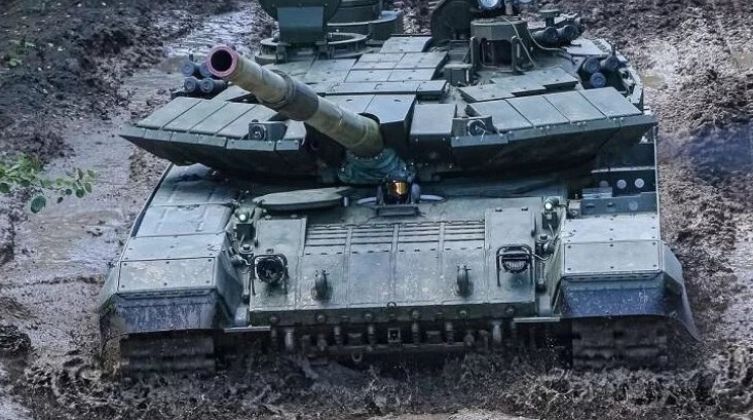
Russian Army T-90M Tank
General Designer at Russia’s largest tank producer the Uralvagonzavod Group, Andrey Terlikov, has provided new details on the future of the T-90M main battle tank program and the vehicle’s future modernisation potential. Assessing that the tank is performing excellently during operations in the Ukrainian theatre, he projected that it continue to be modernised for a decade. Referring to the baseline T-90 variant, he observed: “The tank was developed in the 1990s. Its service life is at least 50 years.” He added that Russian military personnel operating the enhanced T-90M variant have evaluated it to be "highly effective in carrying out combat missions.” The T-90 began development in the late Soviet era as an enhanced variant of the T-72 design, originally designated the T-72BU, and was renamed shortly before being brought into service for marketing purposes.
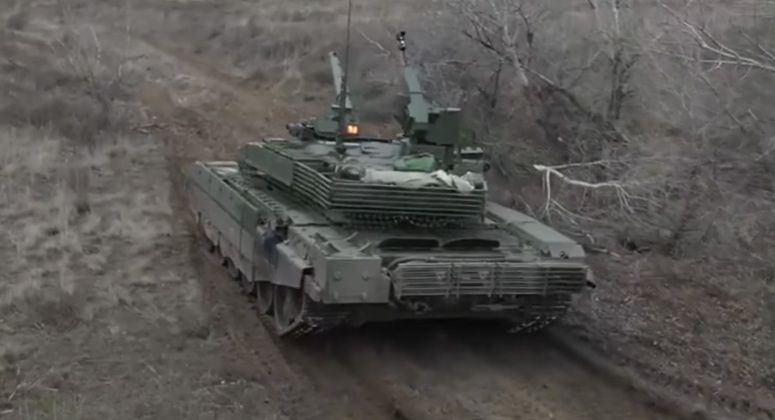
Terlikov further observed that the T-90M is undergoing continuous modernisation to improve its performance characteristics, especially its armour protection, noting “that an “all-aspect fire protection system for the tank has been developed,” primarily for defence against drone attacks. The tank has seen its counter-drone capabilities enhanced with the integration of Russia’s first hard kill active protection system, the Arena-M, from late 2024. It was confirmed in early January 2026 that a new variant of the Arena-M system capable of intercepting single use drone and loitering munition attacks had completed development. The Arena-M uses a radar to continuously monitor the surrounding environment for incoming threats, and when detecting an incoming projectile tracks it automatically, calculates its trajectory, and deploys protective munitions to intercept and destroy it before it impacts the tank.
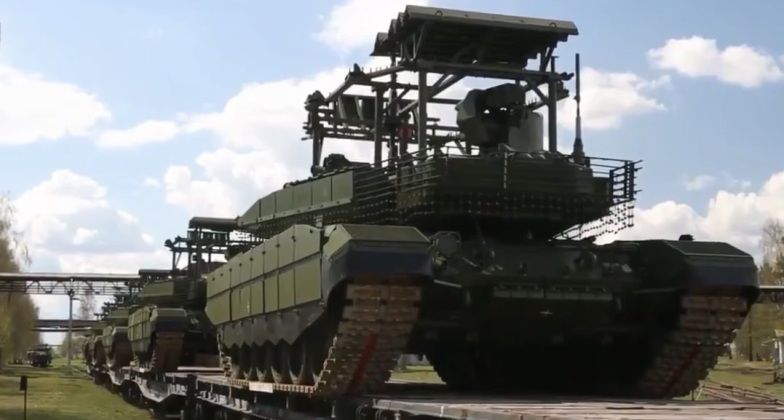
Russia’s tank industry from 2022 pioneered new types of top armour protection to reduce the risk of drone and loitering munition strikes, after armour took heavy losses to such attacks from late February that year. CEO of the Russian state defence conglomerate Rostec, Sergey Chemezov, observed regarding these developments: “If we talk, for example, about our tanks manufactured by Uralvagonzavod, they have received additional all round protection from drones and anti-tank missiles based on the experience of the special military operation. They're only planning to do it with the Abrams - they’ve copied it from us. Earlier, the Israelis adopted this from us. In other words, we can say that we are leading trends in the global tank industry.”
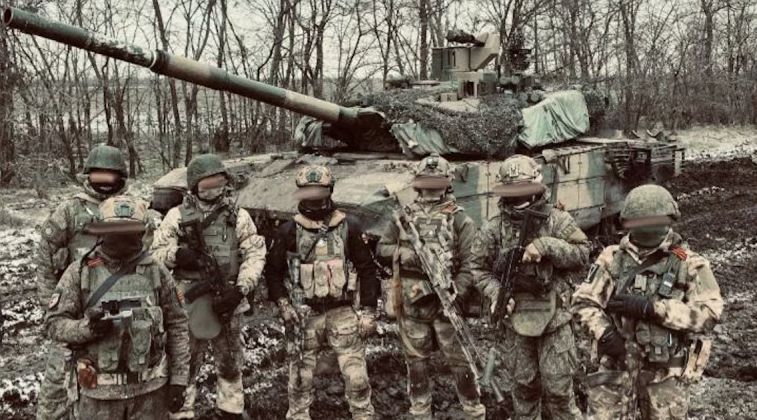
Comparing the T-90M to foreign tank designs, General Designer Terlikov assessed that the tank compared favourably in its performance characteristics to Western main battle tanks such as the U.S. M1 Abrams and German Leopard 2, the performances of which were bought to question after combat testing in the Ukrainian theatre. He noted that these vehicles have demonstrated numerous shortcomings including excessive weight, poor cross-country ability and poor manoeuvrability. “Our T-90M tank is superior compared with all of these models,” he concluded. Although a number of analysts have indicated that the T-90M’s capabilities may compare favourably with those of Western tanks, it is near unanimously considered to be far less sophisticated than new generations of Chinese tanks, in particular the Type 100 which was unveiled in 2025 as the world’s first of a new generation. Russia was previously expected to lead the world in introducing a new generation of tanks into service with the T-14 program, although this has faced several delays and currently has a highly uncertain status.
