
Russia’s Su-57 Fighter Demonstrates Extreme Range with Trans-Continental Flight on Internal Fuel
Military Watch Magazine Editorial Staff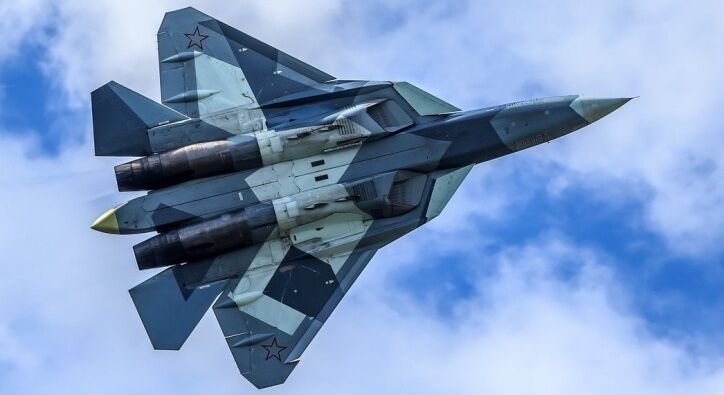
Su-57 Fighter
Russian state defence conglomerate Rostec has taken the El Alamein International Airshow in Egypt as an opportunity to showcase the extreme range of its Su-57 fifth generation fighter, flying the aircraft to the Northeast African country on internal fuel, and subsequently operating it at the airshow without the need to refuel first. "The Russian fifth generation Su-57E fighter demonstrated exceptional flight range with internal fuel tanks. The Su-57E flew to the El Alamein International Airshow in Egypt using internal fuel tanks located inside the cargo bay. This made it possible to do without the traditional external fuel tanks mounted on the aircraft’s wing pylons," Rostec reported.
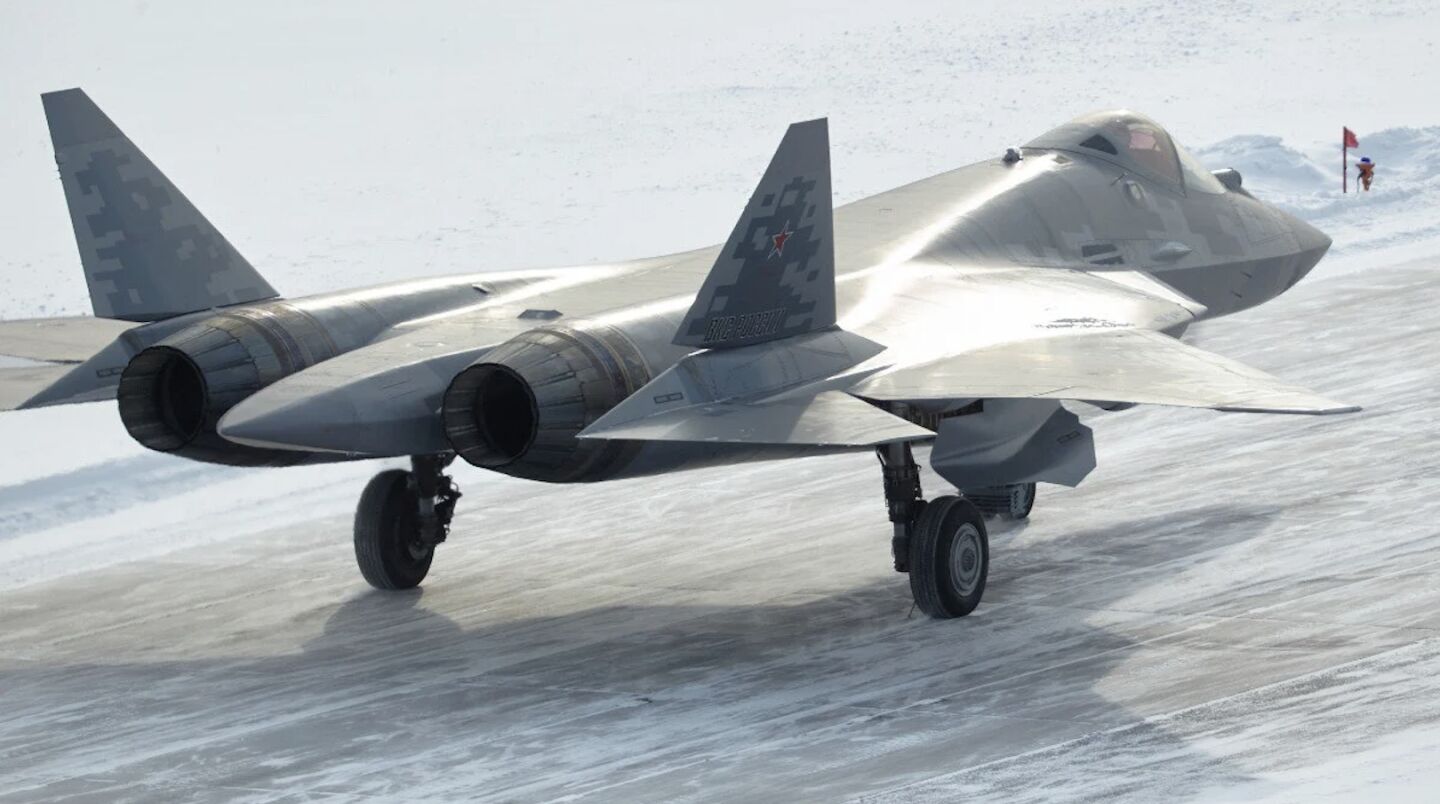
The flight was completed with a single stopover, after which the aircraft still had enough fuel for another 1,000 kilometres. "This was sufficient to conduct a demonstration flight the following day, which was equivalent in terms of resources to a full-scale aerial combat mission," Rostec observed. The ability to use internal fuel tanks “preserves the aircraft’s aerodynamics and ensures a significant reserve of range. The flight demonstrated that, among operational-tactical aircraft, the Su-57E is unmatched in terms of combat radius and endurance," it added. External fuel tanks not only impose considerable additional drag and weight, but also compromise the radar evading stealth profiles of fifth generation fighters like the Su-57.
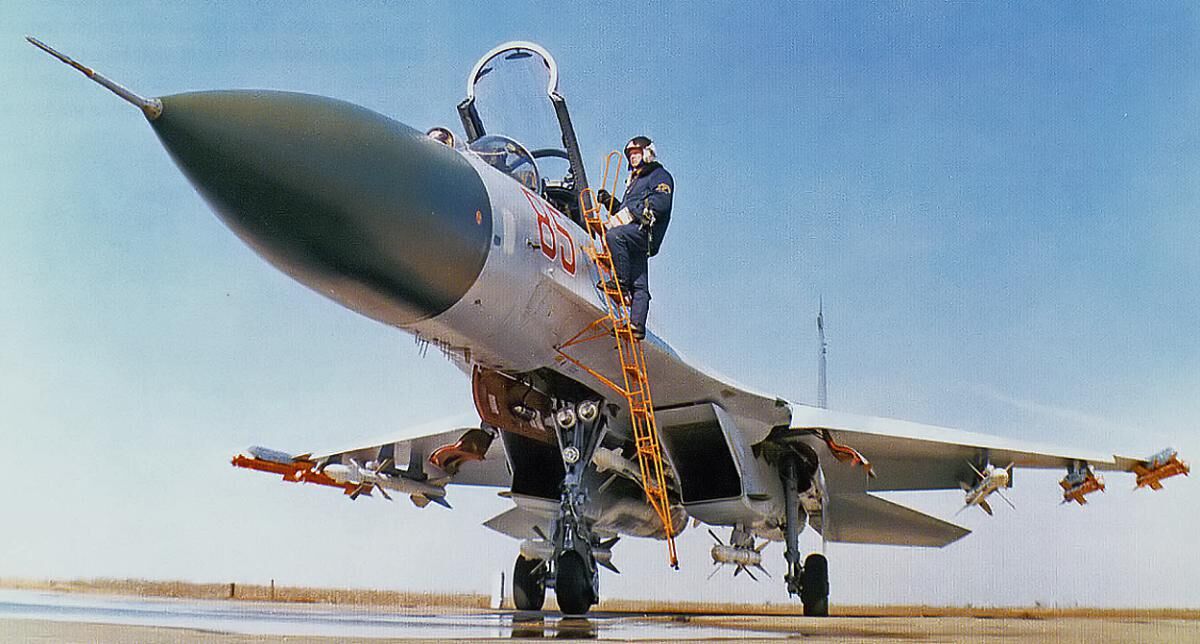
Soviet and Russian heavyweight fighters have since the 1980s had much longer ranges than fighter types in the Western world, with the Su-57’s direct fourth generation predecessor the Su-27 having had a combat radius of close to 2,000 kilometres, far exceeding that of any fighter type fielded in a Western air force. The Su-57 has further expanded on this considerably, with its range expected to increase further with the integration of AL-51F engines near the end of the decade. Major delays integrating these engines, however, have left the fighter significantly behind the rival Chinese J-20, which was confirmed earlier in 2026 to have seen units integrating modern WS-15 engines enter frontline service.
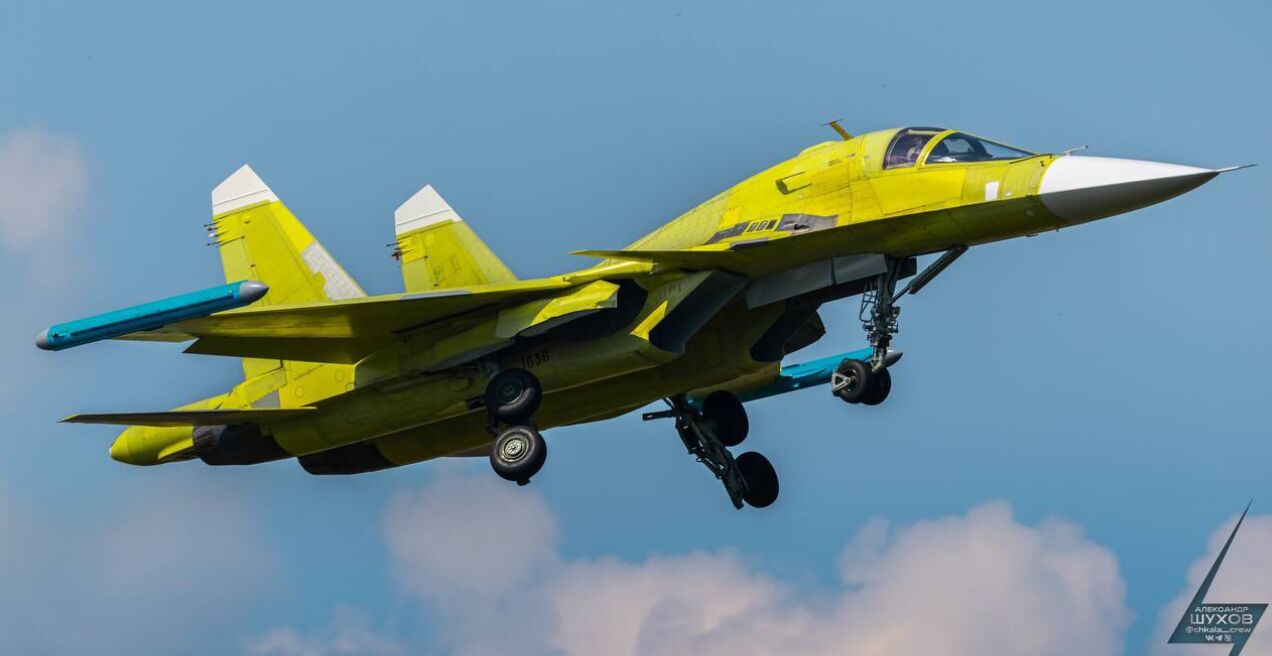
The Su-57’s combat radius is estimated to be over double that of rival Western fighter types such as the F-35 and F-22, although still shorter than the Chinese J-20A. Rostec’s assertion that the fighter was “unmatched in terms of combat radius and endurance” was surprising, primarily not because it overlooked Chinese fighters, but because the much larger Russian Su-34 strike fighter was thought to have a comparable or longer range and endurance. It is possible either that the Su-57’s range is longer than previously thought, exceeding that of the Su-34, or that because the Su-34 is sometimes classified as a bomber in Russia it was not counted in the comparison.
