
Russia’s Simple But Robust Kornet Anti-Tank Missile Has Achieved Thousands of Confirmed Kills
Military Watch Magazine Editorial Staff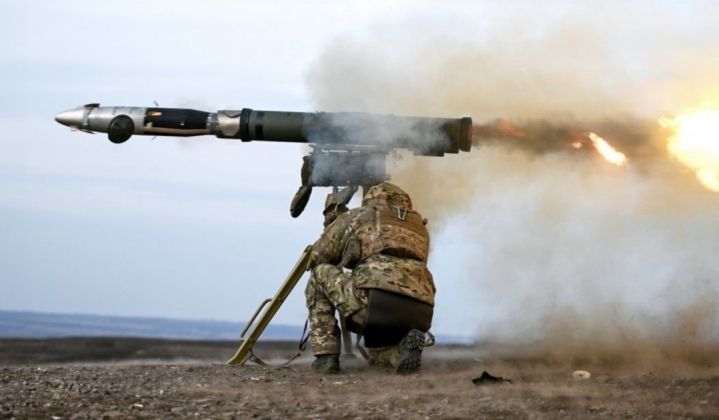
Kornet Anti-Tank Missile Launch
Th Russian Kornet anti-tank missile system has reportedly achieved several thousand confirmed kills in combat, the majority of them in the ongoing Russian-Ukrainian War against Ukrainain Army vehicles. The Kornet is a light handheld system which was introduced into service in the late 1990s, and was previously widely combat tested by export clients including in high intensity conflicts in Iraq and Syria. A notable feature of the missile is its tandem-charge warhead, with two high-explosive anti-tank charges separated by its rocket motor allowing for the second charge’s focal length to be increased. This has the effect of significantly improving its penetrative capabilities. The particularly large size of the second warhead contributes to its survivability against countermeasures such as explosive reactive armour.
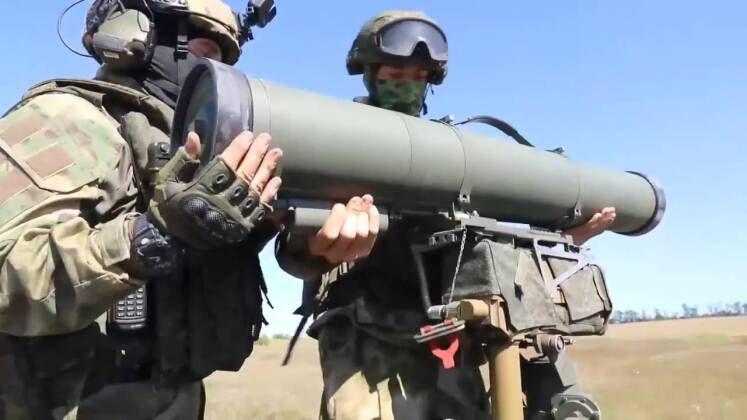
The press office of the Russian state defence conglomerate Rostec recently commented in the system’s performance when reporting on the delivery of a new batch to the Russian Army, observing: "In the area of the special military operation, Russian servicemen hit such heavily protected targets as enemy drone control posts and dugouts with Krasnopol shells. These munitions were also used to hit mobile armoured targets, such as Abrams and Leopard tanks.” “Russian servicemen call the Kornet the enemy armor torcher. The weapon has a record of thousands of successfully destroyed targets, among them Leopard and Challenger tanks, Bradley infantry fighting vehicles and other Western-made armor, enemy strongholds and fortifications,” it added, noting: “It is used from various shelters, mounted on buggies and quad bikes. A remote-control panel has been created for it to ensure an operator’s safety in case of enemy retaliatory fire.”
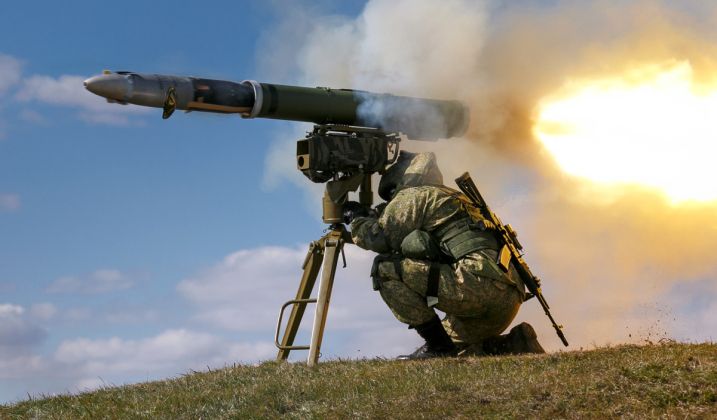
Since the Kornet first entered service, new and enhanced variants have continued to be developed, most notably the extended range Kornet-EM which has automatic target tracking capabilities and more advanced countermeasures against explosive reactive armour. Russian President Vladimir Putin in mid-2023 praised the system’s performance stating that there was a need for production of greater quantities. The Kornet would gain further publicity in September that year when it was credited with achieving the first kill against a British Challenger 2 in the theatre, just days after the tanks’ first deployment for frontline operations. The system is nevertheless hindered by a ack of ‘fire and forget’ capabilities as seen on rivals like the American Javelin and Chinese HJ-12, with Russia having achieved a ground-launched anti-tank missile with such capabilities only after purchasing the Bulsae-4 from North Korea.
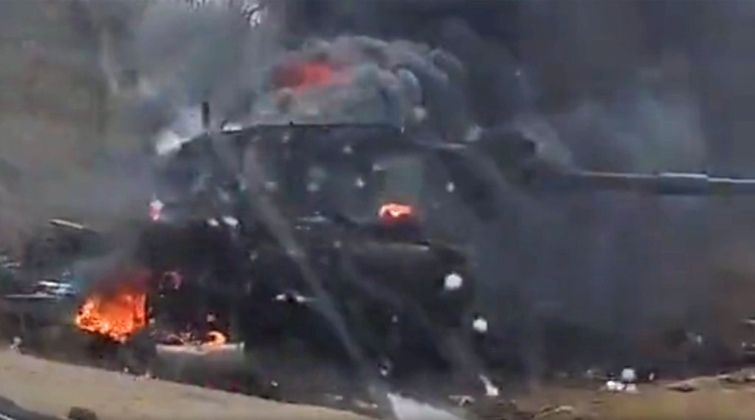
Kornets were first used in combat during the U.S.-led invasion of Iraq in 2003, after Iraqi Republican Guard units obtained the missiles through black market deals and in defiance of UN Security Council imposed arms embargoes. The missiles proved highly effective against American Abrams tanks and Bradley fighting vehicles. Kornets were used again three years later against Israeli Merkava tanks, including the enhanced Merkava IV variant, when deployed by the paramilitary group Hezbollah in 2006, piercing the armour of at least two dozen tanks. Militias from the Islamic State terror group also used captured Kornets highly effectively to disable multiple Iraqi Army Abrams tanks from 2014, with some reports indicating that Kornets were also used by Islamic State units to great effect against Turkish Leopard 2 tanks in Syria.
