
Russia’s Su-34 ‘Hellduck’ Strike Fighter Marks 30 Years Since First Flight
Military Watch Magazine Editorial Staff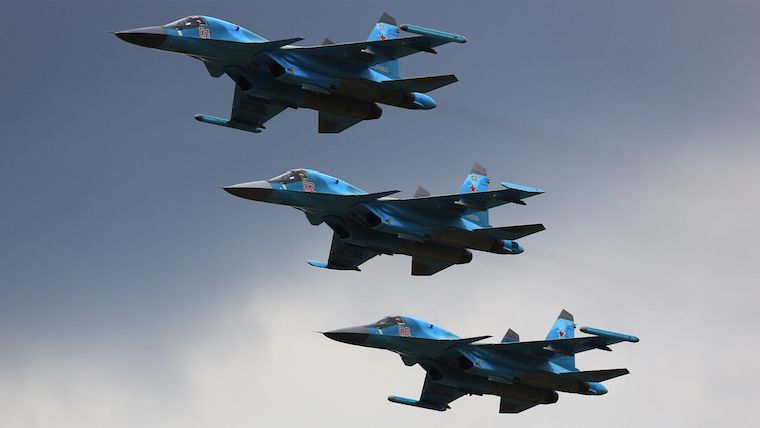
Su-34 Strike Fighters
April 13th 2020 marks 30 years since the first flight of the Sukhoi Su-34 strike fighter - an advanced derivative of the Su-27 Flanker heavyweight air superiority fighter which is heavily specialised in air to ground and anti shipping roles. The aircraft began development in the Soviet Union in the 1980s as a successor to the Su-24M swept wing strike platform, and was one of multiple ambitious Flanker derivatives under development at the time alongside the Su-30, a more versatile and manoeuvrable twin seat aircraft, the respective Su-27K and Su-27KUB carrier based fighter and naval trainer, and more advanced air superiority platforms which would become the Su-35 and Su-37. The Su-34 was one of multiple ambitious programs either delayed or cancelled entirely as a result of the Soviet collapse - meaning the platform would only enter service in 2014, the same year as the Su-35, after completing trials three years prior.
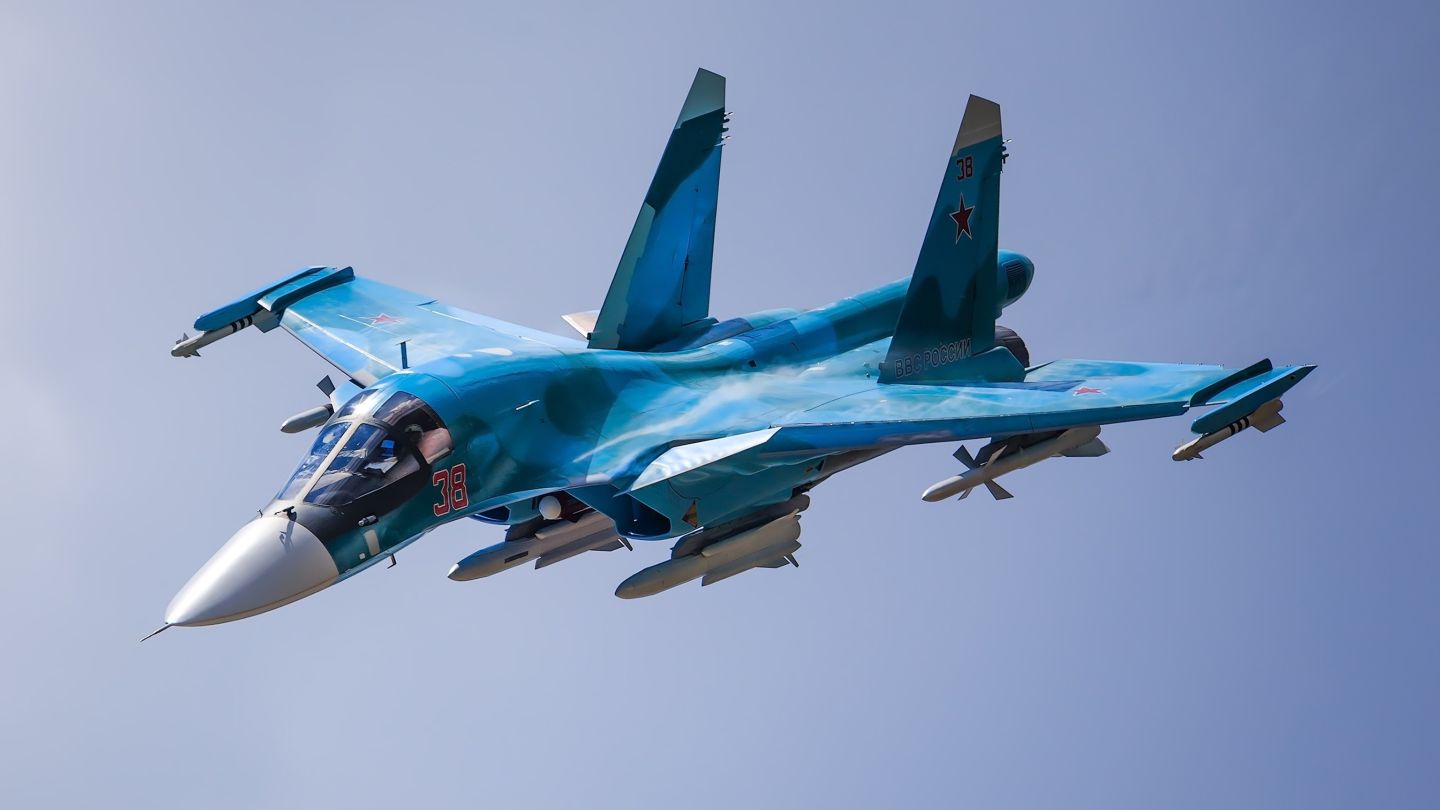
The Su-34 would be one of the first Russian aircraft deployed for combat operations in Syria, and unlike the older Su-24 jets they can carry a limited defensive armament of R-27 or R-77 long range air to air missiles. The fighters have more recently taken part in precision strikes against jihadist targets in Idlib province, where Al Qaeda affiliates maintain their last major stronghold in the country’s northwest. Israeli media has also reported that Russia has used the aircraft to intercept strikes by Israeli F-16s on Syrian targets on at least one occasion. The Su-34 is compatible with a wide range of advanced air to ground, anti radiation and anti ship munitions and boasts sophisticated electronic warfare capabilities and a powerful sensor suite. Among its most notable classes of weapons are the Kh-65Se and Kh-SD capable of striking targets at up to 600km away, well out of range of any air defence platform currently in service, as well was the Mach 2.2 Kh-38 which can deploy cluster munitions, fragmentation warheads or armour piercing warheads depending on the nature of the target. Mach 3 Kh-41, the Mach 3.5 sea skimming Kh-31A also provide a formidable combination of speed and range for engaging heavily defended targets.
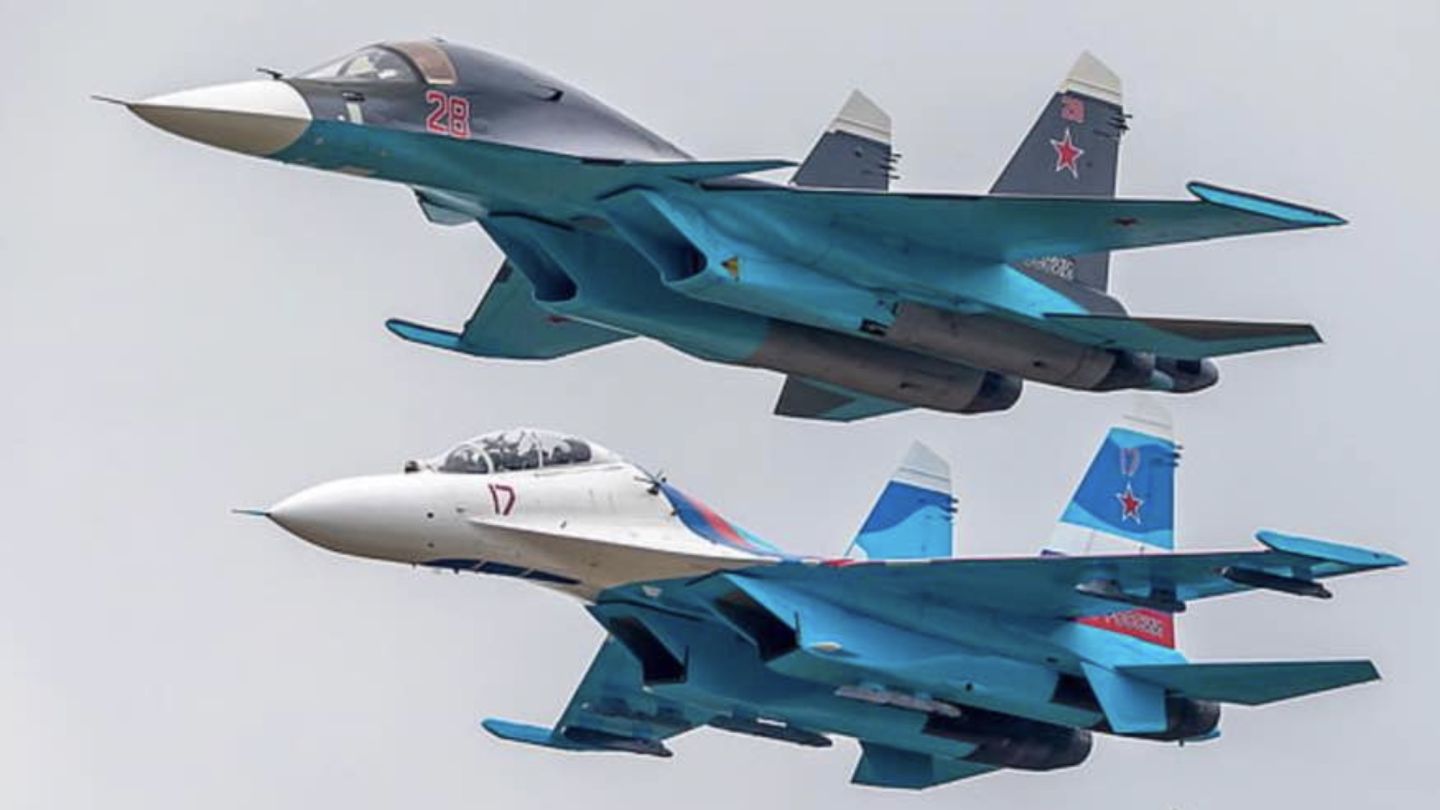
The Russian Air Force currently fields over 120 Su-34 strike fighters, which can reportedly be manufactured at a much lower cost than the Su-35 and are expected to be purchased in larger numbers. Although the fighters have not been exported, and are far too specialised for most air forces which seek more versatile jets which are not necessarily as capable in a strike role, their AL-31F M2 engines have been sold to China to initially power its J-20 fifth generation fighters. These engines have now been replaced by the more capable WS-10B in Chinese service however. The Su-34 may well be the most capable strike fighter in the world, with capabilities in many ways surpassing those of its Chinese and American counterparts the J-16 and F-15E - although at the expense of an inferior air to air capability compared to the more well rounded foreign designs. Russia has extensively tested the Su-34 over almost five years of engagement in Syria, and the fighters are likely to remain in production long after the Su-30, Su-35 and other Russian Flanker derivatives with no signs of a replacement strike platform in sight.
