
Russia’s Revolutionary S-500 Missile Defence System Almost Complete
Military Watch Magazine Editorial Staff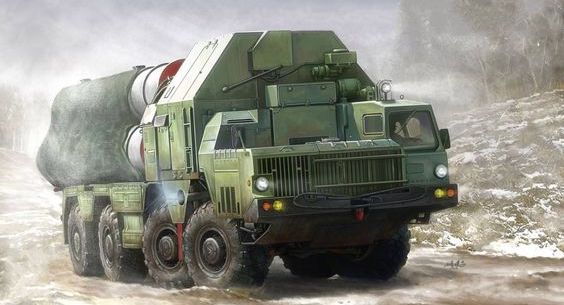
Russian Long Range Surface to Air Missile System - Art Work
Following reports in May 2018 of a successful test firing of the S-500 missile system setting a record range for surface to air interception, Russia’s Deputy Prime Minister Yury Borisov stated on September 26th that Russia’s defence manufacturers were on the verge of completing the weapons platform - with serial production expected to begin soon afterwards. "Our S-300, S-400 and S-500 systems, which are close to serial production, do have better specifications in comparison with all competitors, be it either (U.S.) Patriot, or French and Israeli systems," he stated. The Minister’s statements were made during the Revunov Award ceremony, an annual event at the Bauman Moscow State Technical University held for young engineers. The weapons platform is being developed by Almaz Antey, the same manufacturer which developed the S-400 and S-300 systems which currently comprise the bulk of Russia’s long range air defence capabilities.
News of the S-500 nearing the end of development comes four months after Russian President Vladimir Putin called for the weapons platform to be put into mass production as quickly as possible, with the President having stated: "One of the key tasks is to improve anti precision warfare means. It is necessary to develop and build up technological groundwork in the area of air defence, to continue modernisation of Pantsir (medium range) systems, to finish the development and preparations for mass production of the S-500 newest systems capable of hitting targets at super high altitudes, including near the earth space.” The S-500 is expected to fill a number of roles, and will be the only surface to air missile platform in the world capable of intercepting hypersonic missiles. Russia inducted its first hypersonic ballistic missiles into service in early 2018, while its Western military rivals have since invested heavily in developing such technologies to strengthen their own strike capabilities.
The S-500 is expected to retain an engagement range of 600km, surpassing the 400km range of the S-400 and S-300V4 - currently Russia’s most advanced long range air defence platforms. The new system’s sensors are expected to be unrivalled worldwide, and when networked with older platforms such as the S-300V4 it will be able to provide key targeting data to these other missile systems. Alongside intercepting ballistic missiles, the S-500 is expected to play a key role in eliminating high value enemy support aircraft such as the U.S. Air Force’s E-3 AWACS platform and KC-135 aerial tanker, both of which are highly vulnerable to missile attacks and rely on retaining a considerable distance between themselves and hostile fighters and missile systems in order to maintain some degree of survivability. The development of the S-500, alongside new air to air missiles such as the 400km range R-37, may well leave such aircraft obsolete in a major war between Russia and the Western Bloc - thus forcing Russia's potential adversaries to seriously revise their aerial warfare strategies. The S-500 will also be able to target low altitude satellites, and is likely to also retain the capability to target the latest fighter aircraft such as the U.S. F-35 and F-22 to build on the capabilities of its predecessor the S-400. With the S-400 having entered service in 2006, Russia’s armed forces expect to field the S-500 by 2020 - with navalised variants also planned for deployment onboard the country’s new destroyers.
