
Russia’s Plans to Retire MiG-31 Heavy Interceptors By 2028 Unrealistic - Service Beyond 2035 Likely
Military Watch Magazine Editorial Staff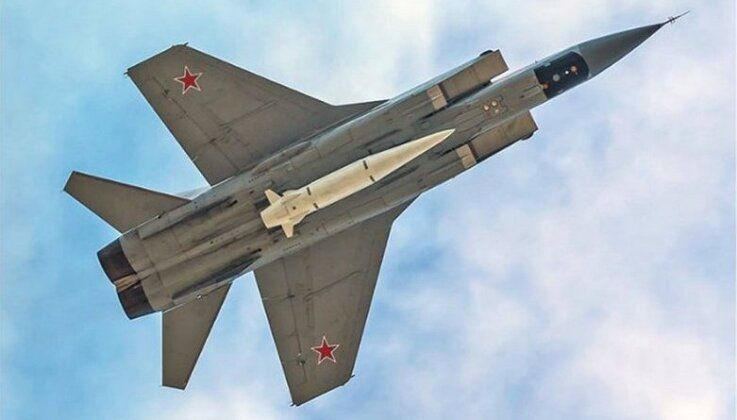
MiG-31K Foxhound with Kinzhal Hypersonic Weapon
The MiG-31 Foxhound heavyweight interceptor was the first Soviet fourth generation combat jet to enter service, joining the Air Force in 1981 a year before the MiG-29A lightweight fighter, and four years before the Su-27 heavyweight air superiority fighter. The Foxhound remains today the heaviest combat jet in the world designed for air to air engagements, and was not only faster and higher flying than the MiG-29 or Su-27, but also carried much more dangerous weapons including active radar guided air to air missiles which not only had much longer ranges and heavier payloads than those deployed by the later aircraft, but also had ‘fire and forget’ capabilities meaning they did not need to be guided by the aircraft throughout their flights. The MiG-31 also had a larger and more powerful radar than any other fighter or interceptor of its time, which combined with other features such as its satellite capabilities led to to be considered one of the two most capable aircraft of the Cold War era in terms of air to air combat capability - alongside the F-14D Tomcat of the U.S. Navy which entered service in 1991.
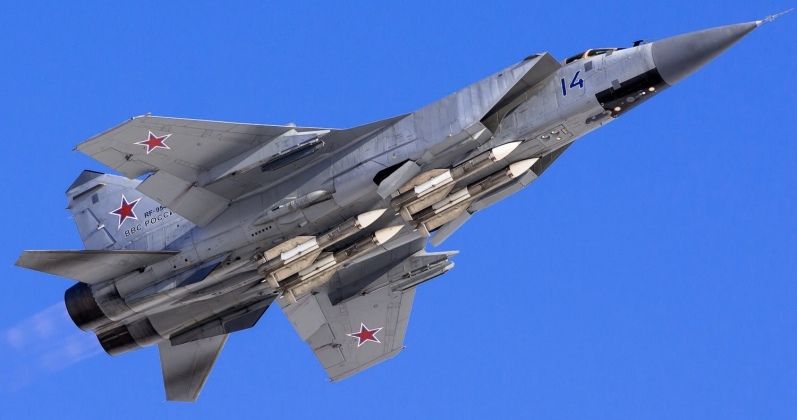
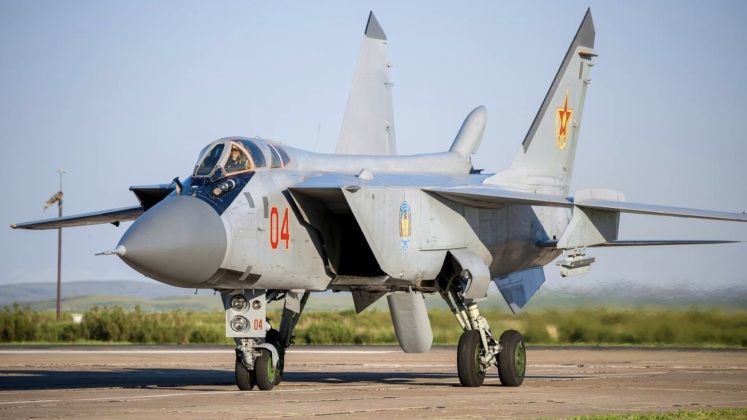
While the MiG-31 was a formidable aircraft, it was also the most expensive both to operate and to produce, and following the sharp decline in the Russian military aviation industry after the Soviet collapse in the 1990s plans to enter an enhanced variant of the Foxhound into production, the MiG-31M, were terminated due to budgetary constraints. This meant that modernisation of the MiG-31 was far more conservative than that of the MiG-29 or Su-27, which were not only cheaper, but had been offered for export earlier meaning there was a greater demand for more advanced variants from foreign clients - forcing Russia to invest in updating the designs. As a result the Foxhound would cease to be produced, with over 200 in Russian service, more than a hundred more in reserve, and a single squadron deployed by neighbouring Kazakhstan. This has led to speculation that the aircraft would face an early retirement, which was partly confirmed by the CEO of the Russian Aircraft Corporation MiG, Sergei Korotkov.
Speaking at the international aerospace show FIDAE-2016 in Chile, Korotkov stated: “By 2028, the fighter-interceptor MiG-31 will cease to exist… We have the time to create a new aircraft as a replacement.” While a successor to the Foxhound is currently under development, a ambitious interceptor known as the MiG-41 which is reportedly capable of operating in space and can fly at hypersonic speeds, the prospects for this aircraft replacing even half of the MiG-31 by 2028 appear very slim. The MiG-41 is being designed as a sixth generation aircraft, and is not known to have yet carried out its first flight, and given the track record for post-Soviet Russian aircraft designs it would be a major achievement for the jet to have entered even an initial operating capacity by 2028 on this basis.
With over 200 Foxhounds in service, and the MiG-41 expected to be much more costly than any existing Russian fighter or interceptor, very likely the most costly outside the Western world, Russia is highly unlikely to replace its entire Foxhound fleet even by the mid-2030s. Furthermore, while interceptor variants of the MiG-31 may eventually be replaced, it is likely that more recent variants designated with other missions such as satellite hunting, or delivery of hypersonic ballistic missiles as with the MiG-31K, could remans in service into the 2040s due to the lack of urgency for replacing them — in much the same way as bombers can remain in service for decades because they are not required to participate in air to air engagements. Ultimately it is unlikely that the MiG-31 will be fully retired by 2035, let alone 2028, and given the aircraft’s tremendous potential to incorporate upgrades and serve in a wide range of roles this may not necessarily be a bad thing for the Russian Air Force.
