
Russia’s Elite MiG-31 Foxhound Interceptors Selling for $2 Each? New Details on Serious Post-Soviet Corruption
Military Watch Magazine Editorial Staff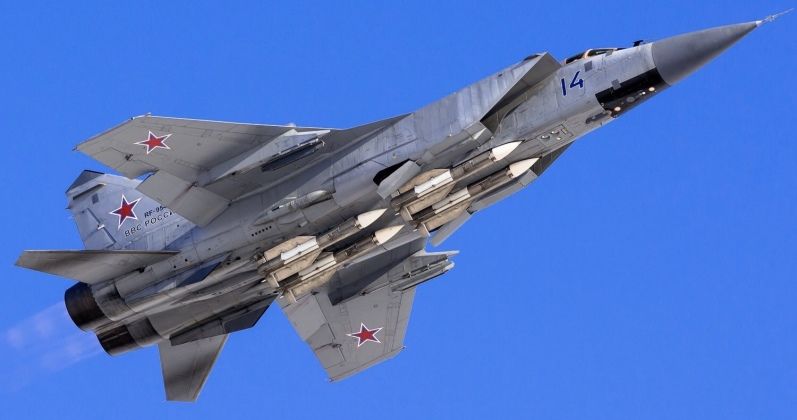
MiG-31 Foxhound Interceptor with R-33 Long Range Missiles
With the Su-57 next generation fighter having yet to enter service in the Russian Air Force, the MiG-31BSM Foxhound is considered the service's most capable aircraft in terms of air to air combat capabilities. The original MiG-31 first entered service in 1981, and the design has been modernised extensively since with the latest BSM variant updated with ‘4+ generation’ capabilities. The aircraft is the heaviest in the world in service today designed for air to air combat, and is prized for its extremely large and powerful sensor suite, its high endurance, speed and altitude and its access to unique R-37 hypersonic air to air missiles which carry 60kg warheads and have a range of 400km. The Soviet Union had previously planned a heavily enhanced next generation variant of the MiG-31 with significant modifications to its airframe under the MiG-31M program, and although it reached a prototype stage it would be cancelled in the late 1990s as a result of Russia’s economic crisis.
Despite the MiG-31’s advanced capabilities, it has recently come to light that ownership of four of the aircraft was transferred to a private entity in the 2000s as a result of the severe corruption the country's defence sector was suffering from at the time. A former civil servant in a branch of Russia’s Federal Agency for State Reserves in Nizhny Novgorod, Andrey Silyakov, was arrested in late May 2020 to serve a sentence of 11 years in prison. He reportedly sold the country’s prized MiG-31 airframes, valued at over $60 million each and considerably more when marketed for exports, for just $2.14 each. The aircraft were given names such as 'Assembly Kit 306-002’ to avoid suspicion, and were sold to an unnamed local contractor firm owned by a close friend of Silyakov. The jets, which included all parts other than engines and weaponry, were subsequently re-sold to the Sokol aviation factory at much higher rates. This is thought to have generated considerable profits for Silyakov and his partners. Corruption in Russia’s defence sector was a serious issue in the immediate post-Soviet years and into the 2000s, and not only crippled its efficiency but also allowed interested parties such as North Korea and Iran to acquire advanced weaponry and technologies which they otherwise would not have been able to access.
