
Revolutionising Carrier Warfare: Russian Military Accepts Risky New Catamaran Design - Reports
Military Watch Magazine Editorial Staff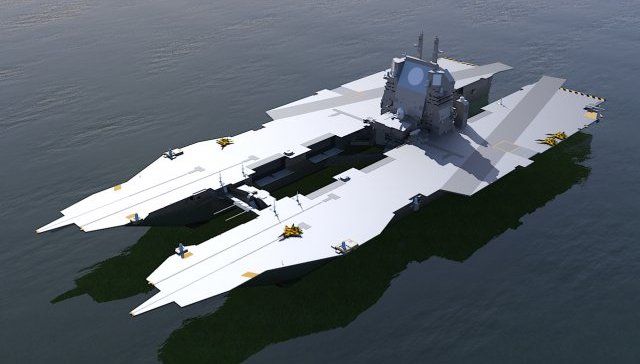
Catamaran Aircraft Carrier - design concept
As the Russian Defence Ministry continues to consider options for new classes of aircraft carrier, with two light carriers of around 22,000 tons set to be laid down in 2020 and an ambitious supercarrier displacing around 100,000 tons also under consideration, the Russian TASS news agency has revealed that an unprecedented semi-catamaran design has been decided on to meet at least part of the Navy’s requirements. A representative of the Krylov Scientific Center, which played a major role in developing the design, stated regarding this carrier program: “The project is distinguished by the underwater part of a semi-catamaran form… Catamaran actually means two hulls united by a platform. It has a wide deck which is important for an aircraft carrier. The design adds flight deck space on which the number of aircraft depends. As a result, a medium-displacement ship can carry a full-fledged air wing… The essence of the carrier is below the waterline.”
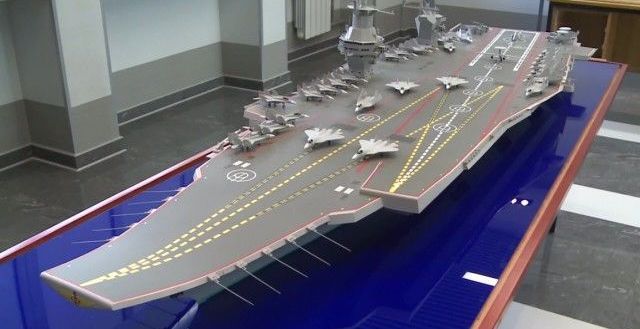
The new Russian warship will displace between 40,000 and 45,000 tons and have a 60 day endurance - a far cry from the supercarriers previously proposed or even the conservative 80,000 ton Lamantin carrier design. The possibility remains that, as Russia pursues two parallel classes of helicopter carrier/assault ship, it may also pursue a second class of heavier carrier in parallel to the catamaran program. The catamaran design will deploy an air wing of over 30 aircraft including airborne early warning aircraft and fighter jets - although the classes of fighters planned have yet to be confirmed. Russia currently deploys navalised variants of the Su-27 heavyweight and MiG-29 medium fighters - the Su-33 and MiG-29K - although a number of proposals have been made for more advanced fighter classes to be nasalised. These have included a navalised Su-57, a navalised MiG-35 and a vertical landing capable jet to succeed the Yak-141.
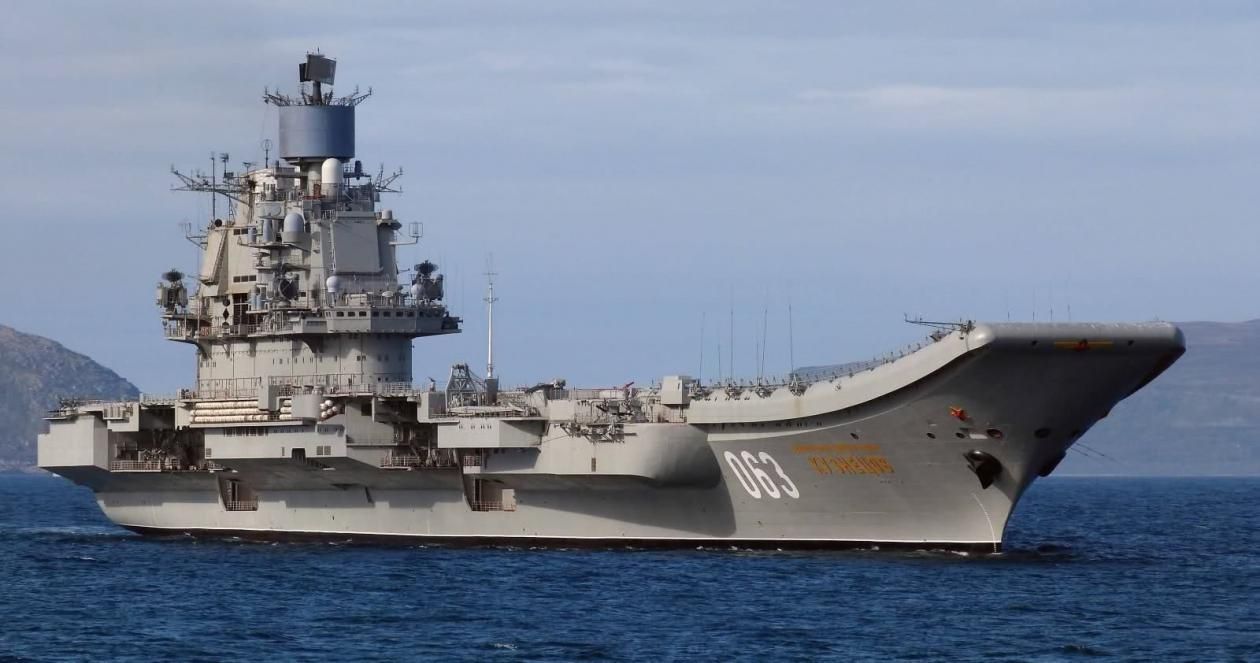
Among the catamaran carrier’s features will be Pantsir-ME air defence systems and new sensors and anti submarine warfare and electronic warfare systems. It remains uncertain whether the design will make use of a ski jump launch system, or whether it will integrate electromagnetic catapult systems which are currently being developed in Russia. A catamaran design presents considerable risks - namely that it will be less stable in rough seas which makes it far from ideal as a blue water platform. For providing support against threats closer to Russian shores however, the design could potentially be ideal - and would follow a growing emphasis on such defensive naval capabilities. Advantages of the design would include lower costs and reduced drag - the latter which allows them to attain speeds which conventional carrier designs would struggle to match without integrating much larger, more fuel hungry and more costly engines.
