
Russia’s P-800 Anti-Ship Cruise Missile Demonstrates Ability to Penetrate ‘Virtually All Air Defences’
Military Watch Magazine Editorial Staff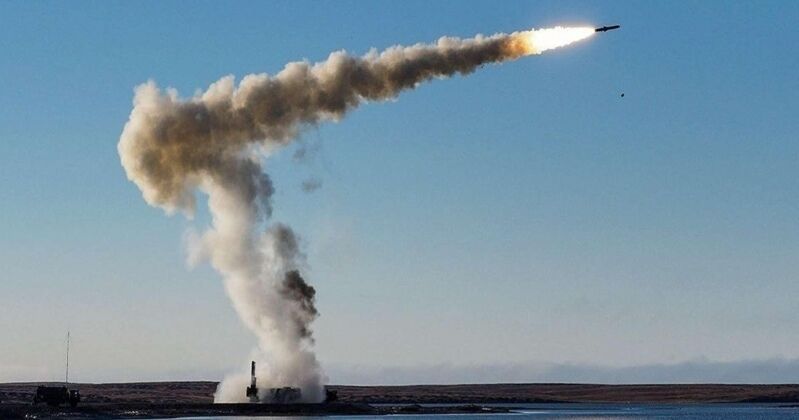
Russian Bastion Missile System Launches P-800 Cruise Missile
The Russian Navy P-800 Oniks supersonic anti-ship missile has played a central role in recent Pacific Fleet exercise, with the fleet claiming that the weapon can overcome virtually all modern air defence systems and disable warships of any size. The statement was issued as Russian coastal missile units conducted deployments across the country’s Far Eastern territories, underscoring Moscow’s continued emphasis on long-range coastal strike capabilities for controlling access to its maritime approaches. "The cruise missile [Oniks] moves toward its target 2.5 times faster than the speed of sound, it is virtually impossible to detect by modern air defence systems, and is capable of disabling a warship of any size at a distance of several hundred kilometres," the Navy reported.
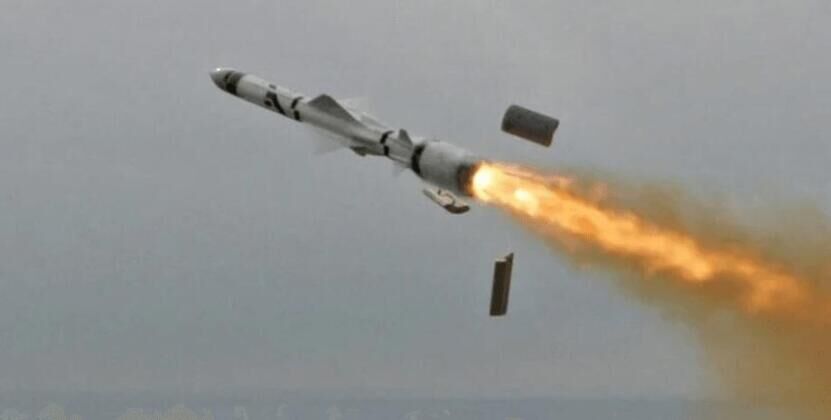
As part of exercises, P-800s were deployed from Bal and Bastion coastal defence systems, with crews deploying launchers to designated positioning areas along the coast in the Primorye Region, Kamchatka, Chukotka, and the Kuril Islands. "Bastion shore-based missile systems armed with Oniks supersonic anti-ship missiles guarantee the creation of restricted access zones in designated areas of the coastal waters of the Far Eastern seas and ensure coastal protection. Their combat deployment takes just a few minutes," the fleet’s press service reported.

The P-800 is also notable because of its combination of speed, range and terminal attack profile. A supersonic missile presents substantially less reaction time to a defending warship than a conventional subsonic anti-ship missile. The weapon’s high terminal speed can reduce the time available for detection, tracking, engagement and interception, particularly when combined with low-altitude flight during the final phase of an attack. Nevertheless, modern naval air-defence systems employ layered sensors and interceptors specifically designed to engage high-speed anti-ship missiles, while the effectiveness of any missile depends on factors including its flight profile, electronic-warfare environment, target location, supporting reconnaissance and the defensive architecture of the target force.

The Pacific deployment also demonstrates how Russia continues to rely on layered maritime defence rather than attempting to dominate its vast Far Eastern maritime approaches exclusively through surface combatants. Coastal missile systems can provide relatively inexpensive and survivable firepower from land, allowing the Russian Navy to concentrate its ships and submarines on other missions while retaining the ability to threaten hostile naval forces approaching key areas. The Kuril Islands are particularly important in this context. The island chain stretches between Hokkaido and the Kamchatka Peninsula and provides Russia with positions from which it can monitor and potentially threaten maritime movement between the Pacific Ocean and the Sea of Okhotsk. The deployment of Bastion systems in the region has therefore become an important component of Moscow’s broader effort to reinforce its military presence in the northwestern Pacific.
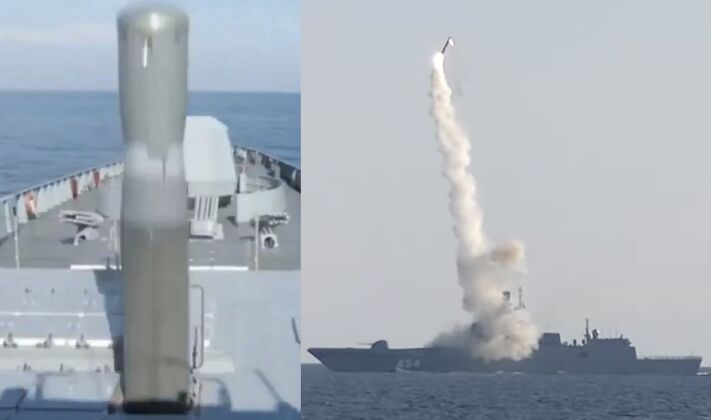
The Russian Navy’s reliance on the P-800 is gradually being reduced as it brings the world’s first hypersonic cruise missile, the Zircon, into service. Russia is adapting the Bastion coastal missile architecture to employ Zircon, allowing the same basic launcher family to field a much faster and longer-range weapon. Open-source evidence indicates that a land-based Zircon capability using modified Bastion-derived launchers has entered service. The newer missile is considerably more capable, combining a 1,000 kilometre range, Mach 9 speed, and terminal manoeuvring capabilities, although it is estimated to also be considerably more costly than the P-800. In late July Russian President Vladimir Putin revealed that development work on the Zircon remained ongoing, with recent combat experience reportedly leading to significant improvements in its precision.
