
Russia’s Kirov Nuclear Cruiser vs. U.S. Zumwalt Stealth Destroyer: Which Surface Ship Dominates?
Military Watch Magazine Editorial Staff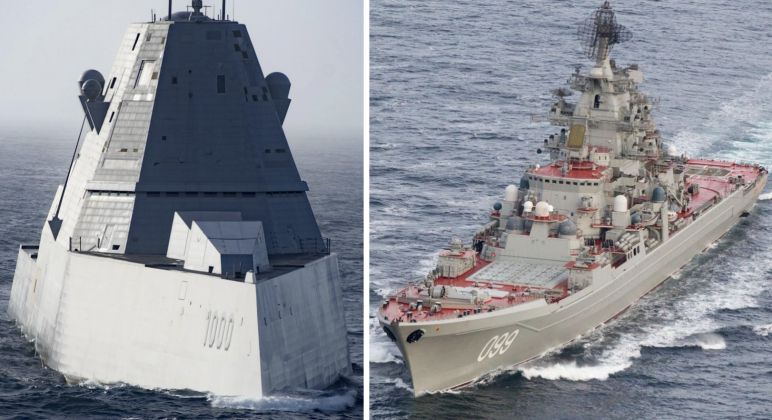
Zumwalt Class Destroyer (left) and Kirov Class Cruiser
The entry the Russian Kirov class nuclear powered cruiser Admiral Nakhimov into the final phase of its sea trials in early June has drawn significant attention to its capabilities, and particularly how they compare to those of the U.S. Navy’s own heaviest surface combat ships the Zumwalt class destroyers. The 28,000 ton Kirov class was conceived during the Cold War as a heavily armed capital ship designed to destroy NATO carrier battle groups through overwhelming missile firepower. The 16,000 ton Zumwalt class, by contrast, was developed as a highly automated, stealthy multi-mission destroyer optimised for precision strike, network-centric warfare, and operations in heavily defended environments. Both programs have proven highly problematic, the Kirov due to the disintegration of the Soviet Union and rapid decline in Russian industrial capabilities which made sustaining the ships challenging, and the Zumwalt due to serious shortcomings in the United States’ post-Cold War defence sector. They nevertheless remain the most unique classes of surface combatants in the two countries’ navies.
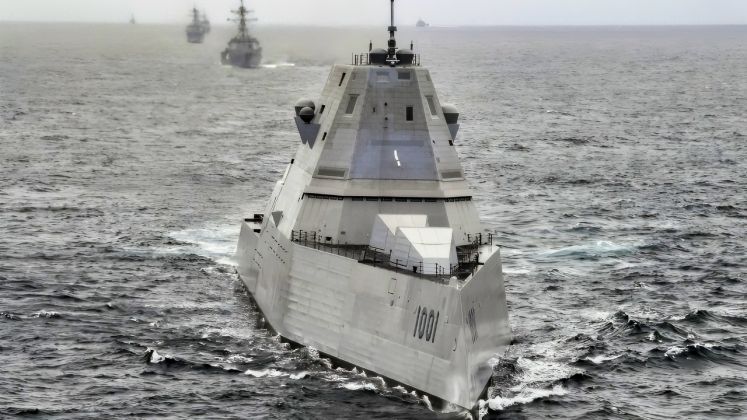
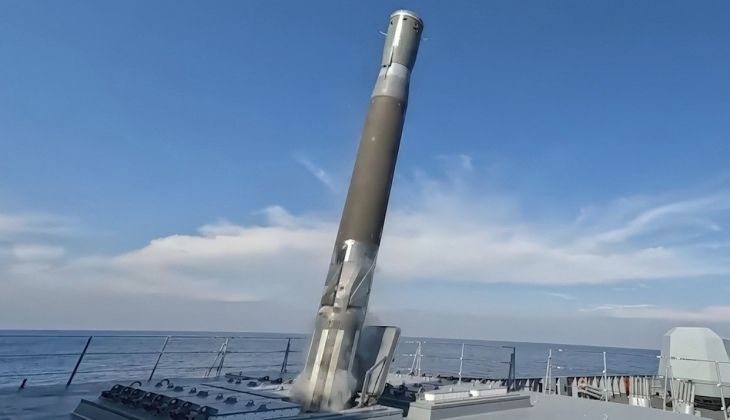
In terms of offensive capability, the Kirov remains one of the most heavily armed surface combatants ever built, with the Admiral Nakhimov integrating a total of 176 launch cells for high diameter missiles, including 96 cells for surface-to-air missiles from a navalised variant of the S-400 air defence system, which is equivalent to three fully battalions of ground based variants of the systems. A further 80 cells are allocated to cruise missiles, and can accommodate the new Zircon hypersonic cruise missile. The Zumwalt carries a missile arsenal 55 percent smaller with just 80 launch cells, which is outstandingly small for a ship of its size. The stealth ship is nevertheless expected to perform better in certain missile defence roles due to its integration of SM-3 and SM-6 anti-ballistic missiles. The ship’s Tomahawk cruise missiles are broadly comparable to the Kalibr missiles integrated onto Kirov class ships, although it lacks a meaningful anti-ship cruise missile capability.
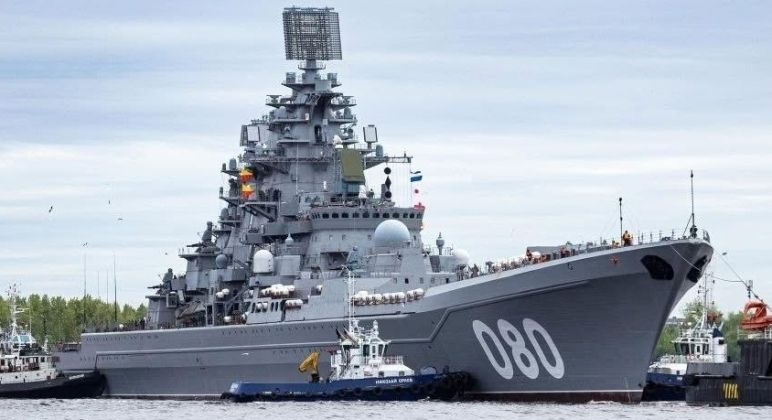
The greatest advantage enjoyed by the Zumwalt is its stealth. The ship’s distinctive hull and enclosed superstructure dramatically reduce its radar cross-section, making it significantly harder to detect and track than conventional destroyers. This low observability allows it to operate closer to hostile coastlines and potentially delay enemy targeting. The Kirov, by comparison, has a massive superstructure covered with external radars, missile launchers, and sensors, creating a very large radar and infrared signature. In an era of satellite surveillance, maritime patrol aircraft, and over-the-horizon radar, the Kirov would likely be detected at considerable distances, reducing its ability to approach an adversary unnoticed.
The Zumwalt also benefits from a far more modern combat system. Its sensors, computing architecture, and data-fusion capabilities allow it to process information from multiple sources simultaneously and share that information seamlessly with other ships, aircraft, and command centres. This networked approach enhances situational awareness and enables coordinated long-range engagements. Although the Kirov’s electronics have been upgraded during modernisation, its design originates from the late 1970s and cannot fully match the digital integration and automation found on the Zumwalt. Consequently, the American destroyer can often identify, classify, and engage threats more efficiently despite carrying fewer personnel.
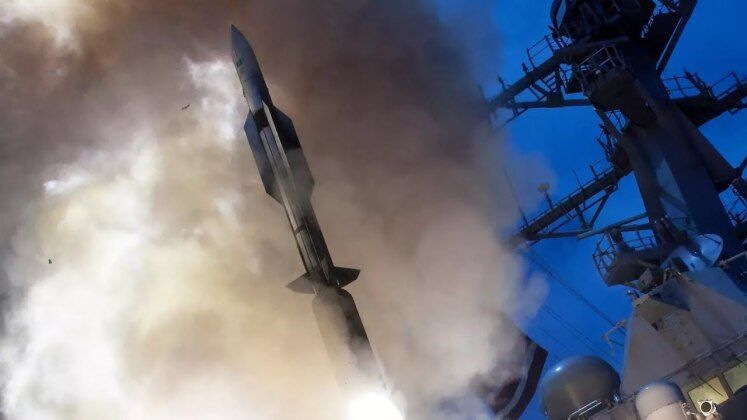
Despite its lack of stealth capabilities, the Kirov class has a number of survivability advantages, with its greater size and extensive compartmentalisation and redundancy allowing it to absorb damage while continuing to fight in ways that the Zumwalt class cannot. Soviet naval doctrine assumed that large surface combatants might sustain battle damage during missile exchanges and therefore emphasised redundancy, compartmentalisation, and layered defensive systems, with the Kirov’s massive hull accordingly providing significant internal volume for separated machinery spaces, duplicate systems, and extensive damage-control capabilities. It also carries multiple layers of air-defence missiles and close-in weapon systems intended to defeat incoming threats at different ranges, can better absorb saturation attacks, and is better suited to counter attacks by cruise missiles and aircraft. The Zumwalt, meanwhile, relies more heavily on avoiding detection in the first place rather than enduring hits.
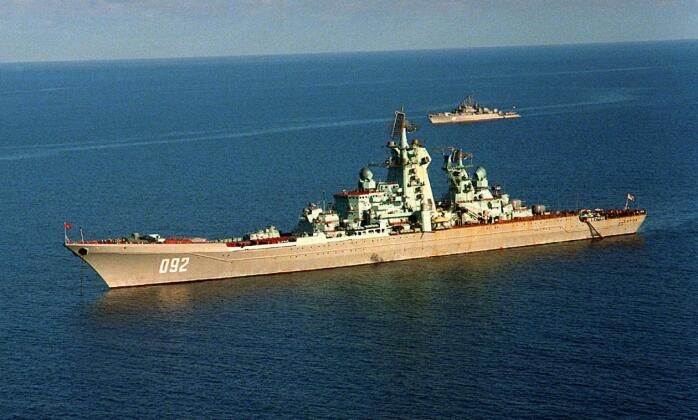
Overall the Kirov class and Zumwalt class both have distinct advantages, with the Kirov in many respects having a greater combat potential and being able to sustain faster speeds due to its nuclear propulsion system. Its advantages are particularly pronounced in anti-shipping roles, with the Zircon missile’s Mach 9 speed, 1,000 kilometre range, and high manoeuvrability well suited to penetrating advanced multi-layered air defences. The Zumwalt, by contrast, appears better optimised for ballistic missile defence roles, which is a primary role of all U.S. destroyer types. The Kirov class’ ability to remain at sea for considerably longer periods, and its far higher versatility, are particularly well suited to operations in the Arctic and Pacific. Where the Kirov is considered Russia’s premier surface combat ship by a significant margin, the Zumwalt has been beset by performance and reliability issues, leading it to be overshadowed by Arleigh Burke Fight III destroyers which have proven to be far less problematic.
