
How China Financed the Development of Russia’s Rarest Fighter Type the Su-30M2
Military Watch Magazine Editorial Staff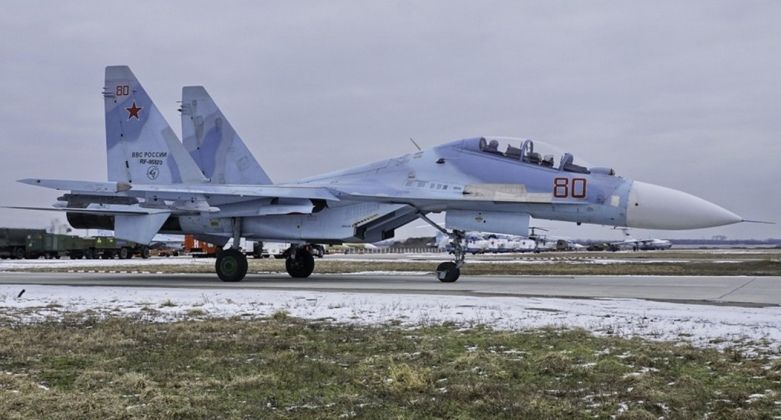
Russian Aerospace Forces Su-30M2
In the aftermath of the disintegration of the Soviet Union, the Russian Defence Ministry suspended plans to procure a wide range of new types of fighter and interceptor types under development, with an extreme shortage of funding leaving its fleet’s capabilities largely unchanged for two decades. Although some of the USSR’s less ambitious fighter programs to develop enhanced variants of its existing fighters were able to be brought to production readiness, the Defence Ministry’s acute lack of funding meant these were produced exclusively for export, with the existence or lack of foreign orders being the decisive factor in whether a fighter type could go into production. Thus the most capable Russian fighter types in the 20 years after the USSR’s disintegration, the Su-30MKK/MK2 and the Su-30MKI, were heavily customised to meet orders from India and China respectively, with none being fielded by the Russian Armed Forces.
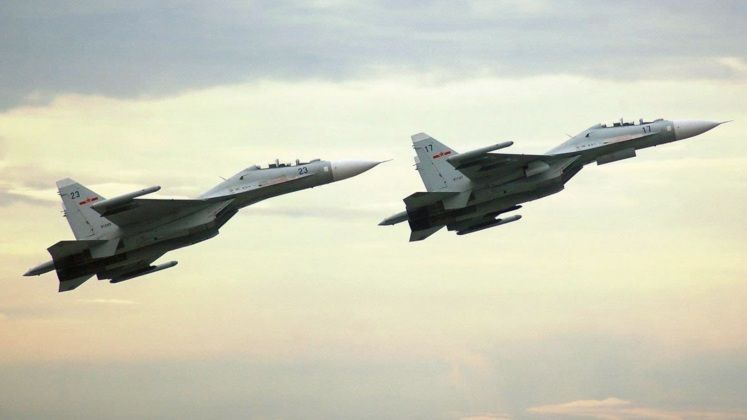
The Russian Defence Ministry placed its first order for a squadron of post-Soviet fighter types reportedly due to the need to keep the Komsomolsk-on-Amur Aircraft Plant in business. The facility from 1999 transitioned to producing the Su-27 to the Su-30MKK, and after three regiments’ worth of the aircraft were produced, again transitioned to produce the more advanced Su-30MK2 variant. This new Su-30 variant was customised to meet the requirements of the Chinese People’s Liberation Army Navy, rather than its Air Force. The Chinese fighter aviation industry’s development of similarly capable fighters domestically, most notably the J-11B, however, resulted in just 24 Su-30MK2 fighters being ordered, after which the fighter type was marketed to other clients including Venezuela, Uganda, Vietnam and Indonesia. Once the small orders placed by these clients were fulfilled, however, the factory suffered from insufficient orders to sustain production rates.
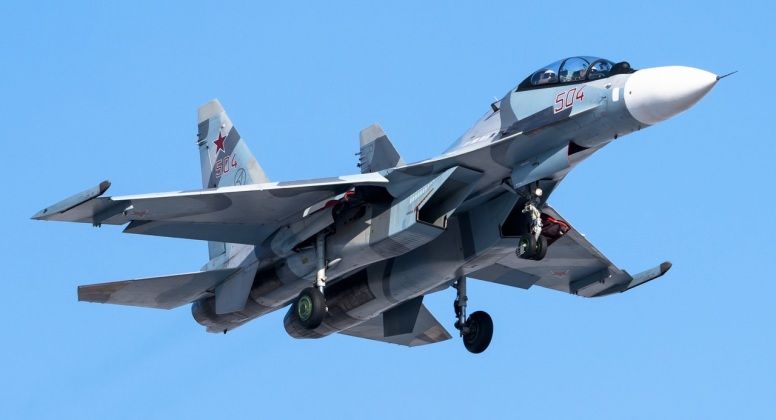
The Russian Aerospace Forces ordered the Su-30M2 as a derivative of the Su-30MK2, with the new aircraft completing factory flight tests in 2010 after four airframes were ordered the previous year. The serious underperformance of the Russian fighter fleet in the Russo-Georgian War in 2008 was a significant further contributor to stimulating the Defence Ministry to place orders, although the aircraft appeared from the outset to be intended primarily as trainers for new ‘4+ generation’ and fifth generation fighters planned for service entry, rather than being intended for frontline use. Only 20 Su-30M2 fighters were ever produced, making it the rarest variant of the aircraft and the least widely fielded in the Russian Aerospace Forces. The Komsomolsk-on-Amur Aircraft Plant subsequently fully transitioned to produce the Su-35S air superiority fighter, a single seat aircraft for which the Su-30M2 fleet plays an important role as a trainer.
