
Russia’s First Fully Indigenous Airliner Makes Maiden Flight: A ‘Saviour’ for Local Civil Aviation Against Western Sanctions
Military Watch Magazine Editorial Staff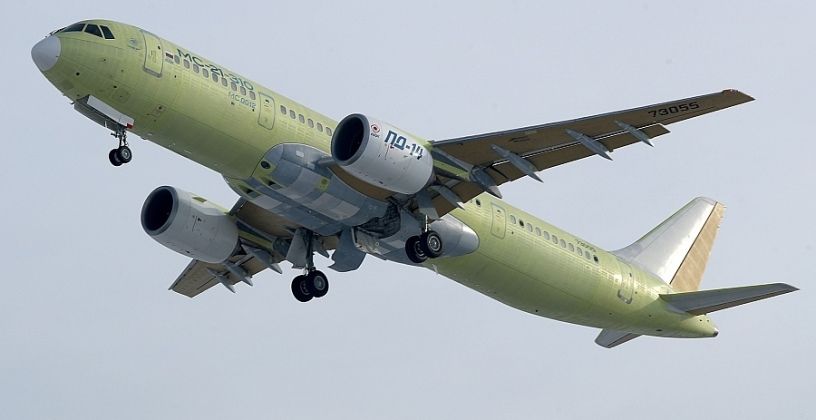
Russian MS-21-310 Airliner
Russia has achieved a major milestone in its civil aviation program with the first flight of the first serial production MS-21-310 passenger aircraft, which was reportedly built using entirely domestically produced components. The flight marks the transition of the aircraft from production to certification testing as Moscow seeks to rebuild its commercial aviation industry around indigenous technologies and totally phase out a reliance on Western aircraft. While the Soviet Union had maintained one of the world’s foremost civil aviation industries, this was devastated after the state’s disintegration in 1991, leaving Russian airlines heavily dependent on airliners from Airbus and Boeing while local production effectively ceased.
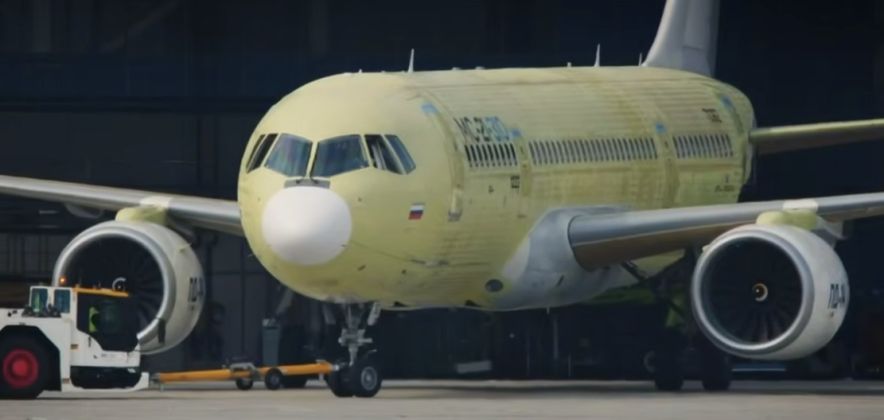
Unlike earlier MS-21 prototypes, which relied on a significant number of imported systems and Western-supplied components, the production-standard MS-21-310 has been equipped exclusively with Russian-made equipment. The aircraft is powered by Aviadvigatel PD-14 turbofan engines and incorporates domestically manufactured avionics, composite wings, flight control systems, and other critical onboard equipment developed as part of Russia’s import substitution programme. During its first flight, test pilots assessed the aircraft’s stability, controllability, and the performance of its onboard systems, with state-owned aerospace conglomerate Rostec reporting that all planned objectives for the flight were successfully completed.
The strategic significance of the MS-21-310 program extends well beyond the introduction of a new passenger airliner. It has become one of Russia’s most important industrial and technological projects, with implications for economic resilience, aerospace independence, and the country’s long-term civil aviation sector. The programme’s foremost strategic objective is to reduce Russia’s dependence on Western aerospace manufacturers and suppliers. Western economic warfare efforts have limited Russia’s access to aircraft, spare parts, engines, avionics, and composite materials from firms such as Boeing, Airbus, Pratt & Whitney, Honeywell, and Collins Aerospace. The MS-21-310 is intended to provide an indigenous alternative capable of sustaining Russia’s commercial aviation industry. The ability to produce airliners remains highly valuable for protracted conflicts, with the aircraft having the potential to support military logistics in wartime.
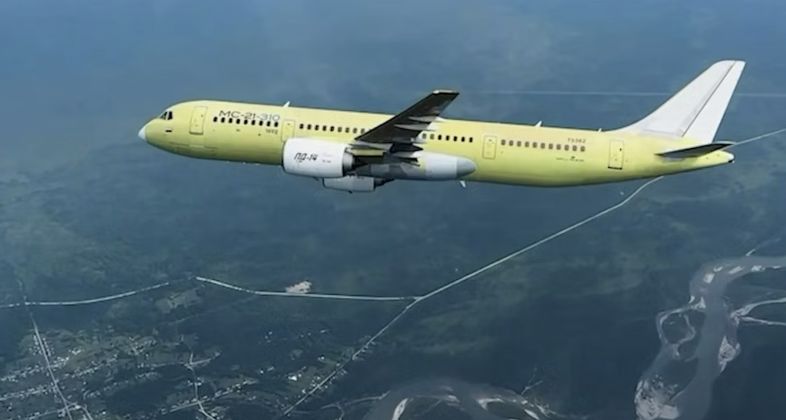
The aircraft also serves as a catalyst for rebuilding Russia’s aerospace manufacturing base. Development of the MS-21-310 has required the creation of domestic capabilities across numerous sectors, including engine production, avionics, flight control computers, composite wing manufacturing, hydraulic systems, and electronic components. Many of these technologies have applications extending beyond civil aviation into military aerospace and other high-technology industries. As Russian airlines continue to rely heavily on ageing fleets of Boeing and Airbus aircraft, many of which face increasing maintenance challenges due to restrictions on spare parts and technical support, successful serial production of the MS-21-310 would provide a replacement aircraft that can be supported entirely through domestic supply chains.
