
Russia Acquiring Several Hundred Fateh-360 Tactical Ballistic Missiles From Iran - Reports
Military Watch Magazine Editorial Staff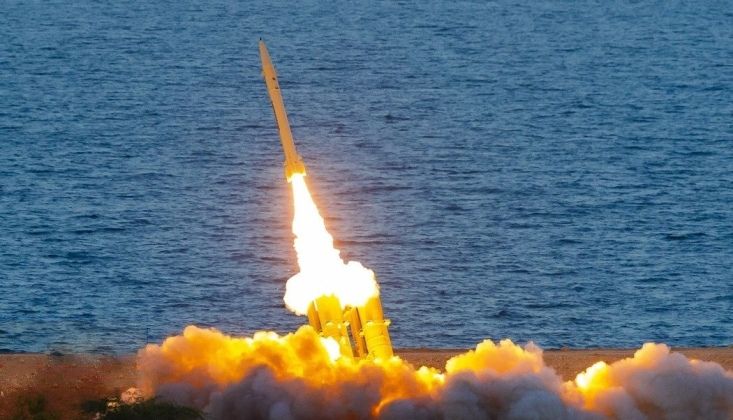
Fateh-360 Launch During Exercises
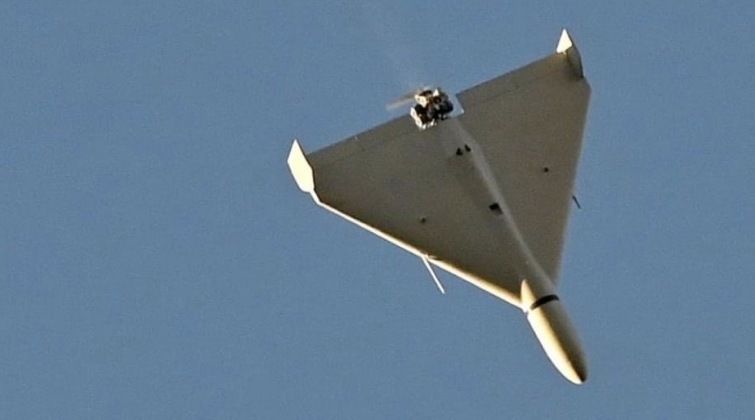
The Russian Armed Forces are set to receive several hundred Fateh-360 short range ballistic missiles produced in Iran, according to European intelligence sources cited by the British media outlet Reuters. The delivery of the missiles is reportedly imminent, and is intended to significantly bolster Russian strike capabilities in the Ukrainian theatre. The Fateh-360 is one of the lightest and shortest ranged missiles classes produced in Iran, and has a very short range of just 120 kilometres, making it more comparable to rocket artillery systems than the ballistic missile systems in its reach. Each of the small solid fuelled missiles uses satellite guidance and carries a 150 kilogram warhead. The system was designed as a lighter counterpart to the already small Fateh-110 ballistic missile, which unconfirmed reports for close to two years have indicated Russia has sought to acquire from Iran. The two Iranian missiles have similar fin configurations. Although Russia is not known to have procured Iranian ballistic missiles in the past, the country’s armed forces have relied heavily on a range of Iranian drone classes, most notably the Shahed-136, for operations in the Ukrainian theatre from the summer of 2022.
The Russian defence sector notably only produces one class of surface launched tactical ballistic missile, the 9K720, which is deployed from the Iskander-M system. This much larger missile, with a heavy 500 kilogram warhead, 500 kilometre range, and complex semi-ballistic trajectory designed to optimise it for evading enemy air defences, makes it far more costly than lower end systems such as the Fateh-360. Although Russia has significantly increased production of the 9K720 since 2022, it has sought to further expand and diversify its arsenal by acquiring North Korean KN-23, KN-23B, and KN-24 ballistic missiles, the first two of which provide heavier and longer ranged counterparts to the Iskander-M, while the latter provides a shorter ranged lighter counterpart. While Iran lacks a ballistic missile system with a comparable performance to the KN-23 and Iskander-M, its defence sector is well optimised to providing lower end tactical missiles with high levels of precision guidance, and doing so in large quantities.
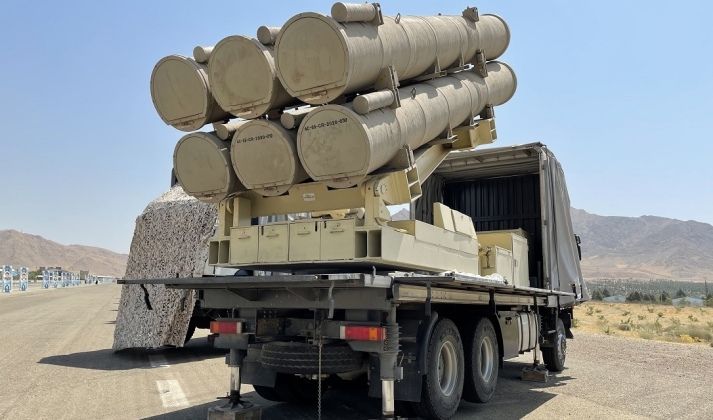
The Fateh-360 is one of Iran’s newest ballistic missile systems, and was unveiled only in April 2022. The system is widely speculated to have benefitted from North Korean support and technology transfers, building on Korean experience developing the KN-25 system, and following over four decades of missile and missile technology transfers from Pyongyang to Tehran. Russian Defence Ministry representatives are reported to have signed a contract in Tehran as early as December 13, with personnel having since visited the Middle Eastern country to learn about the system. The use of these systems would allow Iran to place further pressure on its Western adversaries in the Ukrainian theatre, as considerable forces from across multiple Western countries having been deployed to participate in operations against Russia including frontline combat units. Unconfirmed reports have indicated that Russia has sought to offset the costs of acquiring armaments from Iran by bartering combat aircraft to the country - which represent one of the few asset types that it fields in abundance despite attrition in the Ukrainian theatre. Iran has reportedly placed orders for 24 Su-35 fighters, with options for up to 40 more, to modernise its fleet, and in September 2023 received its first Russian Yak-130 combat trainers. Iranian orders for Mi-28 attack helicopters have also been reported.
