
Russia Enhances Iranian Shahed ‘Kamikaze’ Drones with Air-to-Air Missiles
Military Watch Magazine Editorial Staff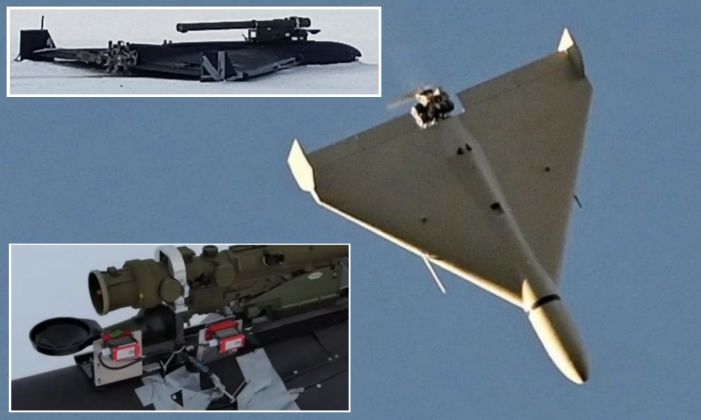
Shahed 136/ Geran 2 and Attacked Anti-Air Missile Launcher
Iranian-designed Shahed 136 single use attack drones being produced under license in Russia as the Geran 2 have been modified to provide them with air-to-air capabilities, with Ukrainain Armed Forces personnel reporting that the Igla man-portable air-defence systems had been attached to the aircraft. The Shahed aircraft was fitted with a camera and a radio modem, while the missile launch is controlled by the drone’s remote operator. It remains unconfirmed whether this configuration is experimental, or has been more widely adopted. The fitting of expendable unmanned assets with short range infrared guided anti-aircraft weapons is far from unprecedented, with the Ukrainian Navy having integrated U.S. supplied AIM-9 short range air-to-air missiles onto its unmanned drone boats to target Russian aircraft over the Black Sea.
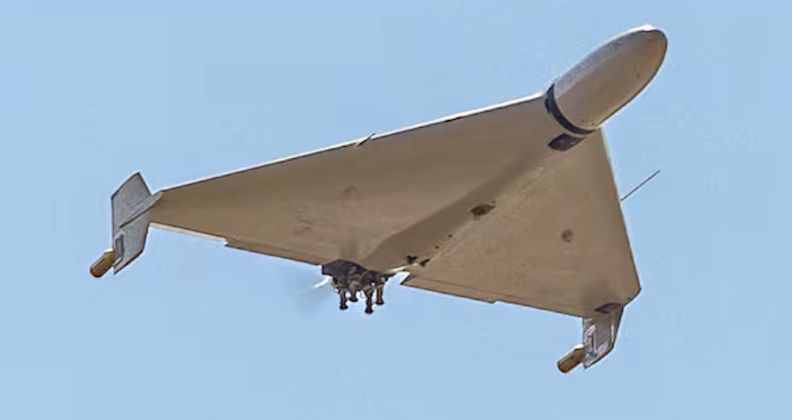
Ukrainain officers have issued warnings to aviation crews regarding the new threat. “The Shahed is equipped with a camera and a radio modem. The missile launch is carried out by the Shahed pilot, who controls it from the territory of the Russian Federation. I ask army aviation pilots to take note of the appearance of a new threat. It is necessary to avoid approaching a Shahed on a head-on course and to be more cautious with those standing on the circle,” officer Serhii Beskrestnov warned to this effect. This is far from the first major modification to the Shahed 136 design made in Russia, with other alterations having been made to allow the aircraft to lay mines deep behind enemy lines, while new guidance components, communications links, and missile seeker countermeasures subsystems have also been integrated. Variants equipped for air-to-air roles are not expected to be procured in significant numbers, and by some estimates cost three or more times as much as baseline variants. The existence of significant Soviet-era stock piles of man-portable missile launchers, however, could make this configuration more viable.
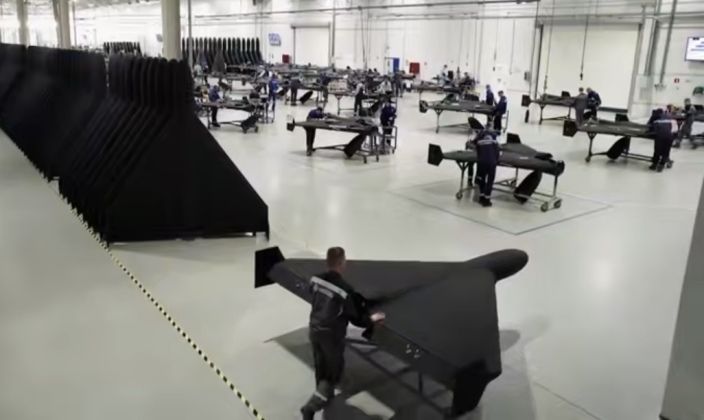
In October Ukrainian military sources noted that Shahed 136 drones had demonstrated a new capability to strike dynamic moving targets near the frontlines, and have seen their ability grow to provide close air support for Russian ground forces. The growing ability of single use drones to dynamically seek out both stationary and moving targets inside Ukrainian territory has heavily compensated for the Russian Aerospace Forces’ lack of either robust long-range kill chains or air superiority. The integration of simple line-of-sight datalinks onto such aircraft has been pointed to as one potentially straightforward means of making the Shahed 136 particularly effective in targeting rear logistics, artillery units, and air defence systems. The expansion of production has ensured that enough drones are available to be used against lower value battlefield targets, with British sources in mid-2025 reporting that production had increased more than tenfold from 300 a month, to over 100 per day, while industry remains on track to be able to produce 500 daily.
