
Russia’s Enhanced T-72B3 Tanks Destroying Two or More Targets Per Mission in Ukraine as Modernisation Continues
Military Watch Magazine Editorial Staff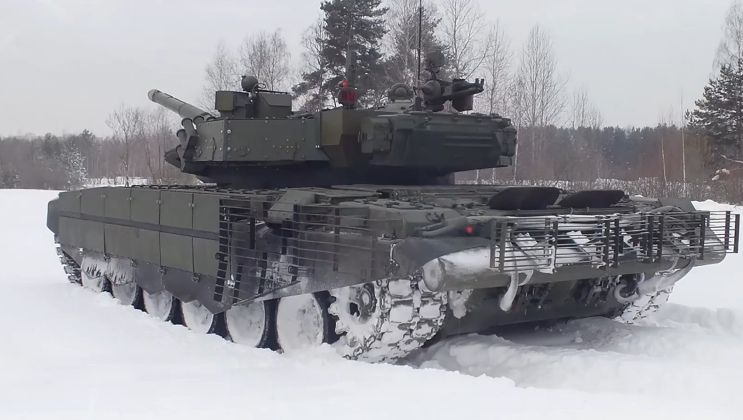
T-72B3 with 2022 Armour Upgrade and Arena APS
The commander of a tank crew the separate Novorossiysk Airborne Division has provided insight into the operations of Russian T-72B3 main battle tanks in the Ukrainian theatre when speaking to local media. Operating under the callsign Kazan, the commander observed: "We mainly go out to fire at dugouts, earth-and-timber strongpoints, and bunkers. We operate from concealed positions, as due to technology, we cannot engage head-on. It’s a drone war now, so to speak, and we mainly strike dugouts and concealed positions in forest belts. We strike first, and then the assault group moves in. We go out into position and are assigned targets, usually two points.”
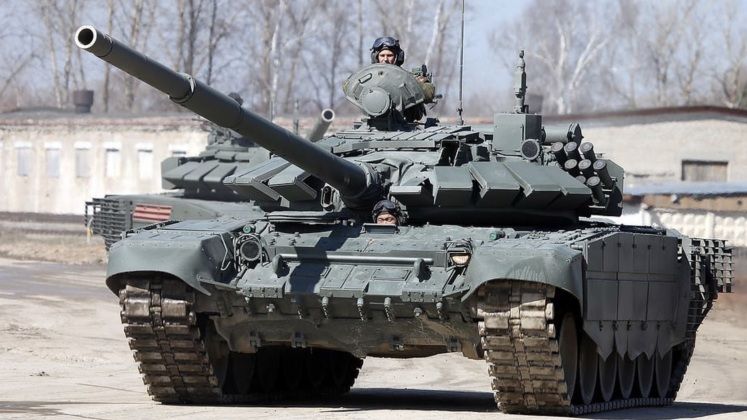
Commenting on how T-72B3 crews engage their targets, Kazan observed: “We engage one, hit it with the fourth or fifth shell, and then move on to the other. We destroy at least two targets.” He added that support from drones provides important assistance during combat operations, and allow crews to more accurately adjust fire. The T-72B3 formed the backbone of the Russian Army’s armoured units at the time of the outbreak of full scale hostilities in February 2022, and while suffering very significant losses in the initial weeks of the conflict, they have since seen both the capabilities and the means by which they are operated modernised considerably. The result has been a considerable improvement in combat effectiveness and rapid decline in loss rates.
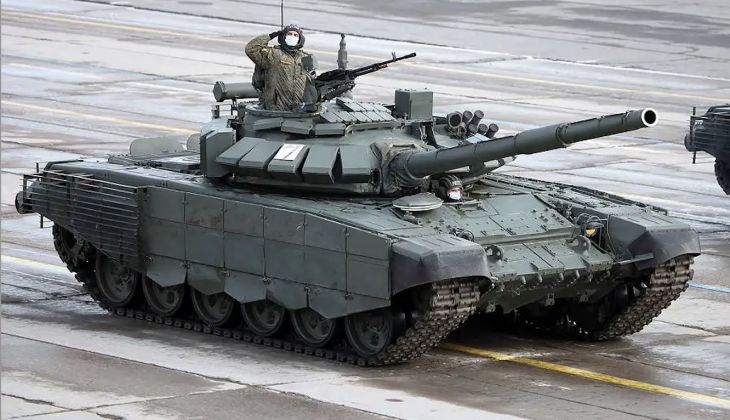
Approximately 200 modifications have been made to the T-72’s design since the outbreak of hostilities, which have improved its firepower, protection levels, and mobility. In late 2022 an up-armoured variant with a similar armour configuration to the newer T-90M main battle tank began to be observed, which some sources have informally referred to this as the T-72B4. Two years later from late 2024 T-72s also began to integrate hard kill active protection systems in parallel to the integration of such systems onto the T-90M fleet. With the Russian Army having lost tanks in the conflict far faster than its production lines can replace them with new T-90s, its defence sector has relied on enhancing T-72s tanks inherited from the Soviet Union, primarily by bringing them up to the T-72B3M standard.
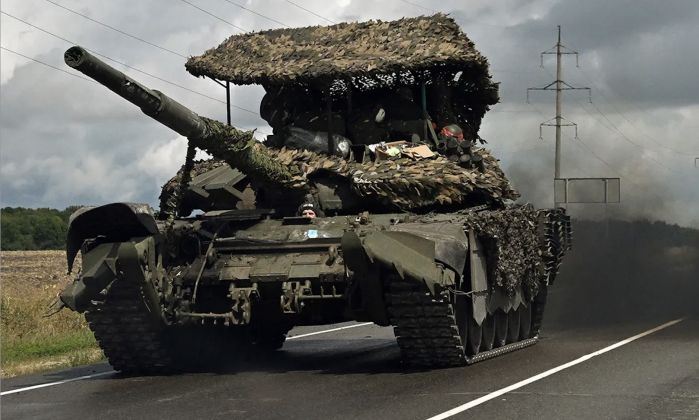
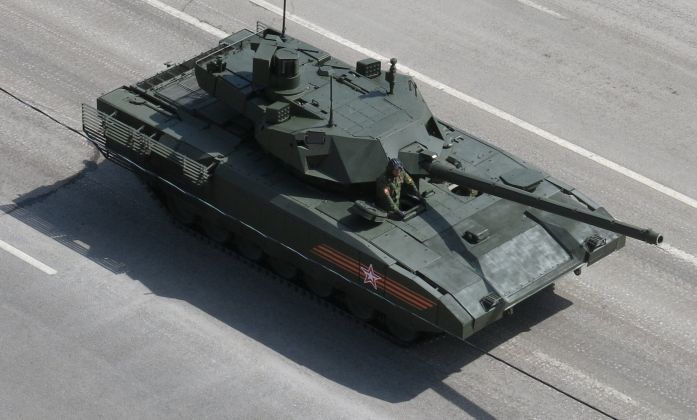
The firepower of the T-72B3 gained particular attention in the Ukrainian theatre when, shortly after U.S.-supplied M1 Abrams tanks were first deployed for combat operations, one of the enhanced Russian tanks became the first in the world to frontally penetrate one of the in a tank-on-tank engagement in early 2024. The T-72B3 integrates the new 2A46M-5 smoothbore gun and is compatible with a wide range of post-Soviet munitions types that have improved penetrative capabilities, with its firepower being a particularly outstanding feature of the vehicle. Russia’s continued reliance on the T-72 is largely a result of difficulties the defence sector has had in developing a clean sheet successor, the T-14, which has seen its service entry repeatedly delayed.
In early March the Russian state defence conglomerate Rostec stated that the T-72 has very significant potential for further modernisation. “The higher the upgrading potential, the better the combat equipment. The T-72B3M tank, produced by our Uralvagonzavod Group, is a platform with almost endless capabilities. This combat vehicle is significantly superior to earlier T-72 models thanks to a modern sighting system, new protective equipment, and a more powerful engine,” it observed. The firm particularly highlighted the tank’s modular design which can be quickly reconfigured to respond to specific threats and challenges. Although the T-72B was considered one of the world’s foremost tank types in the mid-1980s, it is capabilities have fallen increasingly behind, particularly as China unveiled the world’s first operational fourth generation tank in 2025 the Type 100, which is far better optimised for operations in an era of drone warfare. While incremental modernisation can prevent the T-72’s obsolescence, continued reliance on the type will still leave the Russian Army increasingly behind the cutting edge as China and South Korea lead the world in developing new generations of tanks.
