
Russia Confirms Submarine ‘Motherships’ for Poseidon Nuclear Armed Underwater Drones Already in Service with Navy
Military Watch Magazine Editorial Staff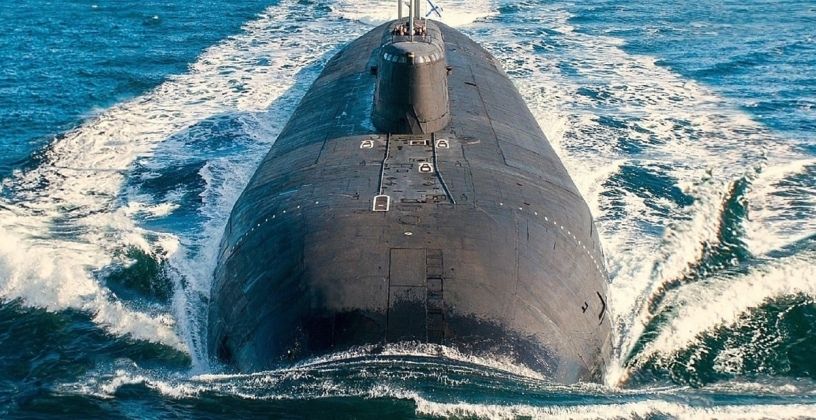
Russian Navy Oscar Class Submarine
Commander-in-Chief of the Russian Navy Admiral Alexander Moiseyev has announced that a dedicated carrier for its 2M39 Poseidon nuclear-powered unmanned underwater vehicle has already entered operational service, confirming that one of the country's most strategically significant weapons programs has progressed beyond the development stage. "We already possess such a carrier. And we are all well aware that this program is linked to the development of the strategic weapon that this vehicle represents. And, of course, such a carrier is already part of the Navy. Our country's leader has also spoken about this publicly," the admiral stated.
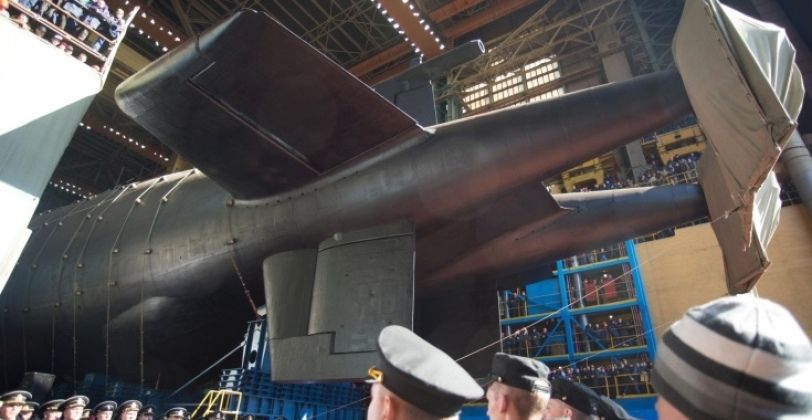
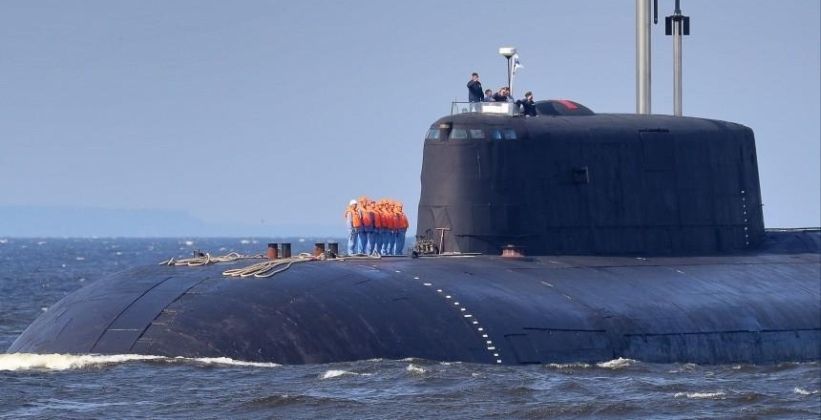
Although Admiral Moiseyev did not identify the vessel by name, the carriers were widely understood to be the specially modified Project 09852 nuclear-powered submarines Belgorod and Khabarovsk, the first platforms specifically built to deploy the Poseidon. Commissioned into the Russian Navy in 2022, the Belgorod is the longest submarine ever constructed, measuring approximately 184 metres in length. Based on the Oscar II class cruise missile submarine, it was extensively redesigned to accommodate multiple Poseidon unmanned submarines while also supporting deep-sea research and special operations missions.
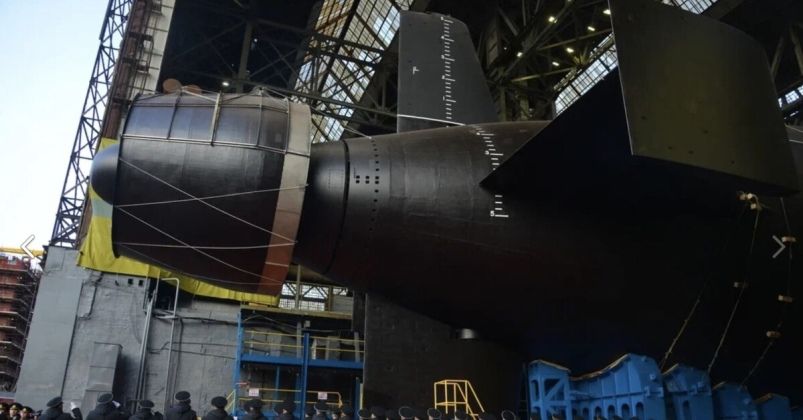
In November 2025 the Russian Severodvinsk Shipyard launched the first Khabarovsk class 10,000 ton nuclear powered submarine, which represents an entirely new type of strategic warship designed specifically to deploy the Poseidon. Where the Belogrod was developed as a heavily modified Soviet cruise missile submarine, serving as a stopgap, the Khabarovsk class is considerably more capable and stealthier. The second ship of the class, the Orenburg, was laid down in mid-2025. In late October Russian President Vladimir Putin commented on the development of the Poseidon, noting that it uses a miniaturised version of a submarine nuclear reactor approximately one percent the size.
The Poseidon is nuclear-powered autonomous underwater vehicle designed to travel thousands of kilometres beneath the ocean before delivering a high-yield nuclear warhead against coastal cities, naval bases or carrier strike groups. Its nuclear propulsion system provides effectively unlimited range, while its underwater operating environment makes interception significantly more challenging than conventional ballistic missiles. The drones are single use weapons, and are designed to detonate their warheads deep under water to trigger radioactive tsunamis, which can inflict mass destruction on enemy coasts. This makes it one of the most unconventional strategic nuclear weapons ever developed, with its service entry complementing the rapid modernisation of the Russian Navy’s fleet of ballistic missile submarines.
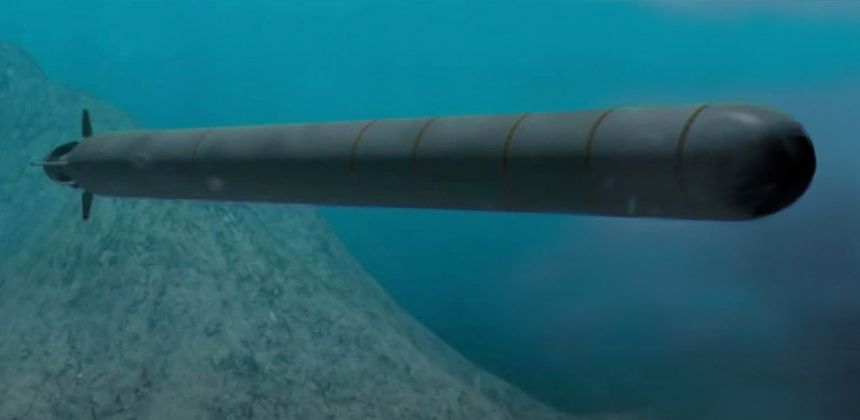
The Poseidon as one of several Russian strategic systems developed specifically to ensure the credibility of Russia’s nuclear deterrent against expanding Western missile defence networks. Unlike ballistic missiles, which follow predictable trajectories through space and can theoretically be intercepted by anti-ballistic missile systems, Poseidon approaches its targets underwater, bypassing conventional missile defences entirely. This alternative attack profile has been presented by Russian officials as ensuring an assured second-strike capability even in scenarios where ballistic missile defences become significantly more effective.
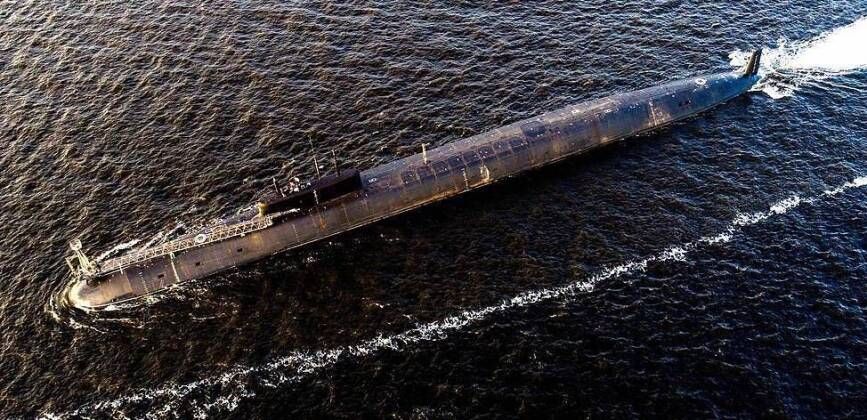
The Belgorod itself serves multiple highly specialised missions beyond acting as a carrier for Poseidon drones. The submarine is also believed to support Russia's Main Directorate of Deep-Sea Research (GUGI), operating deep-diving submersibles capable of working on the seabed at extreme depths. Western analysts have long assessed that these capabilities allow Russia to inspect, recover or potentially interfere with undersea infrastructure including communications cables and sensor networks, making Belgorod one of the most versatile strategic submarines in Russian service. Current reports indicate that additional dedicated Poseidon carriers are under construction.
