
Russia Reequips Two Air Regiments with Il-76MD-90A Heavy Transports
Military Watch Magazine Editorial Staff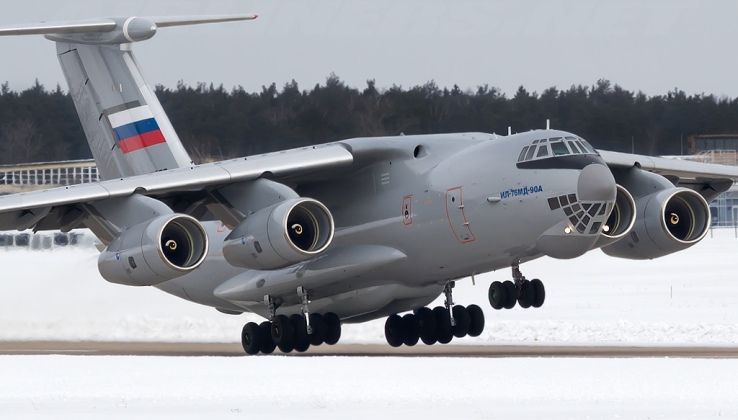
Il-76MD-90A in Russian Aerospace Forces Service
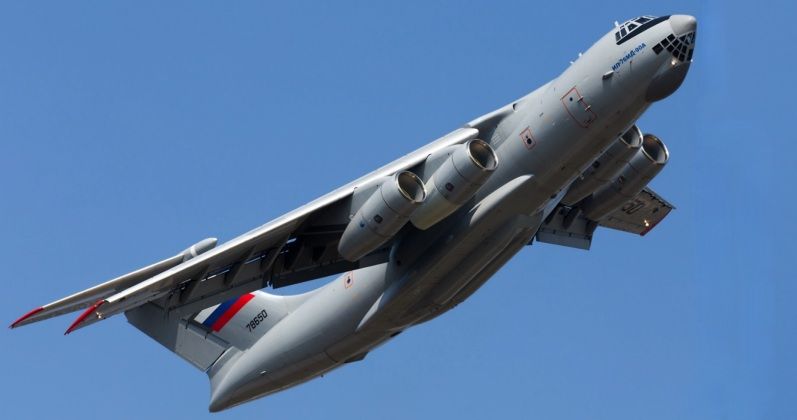
The Russian Aerospace Forces have re-equipped two transport aviation regiments with the Il-76MD-90A heavy transport aircraft, as continued production has allowed for the enhancement of aerial logistics capabilities. Commenting on the procurement, Military-Transport Aviation Commander Lieutenant General Vladimir Benediktov stated in an interview: “In 2025, the state defence procurement plan for us was completely fulfilled. We received the new Il-76MD-90A aircraft, which have already been re-equipped for both regiments.” He added that previously commissioned equipment was also being modernised: for example, with the most Il-76MD aircraft being upgraded to the Il-76MD-M standard.
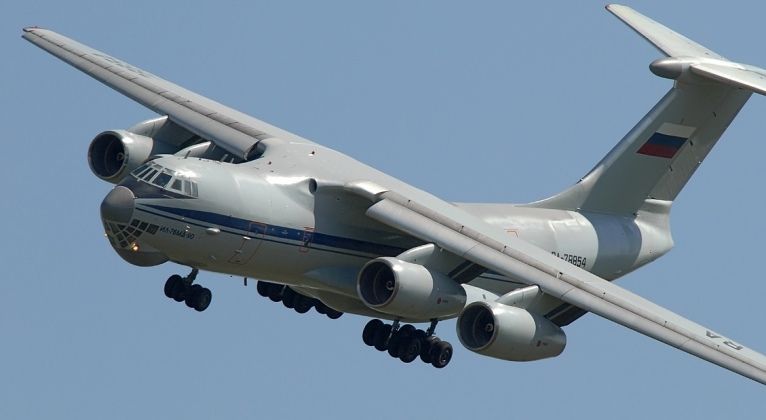
Benediktov elaborated that Russia’s military-transport aviation had been expanding its fleet and deployment areas in recent years, with the expansion of the fleet continuing. The Il-76 has since the late 1970s formed the backbone of the Russian heavy airlift fleet, although the program faced significant setbacks following the disintegration of the Soviet Union. The aircraft were during the Soviet era produced in Uzbekistan, resulting in Russia gradually losing reliable access to serial production of new Il-76 airframes, and in a much diminished ability to produce the aircraft of export. In the 2000s extensive efforts were undertaken to move production facilities to the Aviastar-SP plant in Ulyanovsk, Russia, while restoring the Soviet era supply chains that had largely disappeared after the country disintegrated.
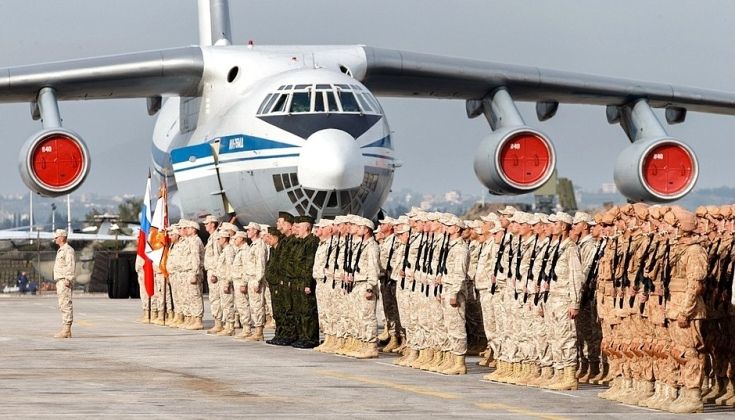
The Il-76 has been one of the most important enablers of Russian military power projection, with its combination of long range, heavy payload, and ability to operate from relatively austere airfields being highly valued. The aircraft served as the backbone of Russian military logistics in the Ukrainian theatre, transporting personnel, ammunition, precision-guided munitions, spare parts, and other military cargo between Russia’s military districts and operational theatres, while supporting medical evacuations. Preceding this, the aircraft became the principal provider of a rapid strategic lift for personnel, ammunition, spare parts, and sensitive military hardware into Syria, and were instrumental in establishing and sustaining the Russian air group at Khmeimim Air Base to support local counterinsurgency efforts. The aircraft have also enabled Russia to project influence into West Africa, including airlifting personnel and supplies to support Malian government counterinsurgency operations.
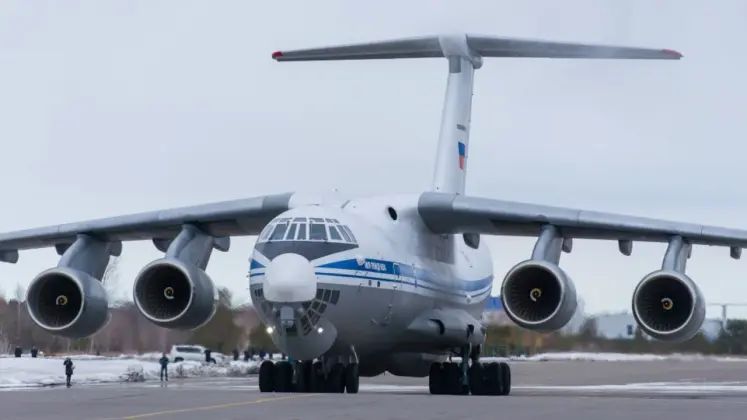
Il-76 aircraft built in post-Soviet Russia were designated Il-76MD-90A, and represented a deeply redesigned version of the Soviet transport rather than a direct continuation of the original design built in Uzbekistan. Russian industry effectively had to rebuild the program while simultaneously introducing extensive modernisation measures, causing considerable costs. Improvements included a greater payload capacity, increased fuel carriage, a new wing structure, strengthened landing gear, a modern glass cockpit, updated navigation and flight-management systems, and the integration of more powerful and fuel-efficient PS-90A-76 turbofan engines. These engines not only increased range, but also increased payload capacity to 60 tonnes compared to roughly 40–50 tonnes for earlier variants.
Beyond transport duties, the Il-76MD-90A serves as the basis for several strategic support aircraft, including the Il-78M-90A tanker and the A-100 airborne early warning and control system, which made restoring production critical. Despite significant difficulties with production, the aircraft production gradually stabilised in the mid-2020s, with annual deliveries rising from two or three aircraft to six or seven per year, while Russian industry pursued plans for much higher output. Supply-chain bottlenecks, workforce shortages, and quality-control issues have nevertheless continued to hamper expansion plans. The program represents one of the most significant attempts by post-Soviet Russia to rebuild a major aerospace manufacturing capability that had effectively been lost after 1991.
