
Republic of China Army Demonstrates U.S. Stinger Missiles’ Heat-Seeking Air Defence Capabilities on Large Scale
Military Watch Magazine Editorial Staff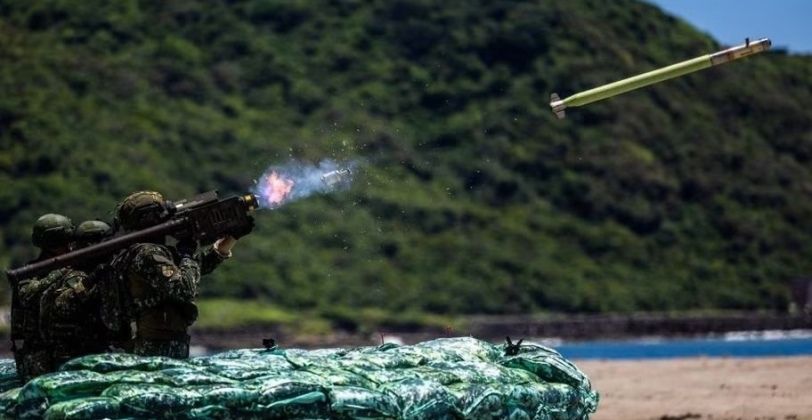
Republic of China Army Stinger Missile Launch
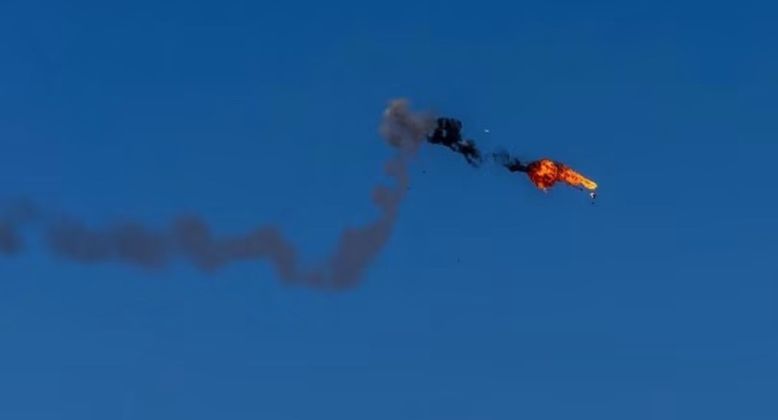
The Republic of China Army has commenced its 2026 Shen Gong live-fire exercises, with a the primary focus being the first large scale operational live-fire testing of the FIM-92 Stinger man-portable surface-to-air missile systems from multiple launch platforms. The U.S.-supplied Stinger has become one of the Republic of China (ROC) Army’s principal short-range air defence weapons, providing frontline units with a highly mobile and easily concealable asset capable of defending against low-flying aircraft and cruise missiles. The exercises were intended to evaluate the effectiveness of frontline air defence units’ missile capabilities. Soldiers fired the shoulder-launched missiles against aerial targets to validate the weapon’s effectiveness, with the exercise having assessed not only missile accuracy, but also the ability of operators to rapidly detect, track, and engage airborne threats under realistic combat conditions.
The Republic of China Defence Ministry first procured the Stinger in the 1990s as part of a broader effort to modernise the Army layered air defence network. The missile was initially primarily procured to equip the Army’s Avenger Air Defense System, which mounts eight ready-to-fire Stingers on a wheeled vehicle together with electro-optical sensors and a .50 calibre gun. The Army has since expanded its inventory by procuring the latest FIM-92F Stinger Block I missiles and introducing the Man-Portable Stinger Missile System into wider service. In 2019 the United States approved the sale of 250 Stinger missiles and their launch units, with a portion of these having also equipped the heavily militarised Republic of China Military Police Command.
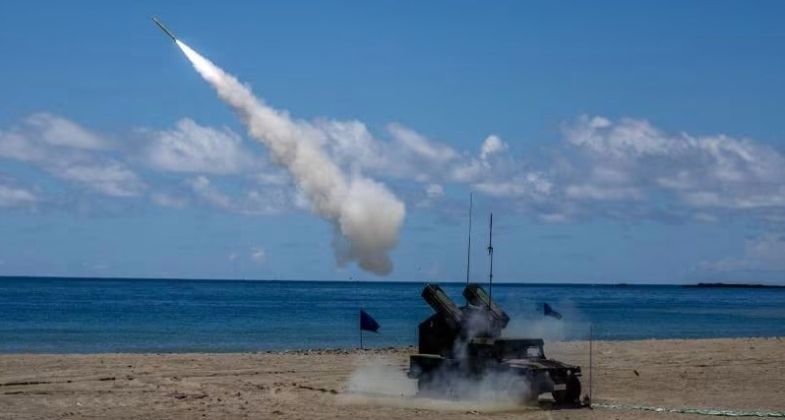
Alongside the man-portable systems and Avenger systems, the Army also procured the Dual Mounted Stinger, which mounts two ready-to-fire missiles on a pedestal with an optical sight. It has further integrated Stingers onto its AH-64 attack helicopters where they function as low cost air-to-air missiles. All four launch platforms were tested in the latest Shen Gong Exercise. Together, the four launch platforms provide the Republic of China Army with a layered short-range air defence capability. The man-portable and Dual Mounted Stinger systems protect infantry units and fixed positions, the Avenger provides highly mobile battlefield air defence for mechanised formations, and the AH-64E provided air cover complementing the anti-drone capabilities of its cannon and guided rockets.

Within the Republic of China Armed Forces’ integrated air defence architecture, the Stinger occupies the lowest tier of a layered defensive network. Long-range systems such as the Patriot and Sky Bow form the top tier of this network, but rely on radars for detection, tracking, and guidance, leaving them vulnerable to jamming and to tracking of their radar emissions. The Stinger is intended to defeat threats that penetrate these outer layers or appear unexpectedly at low altitude, providing point defence for frontline troops, command posts, logistics sites, air bases, and other critical infrastructure. It’s role is particularly significant due to the limited viability of longer range radar guided systems in the face of the Chinese People’s Liberation Army’s advanced electronic attack and stealth capabilities, which could leave the ROC Armed Forces heavily reliant on low tier infrared guided systems like the Stinger. The Republic of China Armed Forces and the Chinese People’s Liberation Army remain in a state of civil war, with the balance of power in the air increasingly overwhelmingly favouring the latter.
