
Preventing War on the Korean Peninsula; China and Russia Launch Large Scale Military Exercises Near Korea Coinciding with U.S. Anti-Pyongyang Drills - Part One
Military Watch Magazine Editorial Staff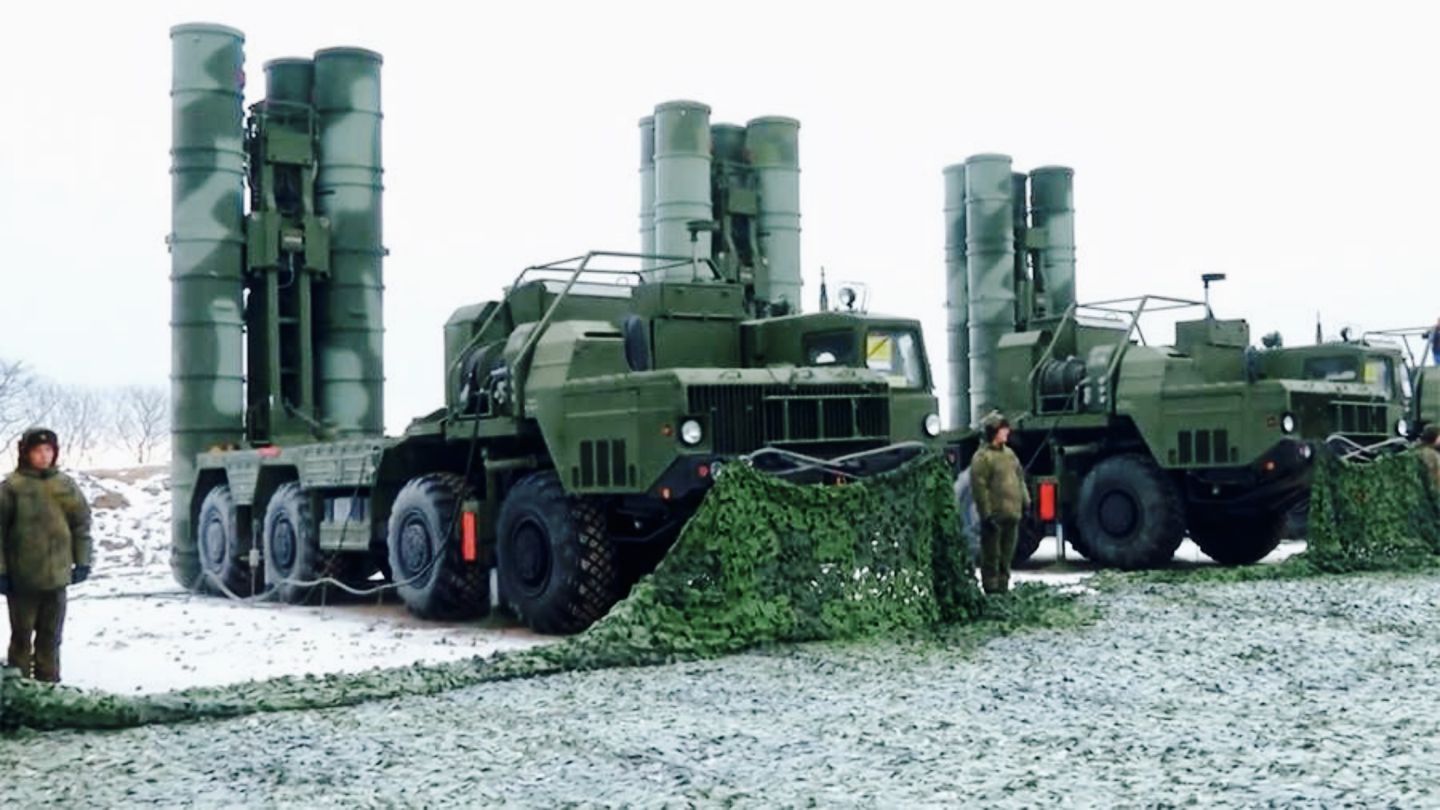
S-400 SAM Systems Deployed Near the North Korean Border
Amid growing tensions on the Korean Peninsula the United States in December 2017 began an unscheduled military exercise on an unprecedented scale simulating an war with North Korea. The announcement of the Vigilant Ace drill brought an end to North Korea's long pause in missile testing, and saw the testing of the new Hwasong-15 ICBM capable of striking the American mainland including Washington D.C. - an attempt by Pyongyang to gain a deterrent sufficient to prevent U.S. military action. The United States has prepared decapitation units for strikes on the North Korean leadership and tactical nuclear weapons for strikes on bunkers and fortified weapons installations among other measures ready for use against the country. Highly formidable U.S. weapons systems such as B1-B and B-2 bombers and F-15 and F-22 air superiority fighters have all been deployed to Korea to simulate strikes on the north. There have been calls among leading U.S. lawmakers and military leaders to withdraw the families of U.S. personnel from South Korea and make preparations for the unprovoked initiation of preventative nuclear strikes against North Korea, and the threat of American military action seems greater than ever.
China and Russia, both neighboring North Korea, have drawn a red line at any U.S. military action against Pyongyang, both stating that such action would be intolerable. Both have moved extensive air defence assets near their Korean borders, with extensive coverage over North Korean airspace, and staged drills practicing shooting down enemy missiles. With Russia giving indications that it would target American missiles should the country launch an unprovoked attack on North Korea, and with China's state run media openly stating that it would intervene against the United States should it launch any aggression against Pyongyang, this sent a strong signal to the United States.
U.S., British, French, Dutch, Italian, Belgian and other western military forces deployed to South Korea have previously trained for operations on the Russian and Chinese borders should a war in Korea break out. This and the environmental threat of nuclear strikes on their neighbor make a U.S. war on North Korea a vital threat to the national security of both China and Russia. This threat and their need to prevent 'the destruction of North Korea,' as the U.S. President previously stated he was willing to see through, has led to more direct and unprecedented measures by both Russia and China to deter a U.S. attack, counterbalance American military exercises and deployments to the Korean Peninsula with their own, and reassure Pyongyang of its security.
Continued in Part Two.
