
President Putin on Why Russia’s Avangard Hypersonic Glider is a Game Changer - Thermonuclear Warheads Delivered at Mach 20+ Are No Ordinary Deterrent
Military Watch Magazine Editorial Staff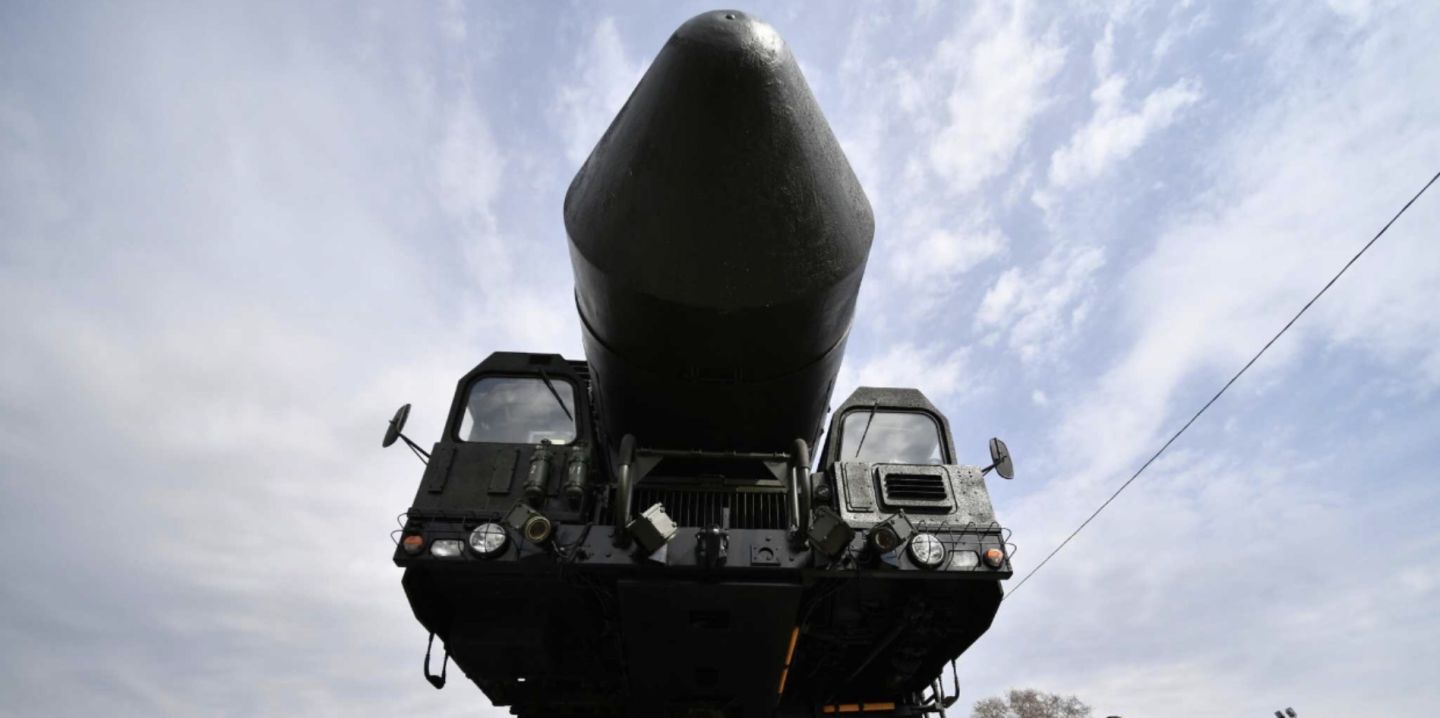
Russian ICBM (RS-24 Yars)
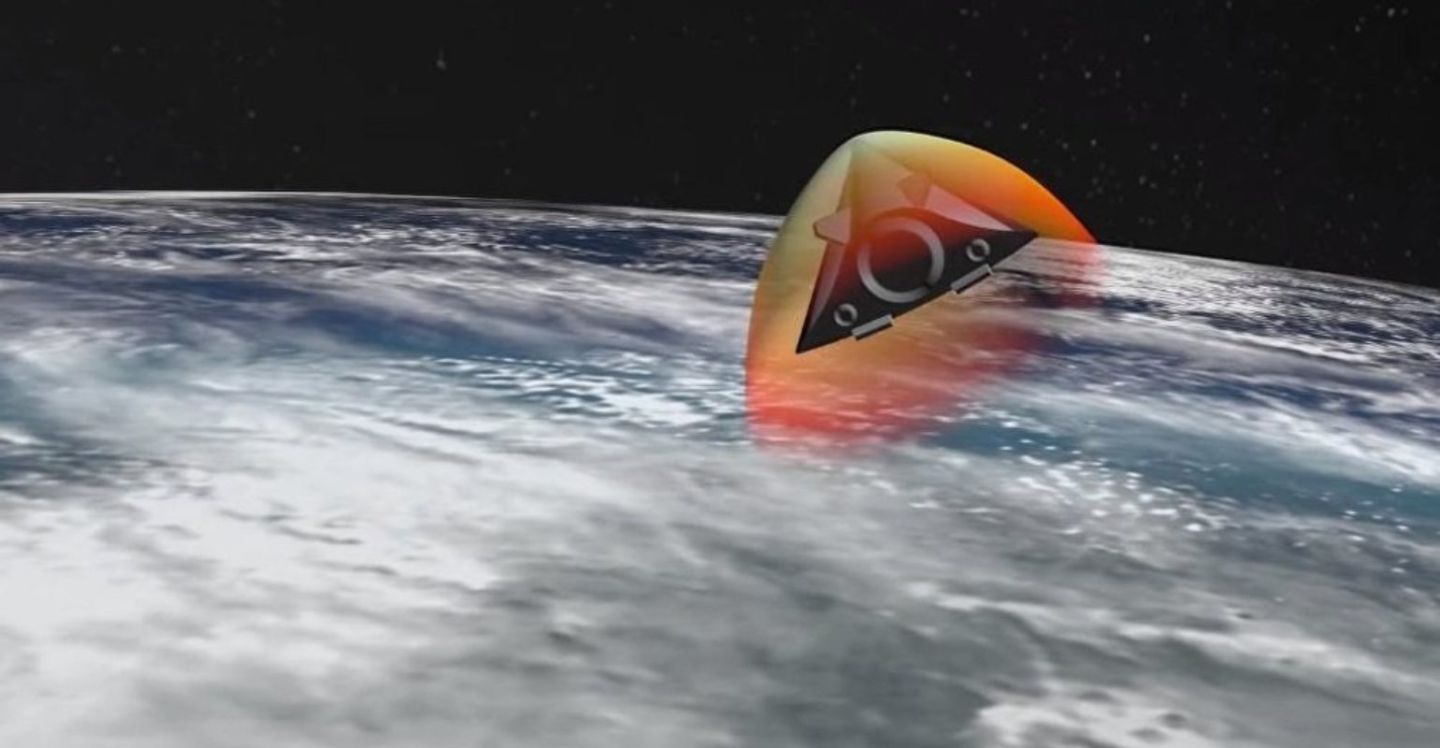
First unveiled in early March 2018, the Avangard hypersonic glide vehicle was one of a number of new hypersonic weapons personally unveiled by Russian President Vladimir Putin intended to revolutionise the country’s warfighting capabilities - both tactically and strategically. The Avangard was designed as a strategic system intended to deliver a large thermonuclear warhead at high hypersonic speeds to any location on the planet. After leaving the lower atmosphere on a UR-100 UTTKh launch vehicle, the Avangard’s ramjet powered engines allow it to surpass speeds of Mach 20 - making effectively impossible to intercept and striking with kinetic force which on its own is enough to level several blocks of a city. The glide vehicle’s high manoeuvrability further enhances its survivability, and upon reaching its target a single thermonuclear warhead of several megatons will be detonated. The Avangard will thus strike 'like a meteorite, like a fireball,’ in the words of Russian President Vladimir Putin when he announced the platform in 2018, and its very high demonstrated precision even at extreme ranges allows it to place its warhead at the centre of any major city anywhere in the world.
The Russian President further elaborated in February 2019 on the capabilities of the Avangard and why he viewed it as a game changer for Russia’s deterrence capabilities. The interviewer, Vladimir Sungorkin, posed the following question: “Mr President, you have compared the Avangard system with the first near-Earth satellite today. Does this not seem to be an overstatement because the first satellite is a far cry from the Avangard system? What happened? Why did you use such a powerful comparison?”
President Putin responded to this as follows: “I see, thank you for your question. As you can see, I have made a reservation. This system absolutely compares with the first near-Earth satellite in terms of maintaining our security. I will explain. The launch of the first space satellite implied, in terms of ensuring security, that the Soviet Union had received systems, or ballistic missiles, for delivering nuclear warheads to the territory of the potential enemy. In effect, that launch ushered in an entire missile programme. Of course, that programme had been developing before that event, but, in effect, it began with that launch. This implies ballistic missiles. But our American friends invented the anti-ballistic missile defence system to safeguard against these ballistic missiles. Therefore, we had to provide an adequate, asymmetrical but serious response. What kind of a response is this?
The Avangard system is our response. A winged glider vehicle moves at Mach 20-plus inside dense atmospheric layers; it was difficult to imagine this in the past. In terms of our defense capability, this amounts to the same landmark achievement as the launch of the first space satellite. This is because that launch implied ballistic missiles, and we are now talking about a new strategic weapons system that moves along a flat trajectory inside dense atmospheric layers. This is another delivery vehicle? Yes, of course, this amounts to another delivery vehicle. But this is an absolute breakthrough in terms of modern technologies and materials. This winged glider vehicle’s nose section heats up to almost 3,000 degrees Celsius. Can you imagine this? What does 3,000 degrees feel like? The Sun’s surface heats up to 6,000 degrees, and here we are talking about 3,000 degrees. I have already mentioned the chocolate-coated ice cream effect, when the vehicle flies along and melts away as it goes. It is coated with a plasma layer, and its sides heat up to 1,900–2,000 degrees. At the same time, the vehicle is controlled accordingly. You know, when I attended the latest tests and when I watched them, the operator said 'Acknowledge message' which means that the vehicle had hit the bull’s eye, the target. The Russian science, engineering school and defense sector have scored an amazing success. Indeed, this is absolutely tremendous. Therefore, a comparison with the first near-Earth satellite is quite adequate and appropriate.”
