
Precaution Against Chinese and Korean Missiles? U.S. Building Major Secondary Airbase in East Asia In Case Guam Neutralised
Military Watch Magazine Editorial Staff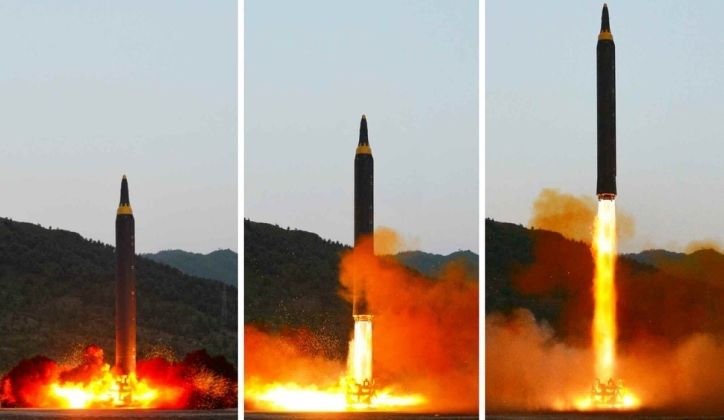
Launch of North Korean Hwasong-12 Ballistic Missile
Reports from the U.S. Department of Defence indicate that the U.S. Air Force plans to open a major new airbase on Tinian Island, with the facility widely speculated to be intended to serve as an alternative to Andersen Air Force Base on Guam in times of war. This development comes as part of a broader effort by the U.S. Military to expand its network of airbases in East Asia, which is itself part of the broader ‘Pivot to Asia’ initiative under which the bulk of American forces are diverted to the area. Tinian Island, which is part of the Commonwealth of the Northern Marianas Islands, was seized by the U.S. Military from the Japanese Empire in 1944 and remains an American possession. It is located approximately 160km north of Guam, and the decision to construct the new facility is thought to have been heavily influenced by the growing vulnerability of Andersen Air Force Base to strikes from China and North Korea in particular. The reach of China’s H-6 bombers, which represents the largest bomber fleet in the world at over 270 aircraft armed with a range of advanced standoff cruise and ballistic missiles, has been a key factor emphasising the high vulnerability of facilities on Guam.
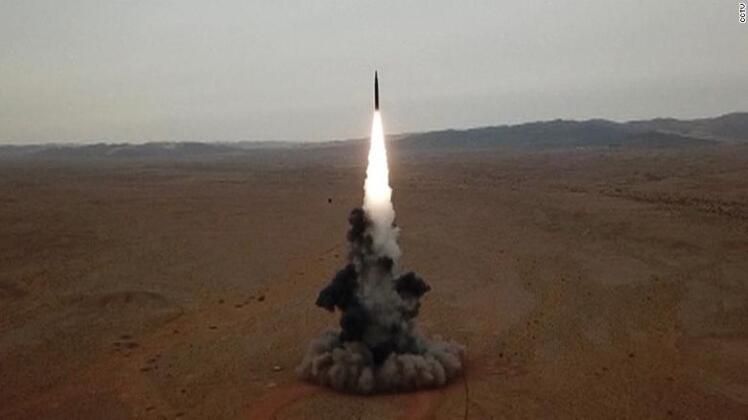
Perhaps more seriously than missile-equipped bombers are the Chinese and Korean ballistic missile arsenals, with their respective DF-26 and Hwasong-12 missiles both termed ‘Guam Killer’ due to their optimisation for targeting American air and naval facilities on the territory. Considering Guam’s critical importance as a hub for Air Force operations in the region, establishing a viable base on Tinian Island could be a major asset in the case of a major regional war and undermine the impact of growing Chinese and Korean strike capabilities. Nevertheless, with both East Asian states’ arsenals fast growing in sophistication, the issue of the vulnerability of American bases operating at such close distances from enemy territory would still remain a very serious issue in wartime. While American strategic bombers can potentially deploy from further afield, including bases in Hawaii and Australia, for the Air Force’s fighter-sized aircraft such as F-35 and F-16 jets, or even the heavier F-22 Raptors, elimination of such bases will effectively exclude them from operations in northeast Asia. The logistical difficulties of conducting ground operations in the region will notably also increase considerably.
