
Portugal Joins the Rest of Europe in Favouring the F-35 to Urgently Replace Obsolete F-16s
Military Watch Magazine Editorial Staff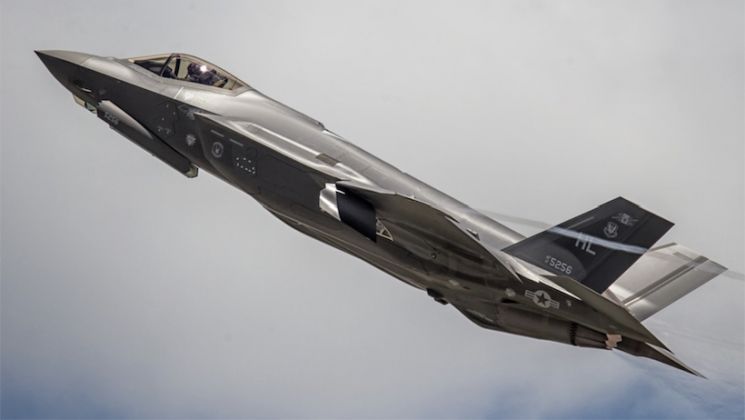
F-35 Fifth Generation Fighter
Portuguese Air Force Chief of Staff General Joao Cartaxo Alves has confirmed that the Portuguese Defence Ministry plans to procure between 14 and 28 F-35 fifth generation fighters , providing long awaited confirmation that the aircraft has been favoured over ‘4+ generation’ rivals. Regarding the urgency of procuring the aircraft to replace the ageing fleet of F-16A/B fighters, he observed: “The Air Force has never had an aircraft in active service for so many consecutive years… Thirty-one years for the most recent F-16s, nearly forty for others. The replacement process should have begun two decades ago.” The first F-35s began to arrive in Europe in 2015, with the Royal Norwegian Air Force having been the first service on the continent to transition its fighter fleet to exclusively operate the aircraft, allowing it to fully phase the F-16 out of service.
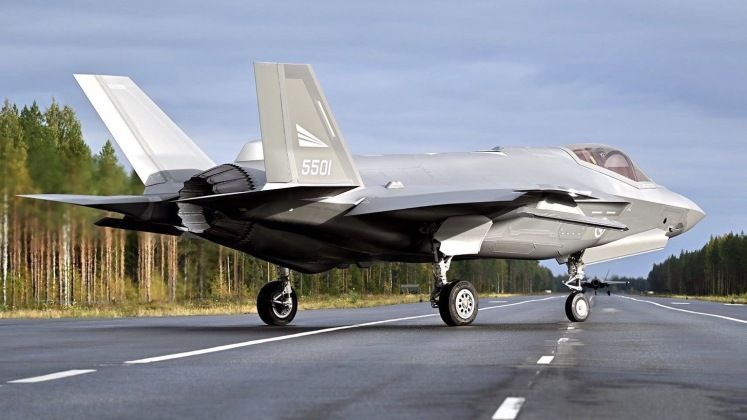
As the poorest country in Western Europe, Portugal has been limited in its ability to procure the F-35 on a significant scale, or to invest in the program at earlier stages when the costs per fighter were significantly higher. The F-35 has consistently won every tender in which it has competed against European fighters, or the rival American F-18E/F, and as the only NATO-compatible fighter of its generation its capabilities are in many respects on an entirely different level. The fighter has continued to gain new contracts across Europe, with a growing number of countries far beyond its limited number of initial program partners placing orders, including Switzerland, Germany, Poland, the Czech Republic and Romania, among others, which all placed their first orders in the early 2020s. Tenders from Finland to Canada have consistently concluded that there is a vast discrepancy between the F-35’s capabilities and those of European fighter types and the F-18E/F. Following Portugal’s decision, it is expected that further holdouts, most notably Spain, may be increasingly inclined to follow suit.
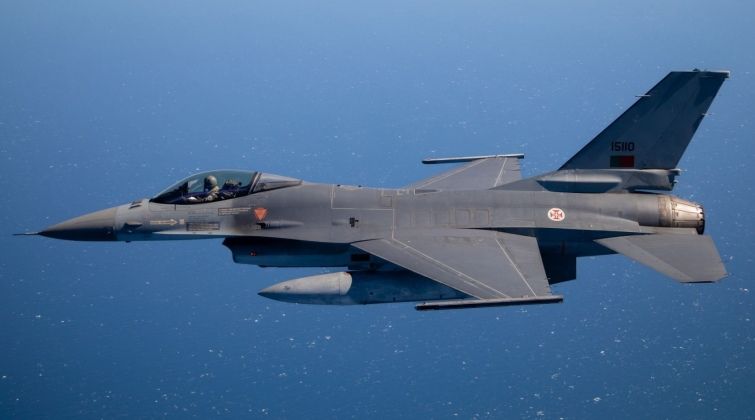
Despite its technological advantages, the F-35 faces a wide range of issues, including limited versatility until the integration of much delayed Block 4 software is completed in the early 2030s. The aircraft’s outstandingly low availability rates compared to other American fighter types have also been singled out for criticism. Pentagon reports have repeatedly highlighted that the F-35 suffers from poor reliability and that its high operational costs could make it unaffordable in the numbers initially expected to be purchased. These costs, which are close to double those of the F-16, have forced operators to compromise by fielding smaller fleets, and by reducing flight training hours for those aircraft that are purchased.
