
Portugal Completes Attack Submarine Deployment to Arctic: More European Warships to Follow Amid Russia Tensions
Military Watch Magazine Editorial Staff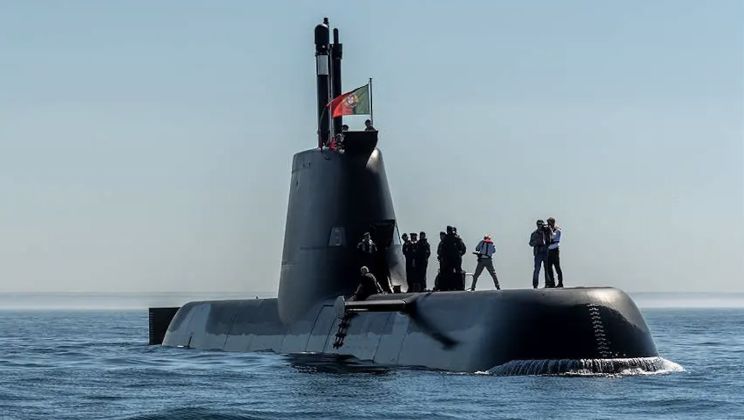
Tridente Class Submarine
The Portuguese Navy has completed its first attack submarine deployment to the Arctic, with the Tridente Class diesel powered warship Arpão expected to be the first of many from Europe to operate in the region at a time of heightened tensions with Russia. This was reported by the NATO Maritime Command as “marking the first time a conventional submarine operated under the Arctic ice. NATO’s submarine fleet significantly reinforces the Alliance’s strategic & tactical advantage.” NATO reported that the deployment was“aimed at deterrence and defence of the Euro-Atlantic area.” It further reported that the warship had been monitoring non-alliance military ships, indicating it had been used to shadow and monitor Russian Navy submarines and surface ships which have a dominant presence in the region. Unspecified support was provided by the navies of Canada, Denmark, and the United States. Tridente Class ships are some of the lightest submarines in the world, and despite their high cost they lack any kind of missile capabilities carrying jus 12 torpedoes. The Portuguese Navy deploys just two of these German built ships.
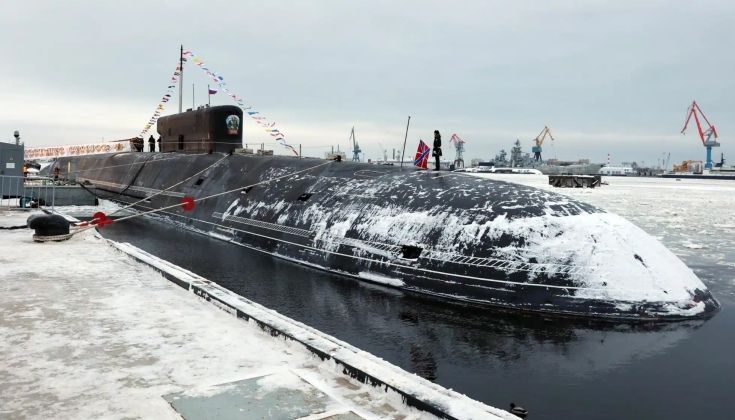
As Russia relies on the Arctic for over 20 percent of its GDP, it remains the only Arctic state outside NATO, which has allowed Western Bloc states to collectively expand their forces to seek to offset Russian military superiority in the region with collective alliance capabilities. Tensions in the region rose from December 19 after the United States made a unilateral claim of sovereignty over approximately 1 million square kilometres of seabed, including a claim to tremendous quantities of minerals and energy resources in the Arctic. Moscow condemned Washington’s new unilateral claim as “unacceptable” at the time, with the head of the State Duma Committee on the Arctic, Nikolay Kharitonov, warning that U.S. attempts to expand the region under its control risked increasing regional tensions. The escalation of the European role in supporting collective Western Bloc interests against Russia comes in parallel to a significant expansion of the European military presence in East Asia confronting China and North Korea. The low combat readiness and efficiency of the large majority of European militaries, however, has raised serious questions regarding the extent of the actual contributions they would be able to make in the event of a high intensity conflict.
