
Poland Puts Patriot Air Defences on Alert as Four Russian MiG-31I Ballistic Missile Carriers Approach Airspace
Military Watch Magazine Editorial Staff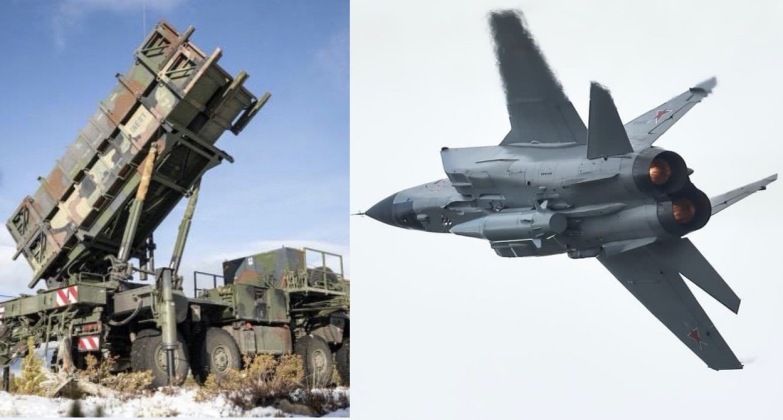
Patriot Launcher and MiG-31 with Ballistic Missile
The Polish Air Force placed U.S.-supplied MIM-104 Patriot long range air defence systems at the Rzeszow-Jasionka Airport on high alert, after four Russian MiG-31 Foxhound tactical combat jets flew westward over the Baltic Sea. The Russian aircraft were reportedly MiG-31I variants designed for carriage of ballistic missiles, which have been specifically employed in the Ukrainian theatre to neutralise Ukrainain Air Force Patriot systems. The MiG-31s operated exclusively within Russian airspace, although their demonstrated highly potent long range targeting capabilities were sufficient to cause significant concern. Polish and German Patriot units at Rzeszow form the upper layer of a multinational NATO air and missile defence umbrella, which has been expanded in recent weeks due to alleged Russian drone incursions into Polish airspace.
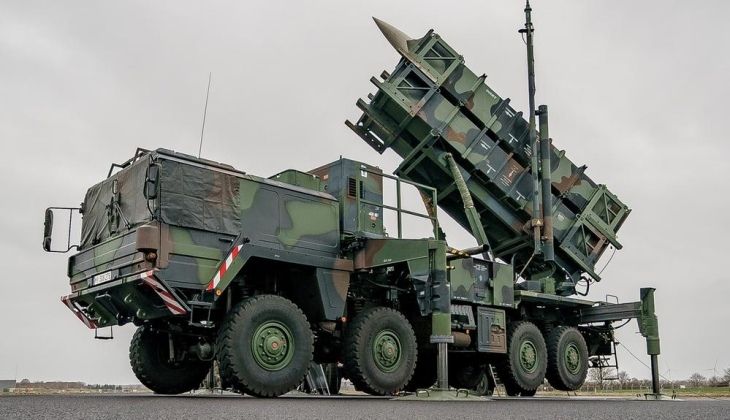
The MiG-31I carries an air launched variant of the 9K720 ballistic missile from the Iskander-M ground-based system, and has been combat tested extensively against a wide range of high value targets in the Ukrainian theatre. The fighter type was credited with the first ever kill against a Patriot air defence system in May 2023, while more recently in early October Ukrainian and Western officials cited by the Financial Times noted that missile strikes launched by the aircraft had become far more challenging to intercept. Patriot missile systems in Ukrainain service able to achieve interception rates of only around six percent against strikes by MiG-31Is and by Iskander-M systems, which has raised questions regarding the utility of Polish and German defences in the event of a conflict. The MiG-31I’s missiles can be equipped with nuclear warheads as well as conventional ones, allowing the aircraft to play important roles in a potential nuclear attack.
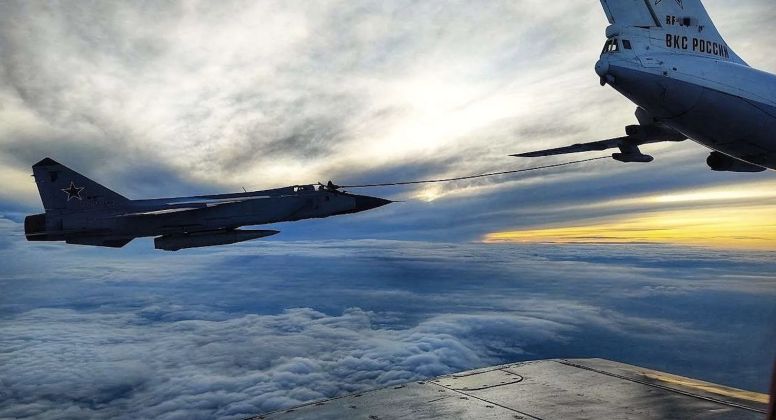
The operational flexibility of the MiG-31I has continued to grow, with a new inflight regretting capability having been added in 2023. The aircraft was confirmed for the first time in October 2025 to have launched strikes on Ukrainain targets from bases deep in the Russian interior, operating alongside Il-78 tankers to cover longer distances and loiter for longer periods before firing their missiles. The MiG-31I first entered service in 2022 as an enhanced variant of the MiG-31K, and alongside a ballistic missile carrying role, is also capable of launching anti-satellite missiles. The aircraft is considered an optimal missile launch platform due to its combination of a Mach 2+ cruising speed, a very high operational altitude in near space, and a high weapons carrying capacity allowing it to launch heavy ballistic or anti-satellite weapons.
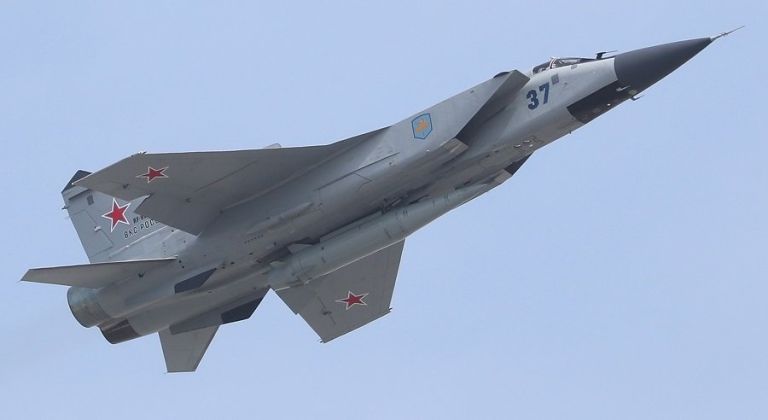
Although the MiG-31 has been out of production since 1994, surpluses of hundreds of Soviet-built aircraft have allied the Russian Aerospace Forces to bring MiG-31DZ interceptors with aerial refuelling capabilities out of storage, and modernise them to the MiG-31I standard to continue to enlarge the fleet. MiG-31K and MiG-31I variants have been deployed outside the Russian mainland in Syria, Belarus, and to the enclave of Kaliningrad in the past, the latter to territories which both border Poland. Alongside the MiG-31I, the MiG-31BM interceptor variant has also played a central role in the Russian-Ukrainian War, and is in many respects Russia’s most capable type of combat aircraft for beyond visual range air-to-air engagements.
