
Pilot Shortage Reaches Crisis Levels; U.S. Military May be Forced to Recall 1,000 Retired Pilots to Keep its Fleet Serviceable
Military Watch Magazine Editorial Staff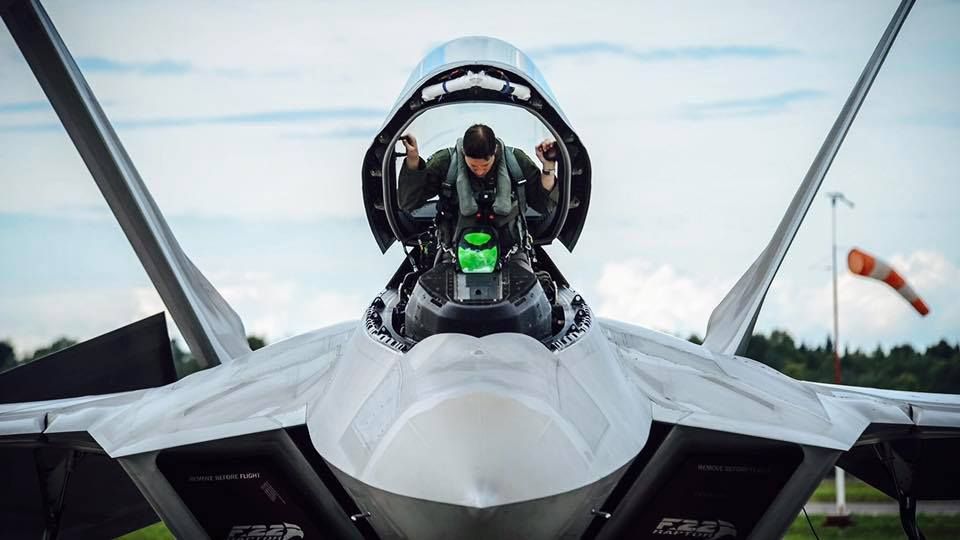
Pilot Boarding an F-22 Fifth Generation Air Superiority Fighter.
The United States Air Force has reported an "acute shortage" of pilots in its ranks, and may resort to desperate measures to compensate for this. A potential means of addressing this which has been raised would be to expand the state of national emergency declared by President Bush in the aftermath of the 9/11 attacks, and using this to recall hundreds, possibly over 1000, retired military pilots. According to Pentagon spokesman and Navy Commander Gary Ross, in order to "mitigate the Air Force's acute shortage of pilots," it was expected that "the Secretary of Defence will delegate the authority to the Secretary of the Air Force to recall up to 1,000 retired pilots for up to three years." Defence Secretary James Mattis would, in response to this crisis, gain "additional authorities to recall retired aviation officers regardless of certain limitations on status, period of service, and numbers."
At the end of the 2016 fiscal year, U.S. Secretary of Air Force Heather Wilson noted that the service was in need of 1,555 pilots, including 1,211 fighter pilots. The Navy faced similar issues for its own air fleet. According to Brigadier General Mike Koscheski, the Air Force's Aircrew Crisis Task Force director, "This is a national pilot crisis, not just a military crisis or an Air Force crisis... The Air Force is partnering with industry to look for ways to just increase pilot production overall...because that's going to be in the interest of the country "not just the military."
The cost of training pilots is extremely high, even when considering the size of the United States' military budget. With modern fighters costing up to $70,000 per flight hour, gaining enough flight experience to prepare a pilot for combat can be extremely costly. The result has been a lowering of standards - an example being F-22 pilots only requiring only 20 hours in the air to be considered fit for combat. Even such minimal training however would cost the Air Force around $1.4 million per pilot. Ultimately, the growing operational costs and high maintenance of complex fifth generation fighters makes pilot training increasingly costly, and is set to lead to a decline in the quality of fighter pilots unless funds allocated to pilot training are increased at a rate that matches the increase in fighters' operational costs - a highly unlikely prospect. The result of the F-35, for example, costing several times as much as the F-16 to operate per hour is set to translate to many times less flight training for the new generation of pilots than their predecessors ever had. Pilot shortages and quality deficiencies are therefore hardly surprising.
