
Why Peru Just Rejected U.S. Abrams and German Leopard 2 Tanks to Favour South Korea’s K2 Black Panther
Military Watch Magazine Editorial Staff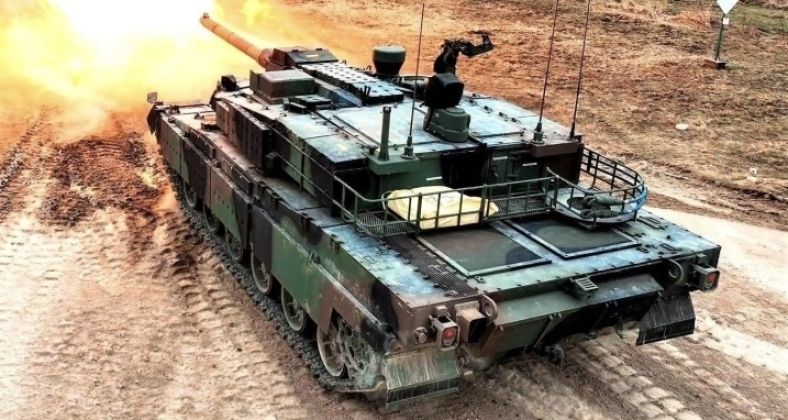
K2 Black Panther Tank
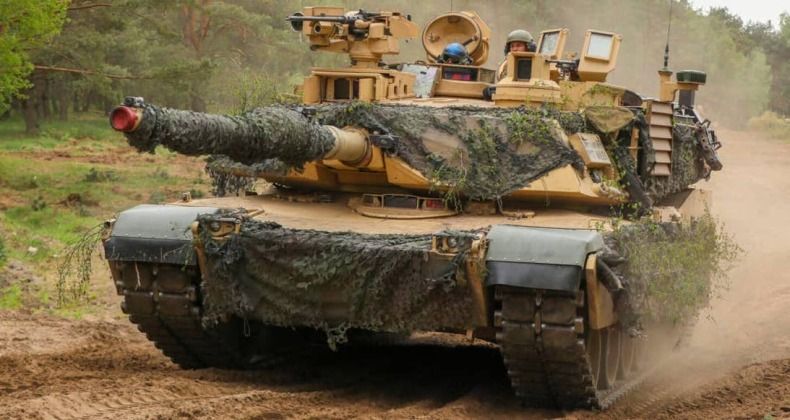
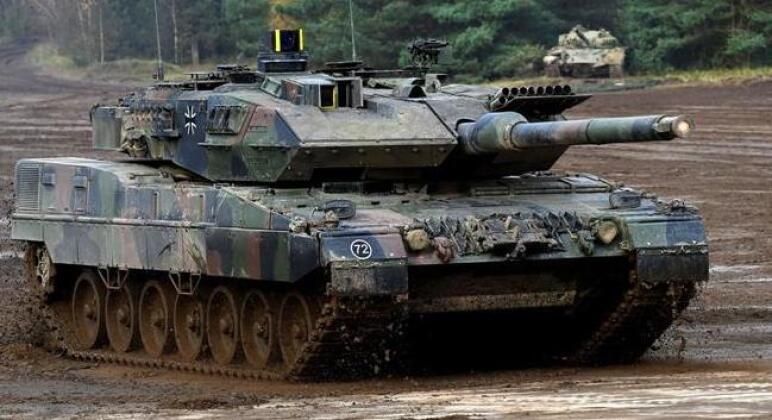
The Peruvian Defence Ministry’s Technical and Operational Analysis Committee has recommended the South Korean K2 Black Panther as the preferred candidate for the Peruvian Army's next generation main battle tank. The recommendation follows an extensive evaluation in which the K2 outperformed competing offers of German Leopard 2 and United States M1A2 Abrams main battle tanks, with the three tank types all having had comparable costs. The K2 also benefits from having been designed decades after both the Abrams and Leopard 2 first entered service, with the designs of the two Western tanks dating to the 1970s, making them around 40 years older. This has provided the design with a much greater modernisation potential, and allowed it to be designed as a lighter and more efficient design with 25 percent lower crew requirements.
One of the K2's greatest advantages is its incorporation of the Korean Active Protection System (KAPS), which uses sensors and countermeasures to detect and defeat incoming anti-tank guided missiles and rocket-propelled grenades before they strike the vehicle. Unlike traditional passive armour, which relies on absorbing an impact, an active protection system attempts to prevent the projectile from reaching the tank entirely. This provides an additional layer of survivability against increasingly capable anti-tank weapons. South Korea has been decades ahead of countries in the Western world in developing and integrating such a system.
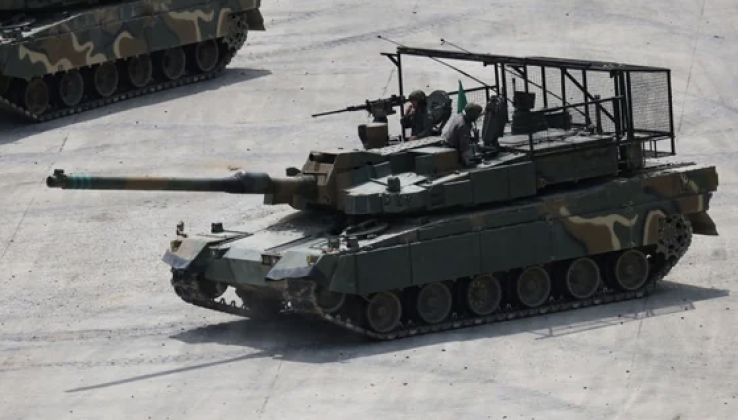
The K2 also features a highly advanced suspension system that distinguishes it from most Western tanks. Its hydropneumatic suspension allows the vehicle to adjust its height and tilt in multiple directions, enabling it to compensate for uneven terrain and maximise the effectiveness of its main gun. By lowering the front of the tank, the K2 can increase its downward gun depression, allowing it to engage targets from steep slopes while exposing less of the vehicle. This capability is particularly valuable in mountainous environments such as those found in parts of Peru.
Another distinctive feature is the K2's ability to employ indirect-fire capabilities. The tank's advanced fire-control system allows it to engage targets beyond direct line of sight by using calculated ballistic solutions, effectively giving it a limited artillery capability. While this does not replace dedicated self-propelled artillery, it allows the K2 to exploit its 120 mm main gun in situations where conventional direct-fire engagement is not possible. The system represents a broader trend toward increasing the versatility of armoured vehicles through digital targeting and battlefield networking.
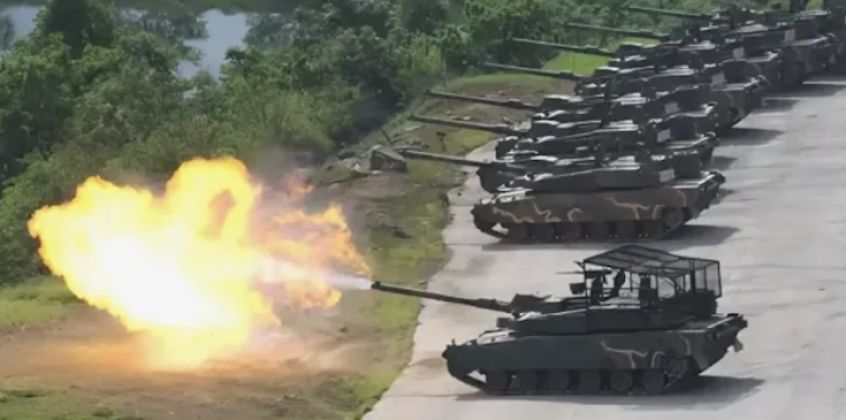
A further distinct advantage is the K2’s mobility. Weighing approximately 55 ton, the tank is significantly lighter than Western tanks, reducing ground pressure and allowing the vehicle to operate more effectively across weaker bridges, narrow roads and soft terrain, while also simplifying strategic transport. These characteristics are particularly valuable for Peru, whose armed forces must operate across deserts, the Andes Mountains and tropical rainforest, presenting logistical challenges that favour lighter armoured vehicles. The tank's mobility is further enhanced by its high power-to-weight ratio. Although all three vehicles are powered by engines producing around 1,500 horsepower, the K2's lower weight allows it to accelerate more rapidly and maintain greater agility over difficult terrain. Combined with its advanced transmission and suspension, the result is a vehicle optimised for rapid manoeuvre rather than relying solely on heavy armour for protection.
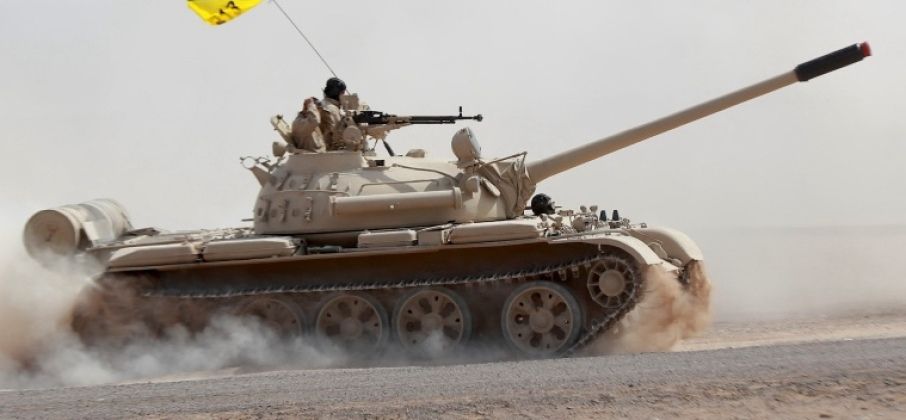
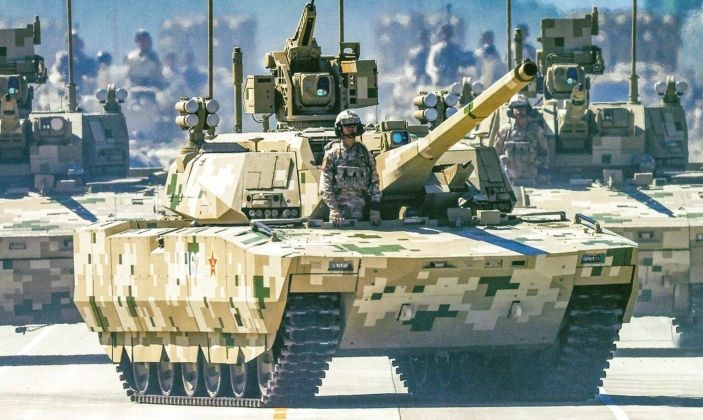
The K2 has consistently been evaluated to have a significantly superior performance to other NATO standard main battle tanks, with political factors being a leading factor allowing Germany and the United States to continue sales. The Norwegian Army, for example, evaluated the K2 more favourably, but still selected the Leopard 2 both due to Germany lobbying, and to ensure commonality with neighbouring European states. The tank is expected to be more seriously challenged in the 2030s as the United States brings the M1E3 Abrams into service. This deeply redesigned tank is intended to provide a next generation performance comparable to the Chinese Type 100, a next generation tank that currently leads the world in performance. The Type 100 has not been marketed for export, and would likely not be considered in most markets due to Western political pressure.
Hyundai Rotem has also distinguished itself through its willingness to offer extensive industrial cooperation. Peru's proposed acquisition includes the construction of a new assembly facility, a $270 million industrial investment, technology transfer, and plans for approximately 30 percent of components to be sourced locally. Such arrangements not only reduce dependence on foreign suppliers but also create domestic manufacturing capabilities and skilled employment. Comparable technology transfer packages have generally been more limited in offers involving the Abrams or Leopard 2.
