
Peace President: Is Donald Trump The First President Since The 1970s Not to Start a New War?
Military Watch Magazine Editorial Staff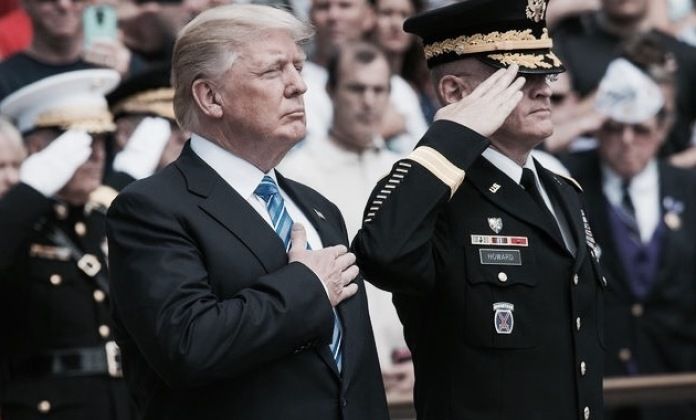
U.S. U.S. President Donald Trump
Nicholas Kamm/AFP/Getty Images
The end of the Donald Trump administration and inauguration of Joe Biden as president has the potential to mark a major turning point in the history of American foreign policy, with Trump’s policies over four years in power having drawn widespread criticism from his opposition in the Democratic Party and from the country’s foreign policy establishment. One notable feature of Trump’s presidential campaign in 2016 was a rallying against foreign interventionism and military action abroad, with the president having attempted despite considerable domestic opposition to reduce the country’s overseas military presence in many theatres including Korea, Afghanistan and Syria. President Trump stated on his final day in office in January 19th: “I am proud to be the first president in decades who has started no new wars” - echoing a similar statement by Vice President Mike Pence the day before. A look at the Trump administration’s record for foreign military interventions, and those of preceding administrations, can give an indication as to whether Trump can indeed be considered a ‘peace president’ by the standards set by others who held the office.
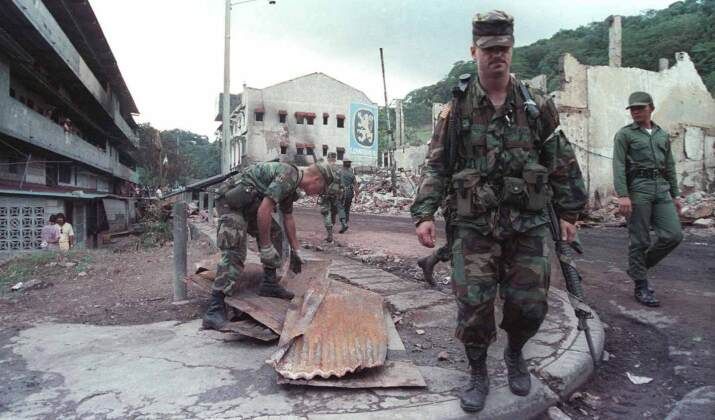
Looking over the past seven administrations, President Trump’s statement that presidents had for decades consistently started new wars overseas was largely true. Barak Obama, his immediate predecessor, initiated military campaigns without provocation in Libya and Syria while also involving U.S. forces in a Saudi-led military campaign in Yemen and escalating drone warfare efforts in Pakistan and Somalia. Before him George W. Bush initiated wars with the Taliban government in Afghanistan and with Ba’athist Iraq - while also bringing the country to the brink of conflict with North Korea and Iran. William ‘Bill’ Clinton initiated military interventions in Somalia and Yugoslavia, and also came very close to initiating a war with North Korea. George H. W. Bush, the last one-term president before Donald Trump, initiated an unprovoked invasion of Panama as well as America’s first large scale military intervention in the Middle East with a war against Iraq. Ronald Reagan before him initiated an unprovoked invasion of Grenada as well as multiple skirmishes with Libyan and Syrian forces, and deployed U.S. forces for operations in Lebanon, among other interventions.
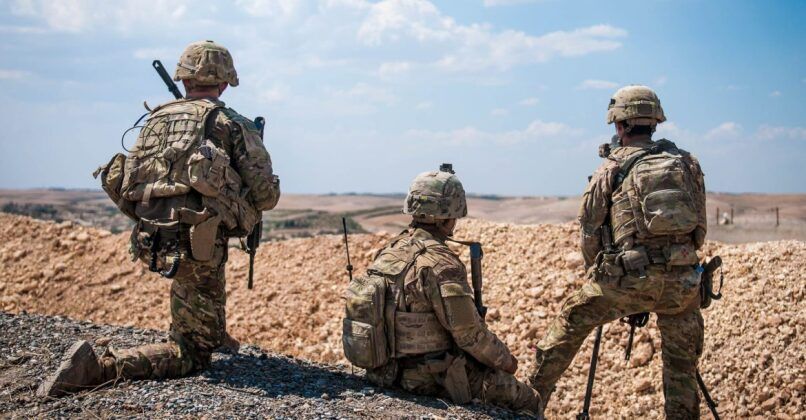
James ‘Jimmy’ Carter, another one-term president, may well have been the last president before Trump not to initiate a new war. While not deploying the U.S. Military for a new campaign overseas however, he did oversee the initiation of a program to arm and train of jihadist insurgents for war against the government of Afghanistan. This involved limited American personnel deployments to the front lines for advisory roles, and paved the way for ongoing conflict in the country which has lasted to this day. Carter's predecessor, Gerald Ford, had a less controversial record when it came to foreign interventions, and may well be considered the last ‘peace president.’ This being the case, there is a strong argument to be made that Donald Trump was indeed the first president not to start a war in 40 years since the 1970s. Despite this, Trump’s time in office was far from peaceful. The president oversaw an escalation of the war effort in Afghanistan and limited air strikes against Syrian government forces which escalated conflicts started by presidents Bush and Obama respectively. Moreover, a major escalation in hostilities with North Korea in 2017 brought the U.S. to the brink of what would likely have been its most serious war since the 1940s, although President Trump notably went against the advice of most members of his administration in 2018 to pursue detente with Pyongyang. Military tensions with China, Russia and Iran were also escalated - with provocations ranging from escalated deployments of U.S. forces both to Taiwan and to Chinese claimed waters, and the assassination of Iranian General Qasem Soleimani on January 3rd 2020. The withdrawal of the U.S. from the Intermediate Range Nuclear Forces Treaty with Russia was another major step towards escalation, as were drastic increases in military expenditures from Trump's first year in power.
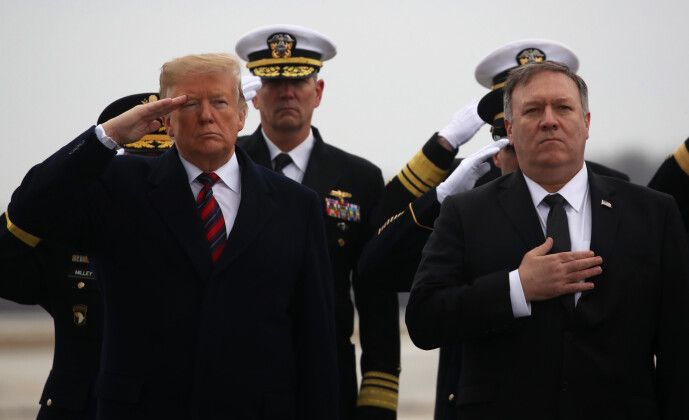
The most aggressive aspects of the Trump administration's foreign policy may well have been its use of economic sanctions to target adversaries such as North Korea and Venezuela, as well as the rhetoric of State Secretary Mike Pompeo particularly in the administration's final year which had strong ideological themes and was often unprecedentedly hostile towards China in particular. Following Washington's initiation of a trade war and 'tech war' against China, relations with Beijing are unlikely to recover. In terms of actual military actions however, the Trump administration can be considered one of the least belligerent since the Second World War. Ultimately the administration left a very mixed legacy when it came to foreign military intervention, and while the U.S. has not initiated a new war in four years, there is a considerable possibility that it could initiate one under the incumbent Joe Biden administration.
