
Pakistan Tests its Most Sophisticated Nuclear Capable Missile Yet with Multiple Independently Targetable Reentry Vehicle
Military Watch Magazine Editorial Staff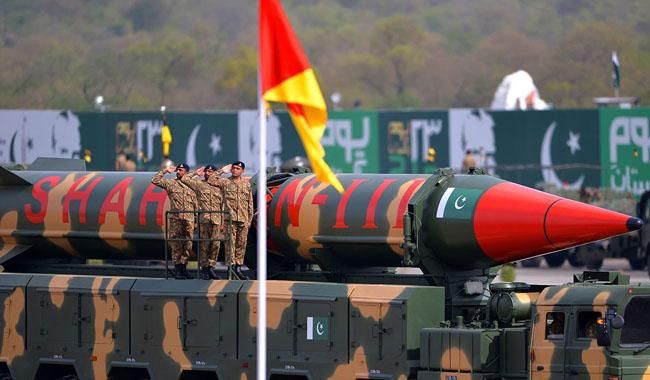
Pakistani Ballistic Missile on Parade
Pakistan has tested its first ballistic missile to be equipped with a multiple independently targetable reentry vehicle (MIRV), which is set to significantly strengthen the country's strategic nuclear deterrent against potential adversaries. The Ababeel ballistic missile was confirmed by the United States to have been successfully tested, according to a congressional testimony given by Defence Intelligence Agency (DIA) director Robert Ashley. This was the first time a U.S. official publicly confirmed what was long suspected - that Islamabad successfully tested a nuclear capable ballistic missile armed with a MIRV. The director stated: “In January 2017, Pakistan conducted the first test launch of its nuclear-capable Ababeel ballistic missile, demonstrating South Asia’s first MIRV payload.”
MIRVs are highly sophisticated and much sought after technologies by nuclear powers, and allow a single missile to deliver multiple warheads against different targets. They effectively act as force multipliers for a missile arsenal, while also allowing missiles to better evade enemy air defences making interception upon reentry near impossible. The Pakistani military was first to announce the successful test of its MIRV system in early 2018, stating in a press release: "Pakistan has conducted its first successful flight test of Surface to Surface Ballistic Missile Ababeel, which has a maximum range of 2,200 kilometres. The missile is capable of delivering multiple warheads, using Multiple Independent Reentry Vehicle (MIRV) technology.” According to the statement, the test's purpose was “validating various design and technical parameters.”
Confirmation of the Ababeel missile's success by the United States is particularly significant considering widespread doubts regarding Pakistan's claims. The Center for Strategic and International Studies’ noted regarding Islamabad's progress in developing a MIRV equipped missile: “Some experts have expressed skepticism as to whether Pakistan has indeed surmounted the various technological hurdles required for MIRVed missiles. MIRV warheads are typically much smaller than unitary warheads, and thus require greater miniaturization. It is unclear if the country has manufactured a miniaturized nuclear warhead small enough to use in a MIRV.” Confirmation regarding the missile's capabilities is yet another recent sign of progress made by Pakistan's defence industry, which has recently inducted several new sophisticated weapons systems into service.
The Ababeel began testing in the late 2000s, and is a solid fuel medium range three stage platform. Pakistan has previously received extensive assistance from both China and North Korea in missile development, and at least some cooperation with one if not both of these powers to develop the Ababeel is highly likely. According to Islamabad, the military has pursued MIRV technology to defeat India’s growing ballistic missile defense network - thus ensuring that the country's strategic deterrent remains viable. The Pakistani military stated when announcing the test of the missile system: "Development of Ababeel Weapon System is aimed at ensuring survivability of Pakistan’s ballistic missiles in the growing regional Ballistic Missile Defence (BMD) environment. This will further reinforce deterrence.”
