
Pakistan’s Obsolete Pre-Vietnam War Era Mirage III Fighters Made Viable with Modern Cruise Missiles
Military Watch Magazine Editorial Staff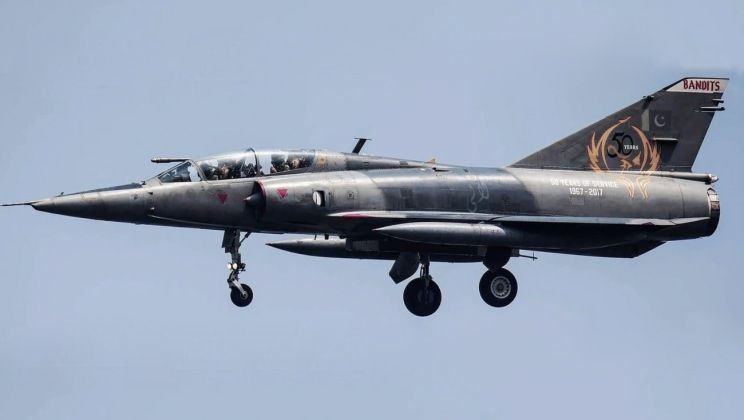
Pakistan Air Force Mirage III/5 Fighter
The Pakistan Air Force has indicated plans to continue to operate part of its fleet of Mirage III fighters, potentially well into the 2030s, with efforts having been sustained to integrate new types of missiles onto what are currently some of the oldest combat jets serving anywhere in the world. Entering active service in 1961, the Mirage III served as the French Air Force’s primary tactical combat jet that decade, and was marketed for export as a much cheaper alternative to U.S. F-4E Phantom which was considered the most capable Western fighter type of its time. Pakistan first procured the Mirage III in 1967, and in 1995 initiated an extensive upgrade program under Project ROSE, which extended the lives of the fighters, and integrated a heads up display (HUD), hands on throttle and stick (HOTAS) controls, a new multi function displays (MFD) and radar altimeter and the Sagem attack system onto each aircraft.
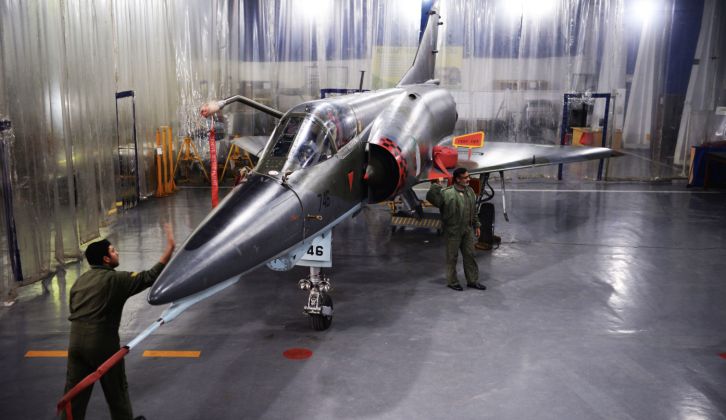
Upgrades in the 1990s also equipped each Mirage III fighter with an inertial navigation system, a GPS system, a new radar warning receiver (RWR) and a modern electronic countermeasures (ECM) suite. The new Grifo M3 multi mode radar system allowed the fighters to engage targets adversaries at beyond visual ranges for the first time. The result was an aircraft with superior capabilities to some basic early fourth generation designs, which were combined with the very low sustainment costs inherent to the Mirage III’s design. The low cost fighters would continue to form the backbone of the Pakistani fleet until the 2010s, when sufficient procurements of JF-17 Block I and Block II fighters brought Pakistan aerial warfare capabilities forward into the fourth generation.
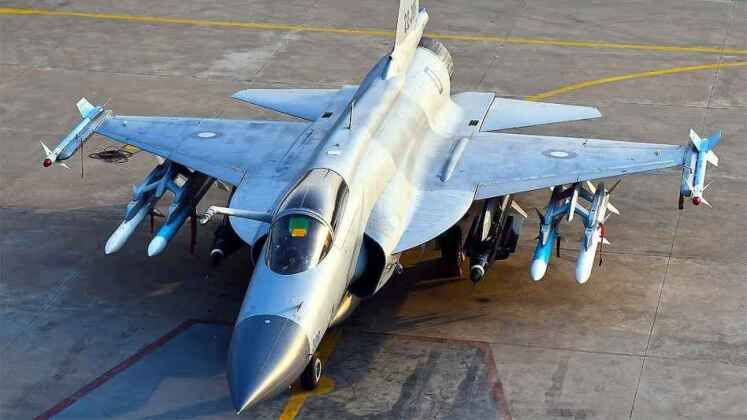
Pakistan’s recent parallel procurements of large numbers of JF-17 Block III and more capable J-10C ‘4+ generation’ fighters has raised questions regarding the future of the Mirage III in service. The JF-17’s far superior combat capabilities and comparable sustainment costs have made it appear highly favourable to replace the Mirages with the newer aircraft. The flight test of Pakistan’s indigenously developed Taimoor air-launched cruise missile in January, however, which was integrated onto the Mirage III, may indicate an intention to further enhance the aircraft and find new roles for them in service. As a cruise missile launch platform receiving targeting data from offboard sensors, the sophistication of the fighter’s own onboard avionics or of its airframe design are of relatively limited importance, allowing them to potentially play important roles despite their obsolescence.
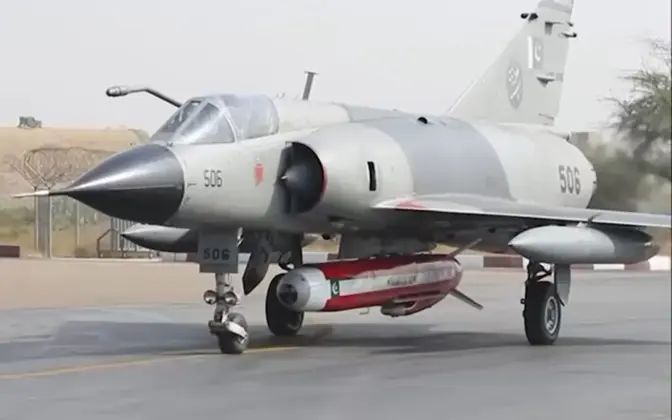
The Taimoor has a range of 600 kilometres, and has been described as featuring modern navigation and guidance systems intended to facilitate precision attacks into well defended airspace. The missile can reportedly follow terrain-hugging and sea-skimming trajectories, and maintains a considerable range relative to its light 1,200 kilogram weight. This weight is vital to allowing it to be carried by the Mirage III, which has a very limited weapons carrying capacity. Pakistan’s efforts to repurpose its Mirage III fighters into cruise missile carriers is far from isolated, with obsolete aircraft widely being relied on for similar roles. Notable examples include the U.S. Air Force’s integration of modern cruise missiles and avionics onto its B-52 strategic bombers, and the Korean People’s Army Air Force’s similar integration of modern cruise missiles onto Il-28 bombers. These programs all serve to highlight that even obsolete aircraft can be of value as carriers for long range missiles, which is a role with only conservative requirements for flight performance and avionics.
