
On Possible Cancellation of the Su-57 Derived FGFA Fighter; Is India Compromising its Air Force's Future Capabilities?
Military Watch Magazine Editorial Staff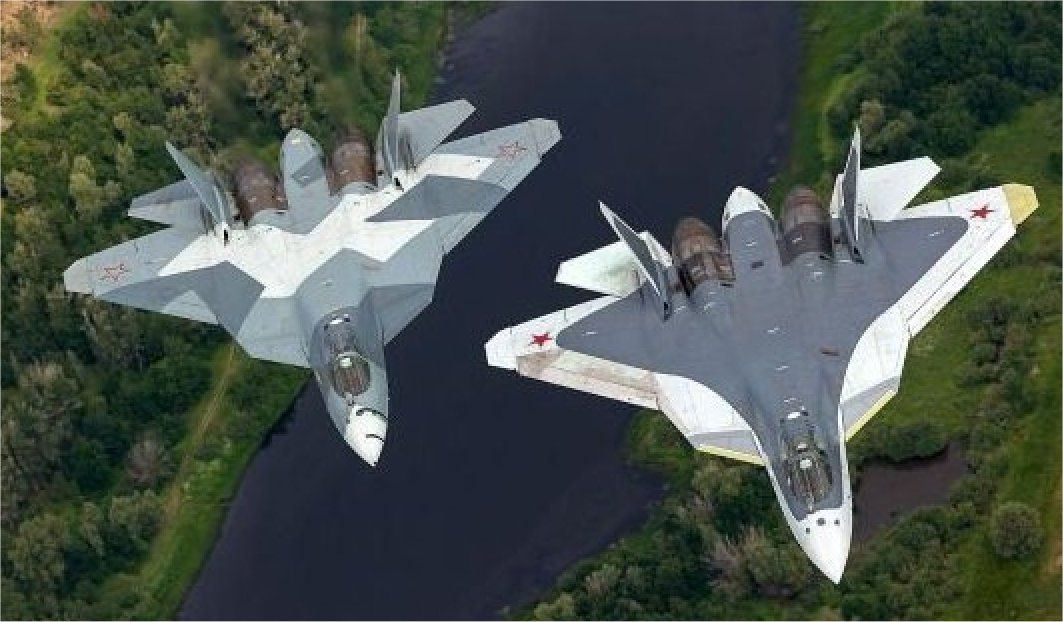
Indian Air Force Su-57/ FGFA Fighters
The Indian-Russian joint Fifth Generation Fighter Aircraft (FGFA) cooperative fighter program sought to produce over 100 fifth generation air superiority fighters derived from the Su-57 for the Indian Air Force. This would potentially have given India an air to air combat capability eclipsing those of its neighbours, able to rival if not exceed those of China with its fifth generation J-20 air superiority and J-31 multirole programs. Amid deepening ties to Washington however, India is considering scrapping the FGFA deal - possibly in favour of American fighters such as the F-35 fifth generation multirole fighter.
Should India abandon the FGFA program, it is set to face a significantly depleted air force capability unable to match those of its Chinese rival. While the acquisition of several hundred Su-30MKI fourth generation air superiority fighters ensures a continuing and overwhelming advantage over Pakistan and other small neighbours for the foreseeable future - the air forces of which rely solely on smaller multirole and interceptor fighters - against China the Indian Air Force will face a growing disadvantage. While the F-35 will be able to match the J-31, its fifth generation multirole equivalent, India will not have an air superiority platform with which to match J-20 - or the Su-57 should China go on to acquire it. The result will be balance of power in the air between China and India similar to that between India and Pakistan today - one that strongly favours China.
The United States will be unable to provide India with a fifth generation air superiority fighter capable of matching the J-20, with the F-22 out of production and banned from export to even its closest allies. With China and Russia being the only other nations to have air superiority fighter programs, and with India highly unlikely to purchase Chinese arms, the Russian Su-57 and its FGFA derivative remain India's only viable alternatives. Should the FGFA be cancelled for political reasons, India will be sacrificing its potential to acquire near-peer capabilities to China. Adoption of the F-35, a troubled and high maintenance fighter program, while India already faces severe issues with maintenance far simpler platforms, would hardly lead to a positive outcome for the country's capabilities. Despite being a fifth generation fighter, the F-35 is not a high performance air superiority platform like the F-22, Su-57 and J-20 and will not be able to engage them directly or to replace them in the Indian inventory. Altitude, range, speed, payload, radar and manoeuvrability are but a few of the multiple factors giving the F-35 and other fifth generation light platforms an overwhelming disadvanrage over the three heavy air superiority fighters. Withdrawing from the FGFA without a viable alternative, of which non currently exist due to the scarcity of producers of fifth generation air superiority platforms, will leave India at a significant disadvantage in the air for decades to come.
