
October 6 1973 and October 6 2017; Two Days Where the Middle Eastern Balance of Power Shifted - Part One
Military Watch Magazine Editorial Staff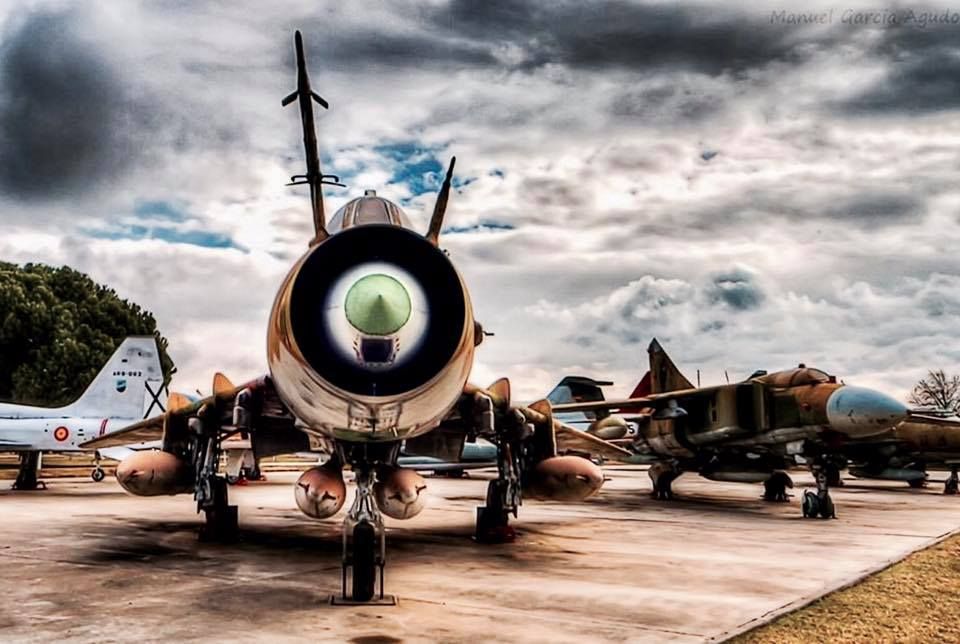
MiG-21 and MiG-23 - Advanced fighters used extensively by the Egyptian and Syrian air forces during the Yom Kippur war
October 6th marks 44 years since the end of the Yom Kippur War, which heralded the beginning of the fragmentation of the Arab Nationalist bloc and a new Western centric balance of power in the Middle East for decades to come. The war, waged between Egypt, Syria and several of their Arab allies alongside personnel from North Korea and Cuba, saw these collective forces engage the Israeli military on two fronts in the Sinai Peninsula and in Syria. Despite a significant advantage in military hardware, the Arab states were overwhelmingly defeated by the better prepared and trained Israeli Defence Force. Several political interventions by Egyptian President Sadat himself, making strategically unsound decisions opposed by his generals, were largely responsible for this - while poorer training and preparation were also key disadvantages. As Soviet Premier Leonid Brezhnev noted regarding the failure of his Arab allies to put their military forces to effective use: "We gave them technology, the latest, the kind even Vietnam didn't have. They had double superiority in tanks and aircraft, triple in artillery, and in air defence and anti-tank weapons they had absolute supremacy. And what? Once again they were beaten. Once again they scrammed. Once again they screamed for us to come save them. Sadat woke me up in the middle of the night twice over the phone, "Save me!" He demanded to send Soviet troops, and immediately! No! We are not going to fight for them."
The end of the war marked a turning point in the Middle East. While the Egyptian army had been routed, thousands of its troops encircled and its lines broken - which had allowed Israel to demand harsh terms including the release of a number of prominent spies imprisoned in Egypt, the Egyptian military and press portrayed the Yom Kippur War as an Egyptian victory. While Egypt did manage to negotiate to regain much of its territory formerly occupied by Israel, Israel had been open to negotiating such a reversion of territory under terms almost identical to those Egypt agreed to even before the war had started. Strategically Egypt's position was in fact worse following the end of the war than it was before it was initiated, with gains made in its initial assault quickly being lost. This effective internal propaganda coup by the Egyptian leadership did however allow their new President Anwar Sadat, who had long sought to abandon both the Arab Nationalist bloc and the Soviet Union in favour of closer cooperation with the Western powers, to leverage the 'victory' to gain the credibility he needed domestically to shift from the Soviet and Arab blocs to become a firm Western ally. The result was the dissolution of the Arab Nationalist bloc, formerly led by Egypt, and near unchallenged Western dominance in the Middle East. Egypt's armed forces also notably sent some of the most advanced Soviet weapons to the United States, those Soviet Premier Brezhnev referred to as "technology, the latest, the kind even Vietnam didn't have." These included the third generation MiG-23 fighter and S-125 surface to air missile batteries, which the U.S. were able to study and develop effective countermeasures to.
Continued in Part Two
