
Back in Testing: Russia’s Nuclear Powered Cruise Missile Can Circle an Enemy For Years
Military Watch Magazine Editorial Staff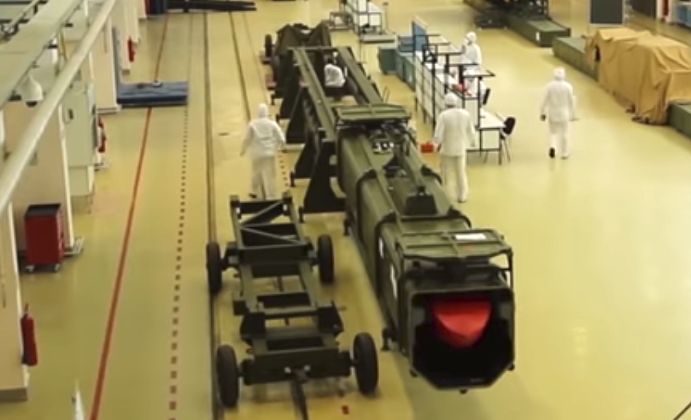
Russian Burevestnik Nuclear Powered Cruise Missile Prototype
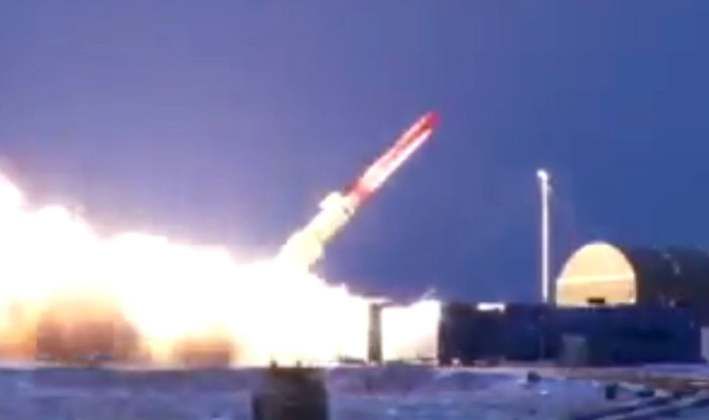
Russia is reportedly resuming testing of its 9M730 Burevestnik nuclear powered cruise missile, codenamed SSC-X-9 Skyfall by NATO, which is set to provide the country with an entirely unique weapon in its arsenal. Novaya Zemlya, an archipelago above the Arctic Circle, appears to be serving as a central testing ground for the new missile - according to recent satellite imagery - with activity there consistent with moves towards a resumption of test flights. Work appears to include reconstruction of a launch pad, which is believed to have been used for previous missile launches, with significant numbers of shipping containers appearing at different support areas around the site. Russia is thought to have test fired four Burevestnik missiles between November 2017 and February 2018, although the longest test flight only lasted around 150 seconds and saw the weapon travel less than 35 miles - quite low given its planned intercontinental range.
The Burevestnik is a very unique weapon, and by using a nuclear reactor to power its propulsion system it can remain in flight for years at a time. This is advantageous as the missile will not be vulnerable to being neutralised on the ground in the event of an enemy first strike, and can potentially be flown near enemy airspace in times of high tensions as a show of force. Its ability to remain in the air for so long can also allow the missile to strike enemies from any direction, exploiting holes in enemy air defences much more effectively than missiles fired from the territory of Russia itself. Addressing the Russian parliament, President Vladimir Putin referred to the missile as having an“unlimited range” and being “invincible against all existing and prospective missile defence and counter-air defence systems.” Should Russia develop the Burevestnik to an operational standard, it is likely that it will seek to apply its technologies onto other missile programs which could give its armed forces a mix of strategic and tactical nuclear powered missiles in constant flight around the Earth. The U.S. has notably strongly discouraged Russia from going ahead with the program.
