
North Korea is Not Alone? Chinese Bombers Rehearse Strikes on Guam and Threaten Hawaii
Military Watch Magazine Editorial Staff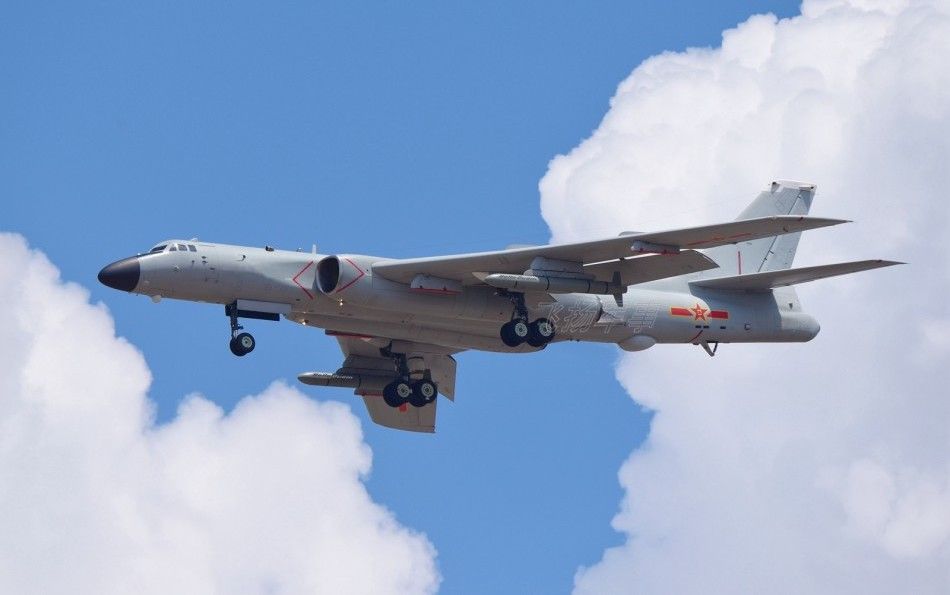
Chinese People's Liberation Army Air Force H-6 Bomber
Amid growing tensions between the United States and North Korea, the U.S. Pacific territory of Guam has repeatedly been threatened with missile attacks. The small territory, housing critical U.S. Naval and Air Force assets, remains highly vulnerable to attacks by Korean systems such as the Musudan, Pukkuksong-2, Hwasong-12 and Hwasong-14 missiles which are capable of delivering high payload nuclear warheads. Amidst Korean threats to carry out strikes on the United States' Pacific territory, China's People's Liberation Army Air Force has simultaneously been carrying out simulated strikes with its strategic bomber forces against Guam, while conducting frequent flybys near Hawaii - another vulnerable and high value target which houses the U.S. Pacific Command.
While China is bound by defense treaty to protect North Korea in the even of war, and has indicated its readiness to intervene in its defence should the United States launch an attack, preparing its forces to strike one of the United States' most vulnerable regional targets could well be seen as a further sign of solidarity with the increasingly threatened government in Pyongyang. It could alternatively simply be a sign that both Asian nations, similarly threatened by growing U.S. military deployments near their territories, have sought to deter the United States from carrying out any aggressive acts by reminding it of the vulnerability of its Pacific territories to nuclear strikes - delivered either by missile or by bomber.
The Chinese People's Liberation Army Air Force maintains a fleet of 140 H-6 long range bombers, with a further 30 bombers in service in the Navy. These bombers, though far less advanced than the U.S. B-1B or Russian Tu-160, retain capabilities similar to the U.S. B-52 Bombers and are able to deliver nuclear payloads and carry over 80,000 Ib. While North Korea is forced to rely exclusively on its missile and, to a lesser extent but increasingly, its submarine forces as well, China's bomber fleet gives it a unique means of projecting power. The ability to fly bombers near enemy territory and back is a formidable means of projecting strength and reminding adversaries of one's nuclear deterrence capabilities in a way missiles cannot do. The fact that missiles can't be given an order to return mid course means that they are less than ideal for posturing in the same way as bombers. Though North Korea retains a sizeable fleet of lighter Il-28 bombers, they are incapable of projecting power in the same way as the more advanced and longer ranged H-6. What China's posturing and threats towards U.S. Pacific territories indicates is that North Korea is hardly alone in the situation it faces in regards to the U.S. military presence in East Asia. While China's actions may not have been directly related to the Korean conflict they symbolize the country's similar perception of encirclement and resulting need to demonstrate its ability to retaliate.
