
Training Ship No Longer; China Upgrades Carrier Liaoning’s Status to Full Combat Vessel
Military Watch Magazine Editorial Staff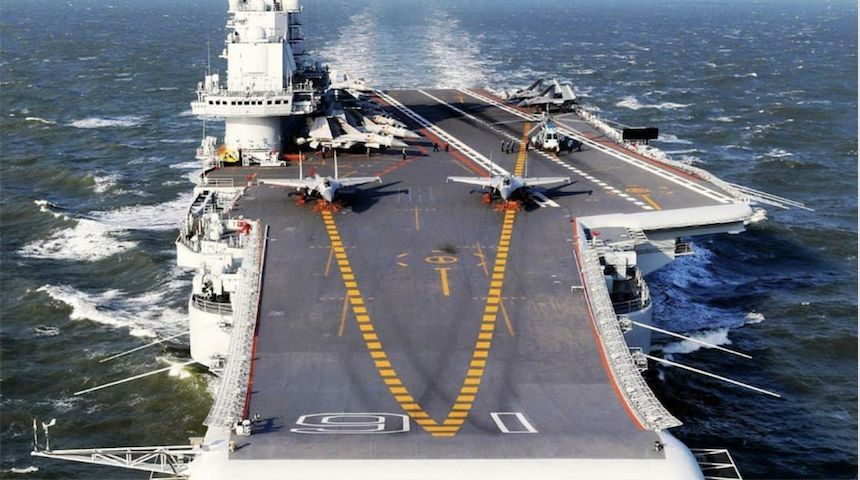
Chinese Carrier Liaoning with J-15 Fighters
Since it’s entry into service in 2012 the Chinese People’s Liberation Army (PLA) Navy’s sole operational aircraft carrier the Liaoning has been termed a training ship - intended to provide the service and in particular its pilots and seamen with experience in carrying out carrier operations. The Liaoning’s basic launch system for fixed wing aircraft, a combination of arrested recovery and ski jump assisted takeoff, is the same as that used by the PLA’s second carrier the Type 001, and though it differs somewhat from the electromagnetic catapult system planned for subsequent warships many of the skills including arrested landings are transferable. Following a six month refit however, the People’s Liberation Army Navy has declared the Liaoning a “combat ship.” An executive officer of the Liaoning, Lu Qiangqiang, stated in an interview with state media outlet China Central Television (CCTV) regarding the refitting and the warship’s new role: "The Liaoning is shifting from a training and test ship to a combat ship... I believe this process is going faster and faster, and we will achieve our goal very soon."
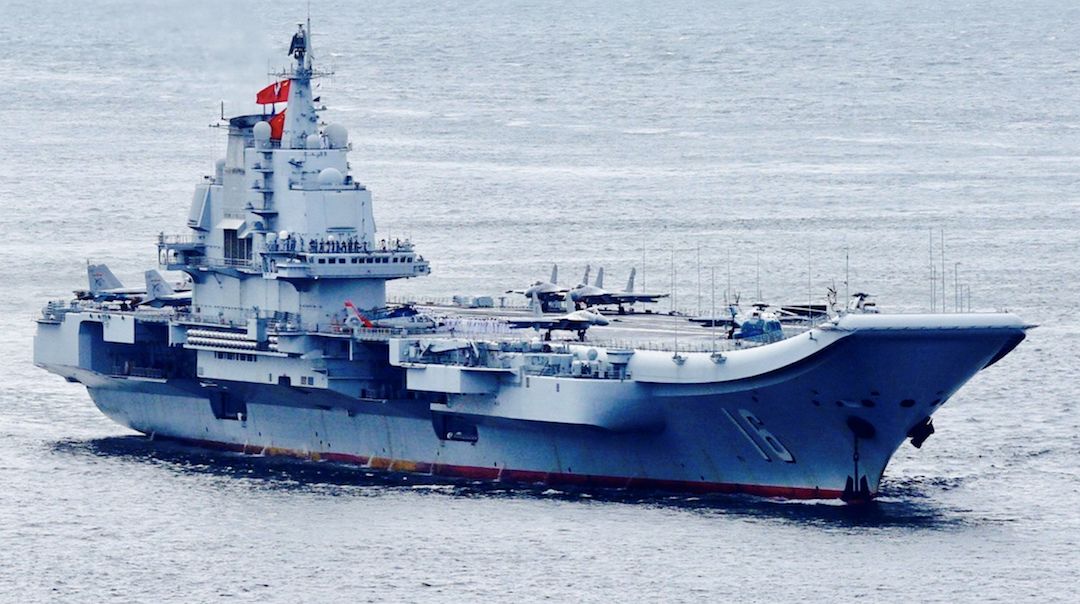
The Liaoning’s retrofitting is expected to bring its capabilities closer in line with those of the Type 001, and include a new 'island' command centre and updated sensors among other enhancements. Even as a training ship the Liaoning's capabilities were considered ahead of those of its Russian analogue the Admiral Kuznetsov - the sister vessel laid down in the very same Black Sea Shipyard during the 1980s. The Liaoning's 200,000 hp steam turbine propulsion systems are a key example, and are considerably more reliable than those on the Kuznetsov which have frequently broken down. The PLA Navy’s far greater investment in its carrier based fighter aircraft, with ambitious plans for the upgrade of the J-15 Flying Shark, has meanwhile allowed it to integrate technologies far ahead of those of its Russian analogue the Su-33. With China’s need for a relatively low end carrier called to serious question in light of its plans to acquire more advanced EMALS equipped vessels, the future of the Liaoning has been brought to question - with some analysts even raising the possibility of its sale to a third party such as Russia. Given the damage the Admiral Kuznetsov suffered late in 2018 to a collapsed crane, Russia’s familiarity with the design which was laid down in the USSR as a sister ship to the Liaoning, and the loss of capacity to build aircraft carriers following the Soviet disintegration, this remains a possibility. Another option reportedly under consideration is a retrofitting of the Liaoning with an electromagnetic launch system, which while potentially more costly than building an EMALS equipped carrier from scratch could be achieved considerably faster - thus allowing the PLA to keep its first carrier up to date with the capabilities of the remainder of the fleet. It is important to note that these reports remain unverified however, and the technical viability of equipping the Liaoning with any form of catapult system remains in serious question.
