North Korean Forces Begin Fielding Russian BTR-80 Amphibious Personnel Carriers
Military Watch Magazine Editorial Staff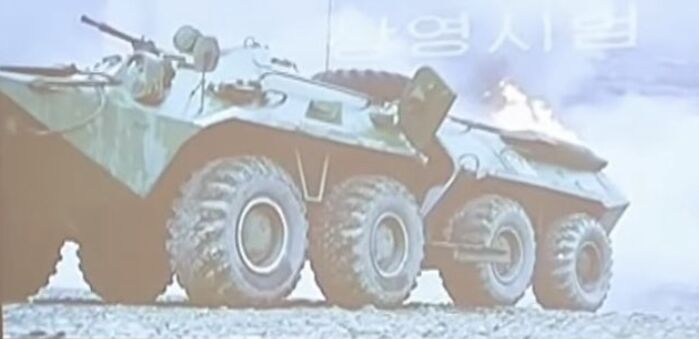
First Image of BTR-80 Armoured Personnel Carrier in North Korean Service
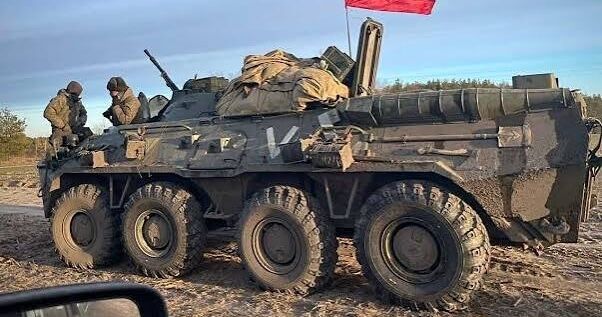
Footage released by North Korean state media has for the first time shown Soviet BTR-80 armoured personnel carriers in Korean People’s Army service. This has raised questions regarding whether Army units operating in the Ukrainian theatre exclusively are using the vehicles, in order to increase commonality with allied Russian Army units, or whether the vehicles may be more widely adopted by units on the Korean Peninsula itself. The BTR-80’s turret carries a 14.5mm KPVT heavy machine gun and a coaxial 7.62mm machine gun, with the BTR-80A variant integrating a 30mm 2A72 rapid-firing cannon. Several features reflect lessons from difficult terrain and combat, with the turret able elevate its main gun to around 60 degrees, which is useful for engaging targets on steep slopes, including in mountainous terrain like that seen across most of the Korean Peninsula.
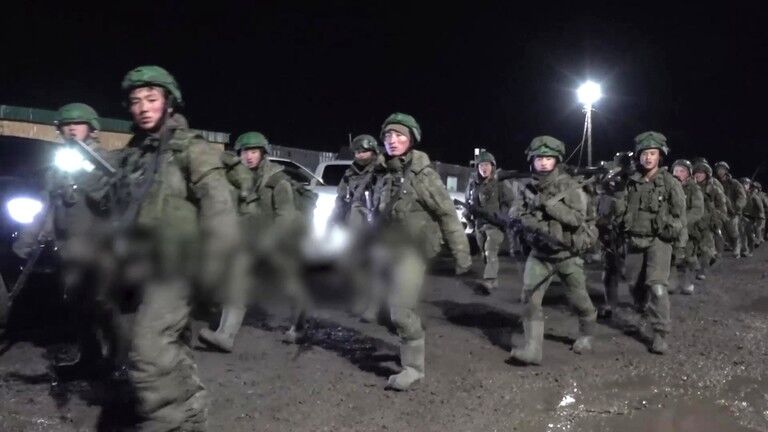
Previously North Korean personnel have been seen with a wide range of Russian armaments when operating on Russian territory, including AK-12 assault rifles, SVDS precision rifles, Vepr-12 shotguns and RPG-7V2 launchers. The Vepr-12 is notable because a shotgun can be useful against small drones at close range. The use of Russian 60mm mortars, anti-tank weapons and night-vision equipment has also been observed, alongside Russian-style uniforms and other soldier kit. The BTR-80 thus represents by far the highest value piece of Russian equipment that North Korean sources have shown being used by its forces since the Korean People’s Army deployed to support Russia’s war effort.
While transfers of Russian armaments to North Korean units have remained limited, North Korean equipment has been adopted by Russian forces on a much larger scale, including much higher value and more complex equipment. By the end of 2024 Russian Army was already estimated to have received up to 9 million 122mm and 152mm North Korean artillery rounds. Subsequent images have confirmed the adoption of 60mm and 140mm mortars for use in frontline Russian Army units, alongside the transfer of 170mm howitzers and their shells. At least six Russian artillery units by early 2025 sourced between 50 and 100 percent of their munitions from North Korea. Other equipment has included ballistic missile systems and mobile anti-tank missile systems with ‘fire and forget’ capabilities.
The BTR-80 is amphibious, using a waterjet at the rear and a raised trim vane at the front to help it cross water. Rosoboronexport also says the specified tyres can allow the vehicle to travel for up to 200 kilometres after losing air pressure to bullet damage. Its combination of simple wheeled mobility, amphibious capability and a chassis that can be adapted for many jobs has allowed it to continue to be relied on heavily in service. Its design has clear limits, however, with the basic model’s armament is a heavy machine gun rather than a cannon, and its armour offers modest protection by modern standards. The North Korean defence sector’s demonstrated ability to develop new generations of armour quickly, and its development of more modern personnel carrier designs, make it appear unlikely that the BTR-80 will be brought into service on a significant scale other than in units operating from facilities in Russia itself.